
Cannabis Vending Machines — Metrc-Integrated Dispensary Self-Service
Age-verified dispensary self-service for pre-rolls, jars, vapes, edibles, and other packaged cannabis SKUs, designed to fit the Metrc workflow your store already runs.
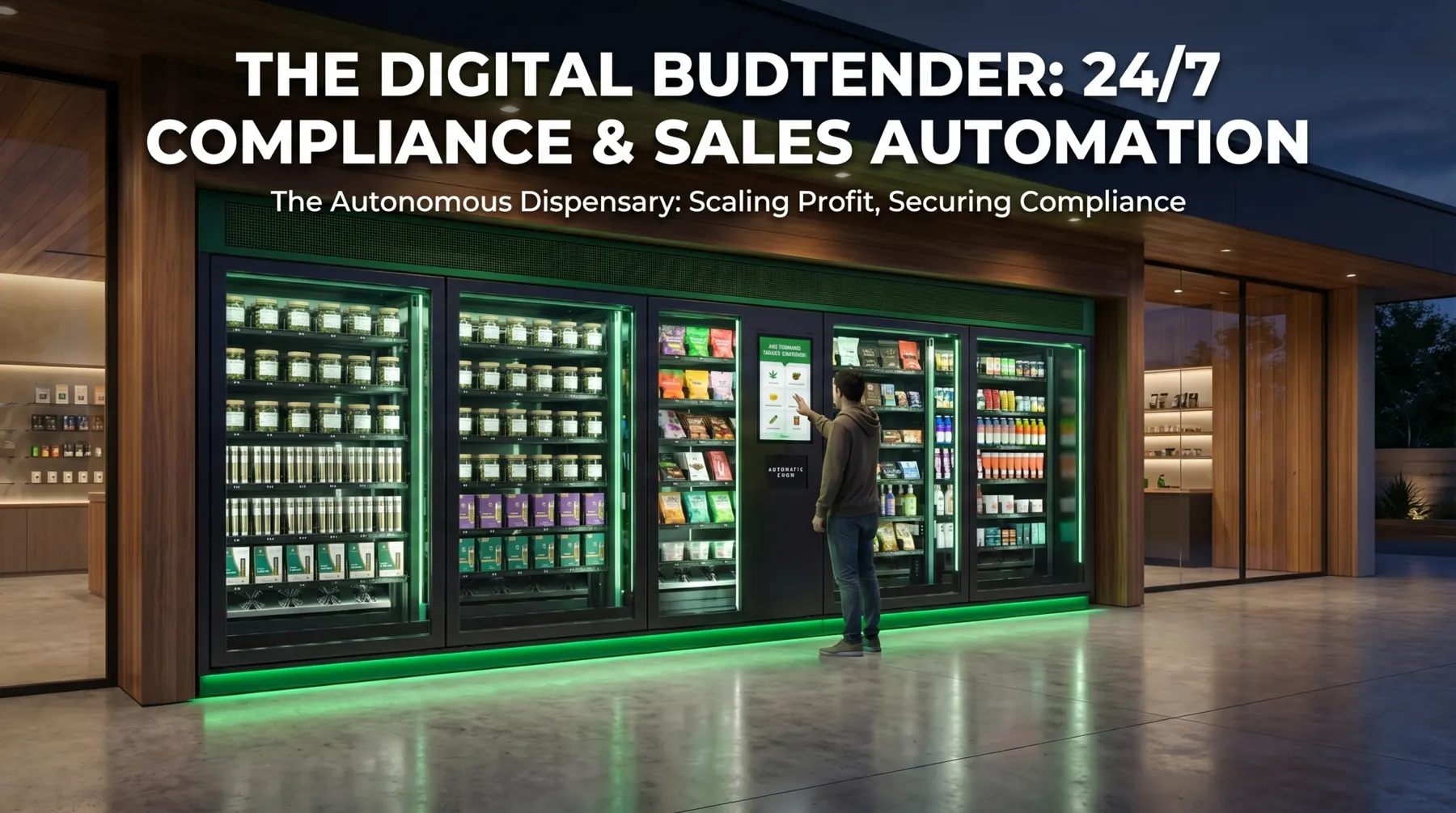
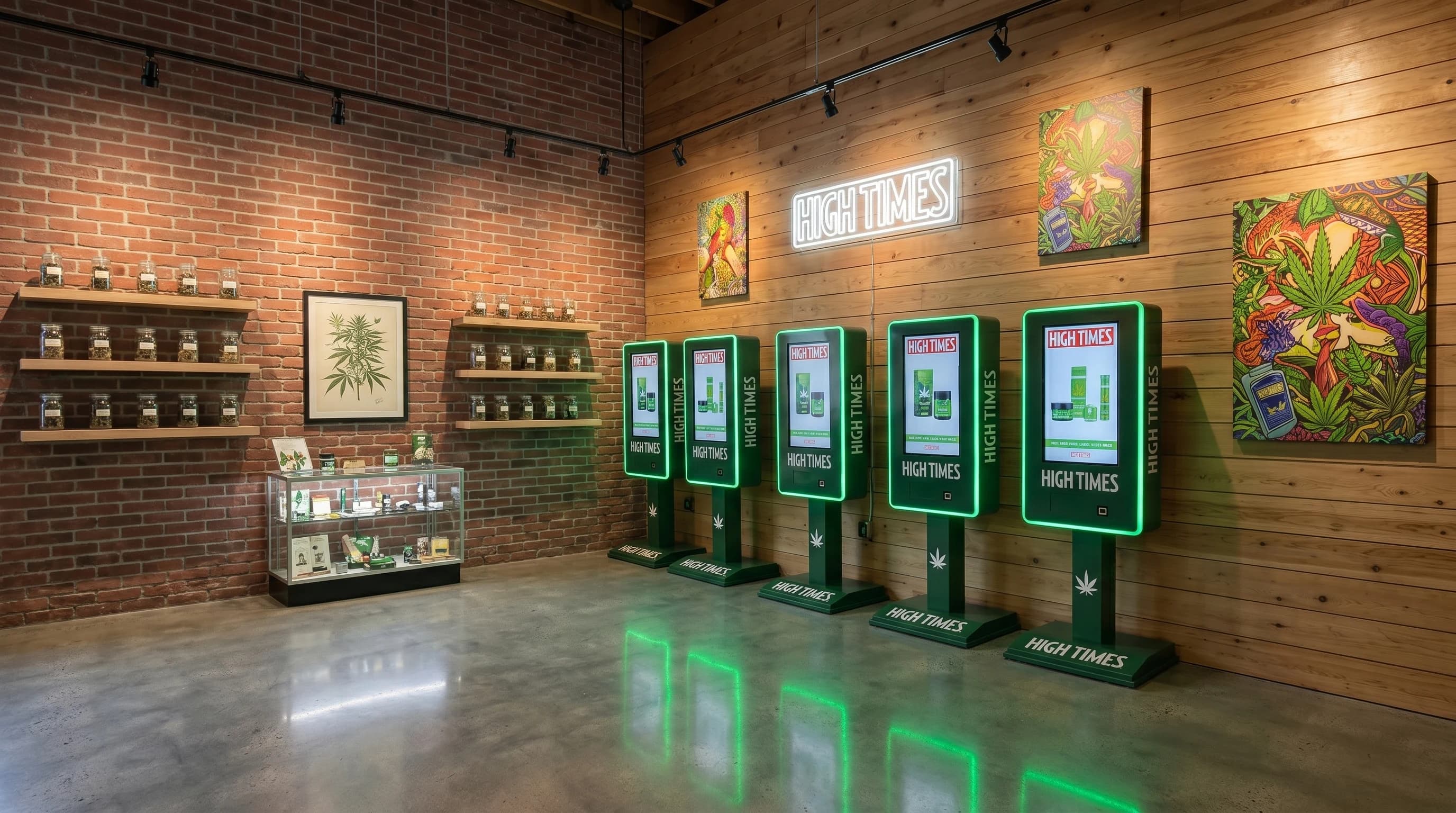
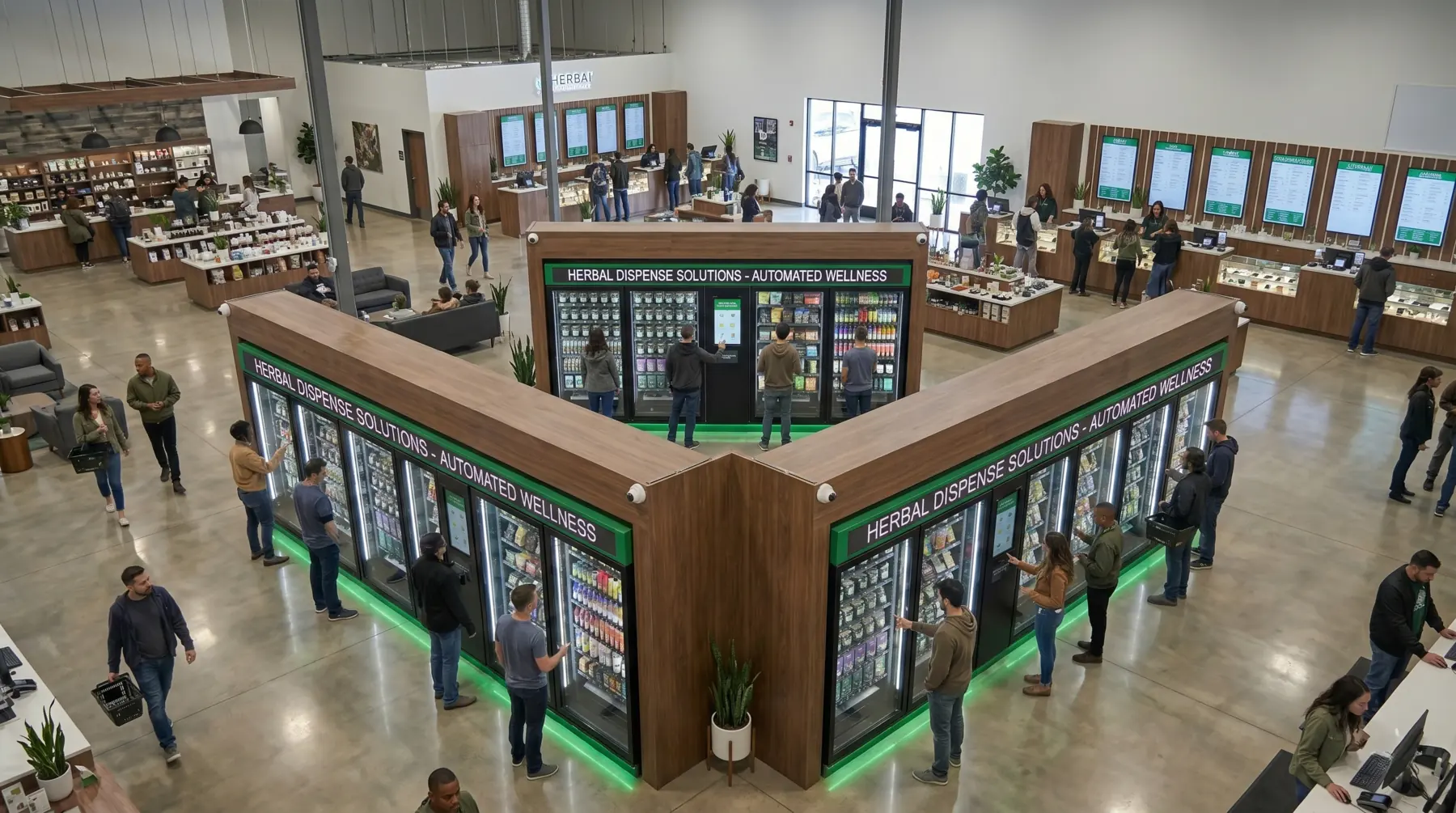
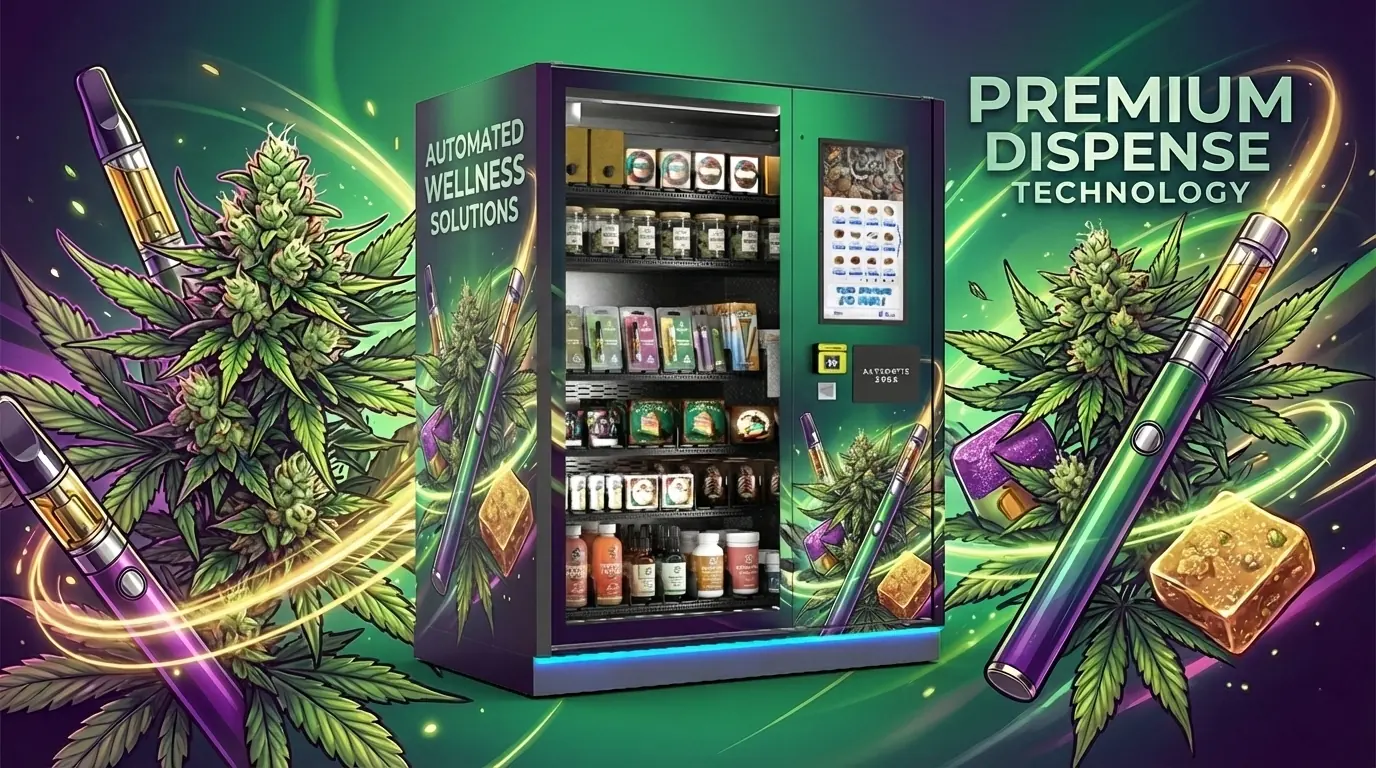
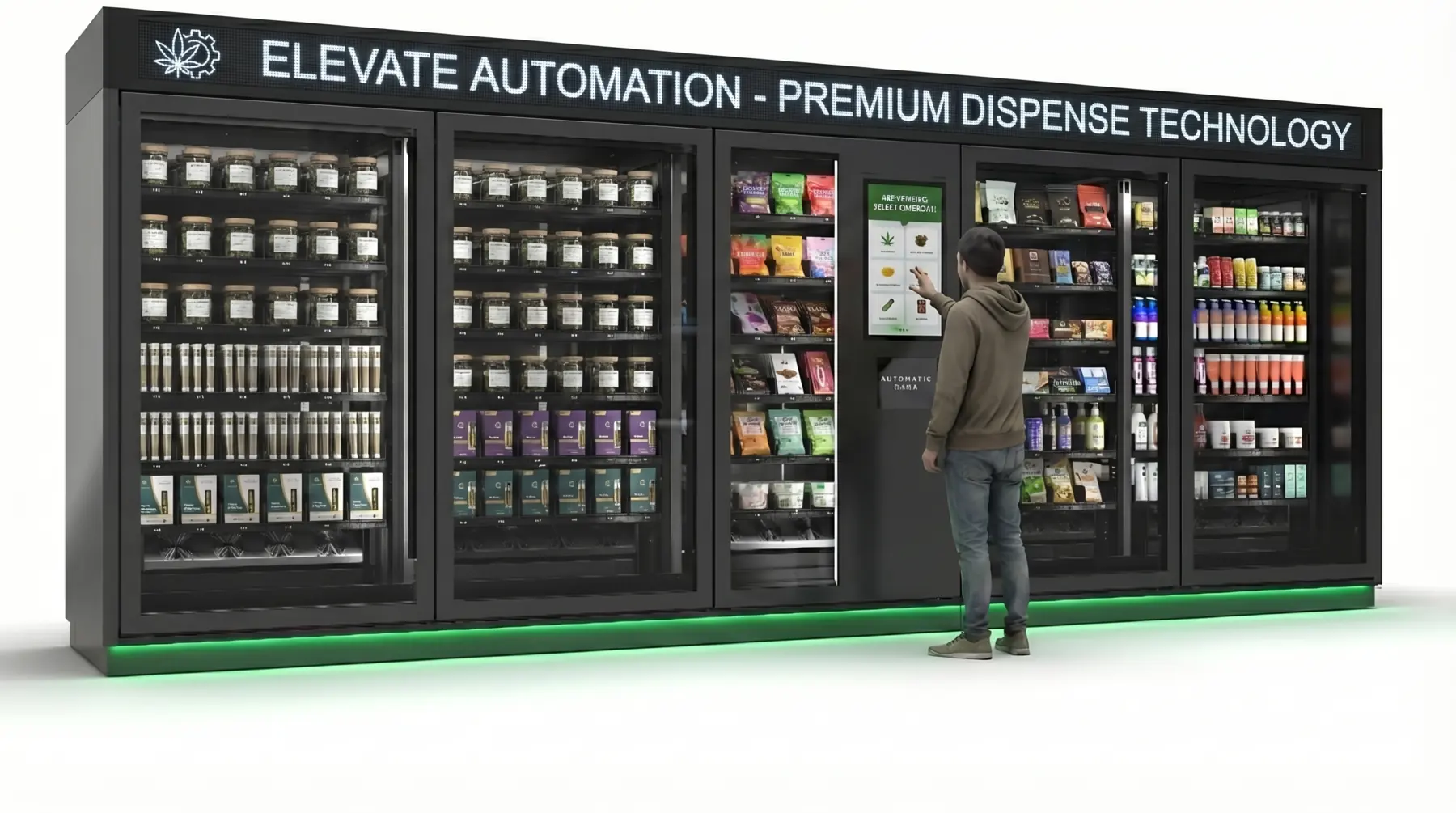
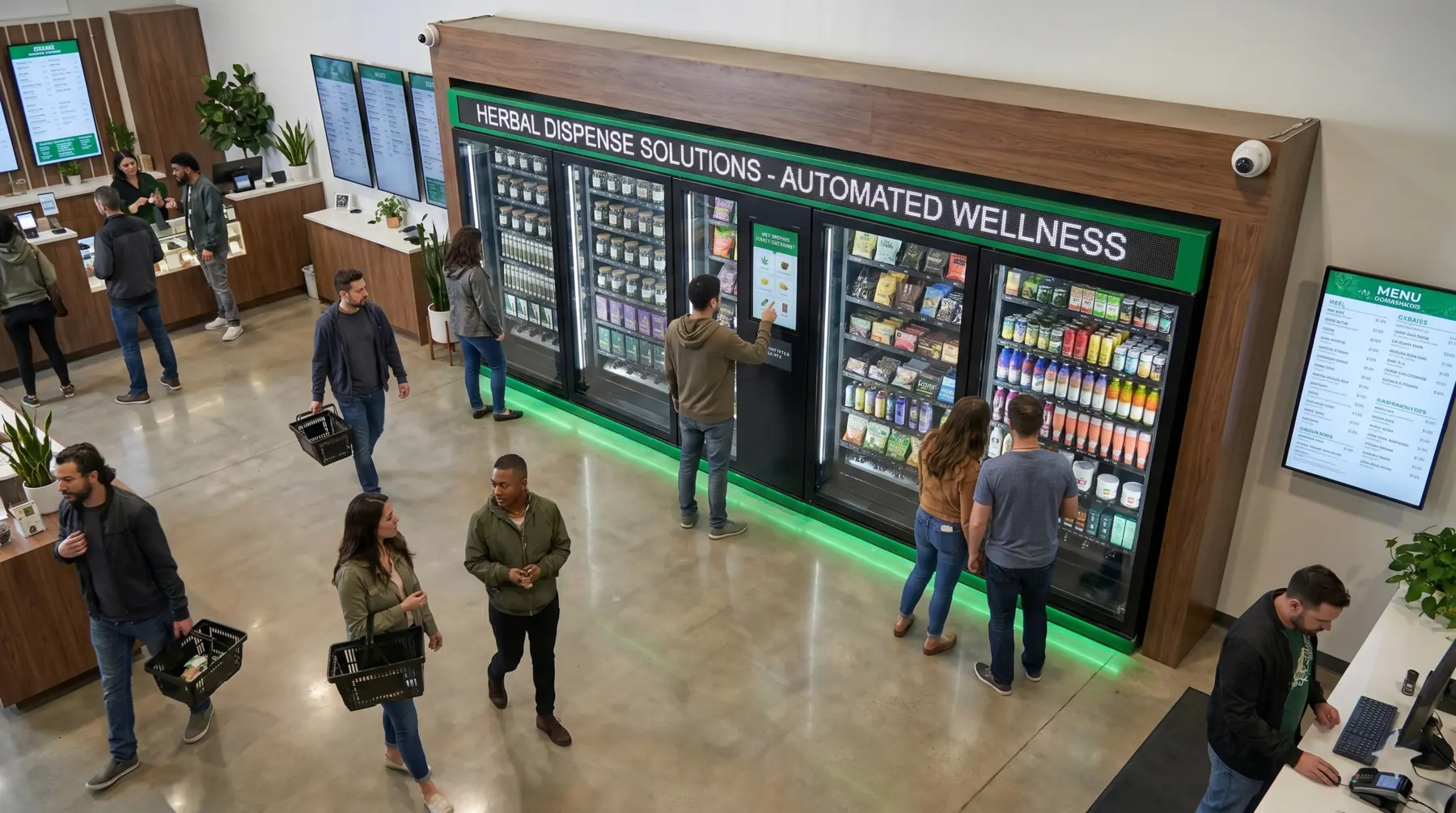
METRC-INTEGRATED DISPENSARY SELF-SERVICE FOR LICENSED CANNABIS RETAIL
A cannabis vending machine is an age-verified, controlled-access self-service cabinet used inside a licensed dispensary to sell packaged cannabis products such as pre-rolls, jars, vape cartridges, edibles, tinctures, tubes, and cartons under the same Metrc framework the store already operates. Licensed cannabis retail outlets are also known as dispensaries, cannabis shops, or cannabis stores (Wikipedia: Cannabis retail outlet).
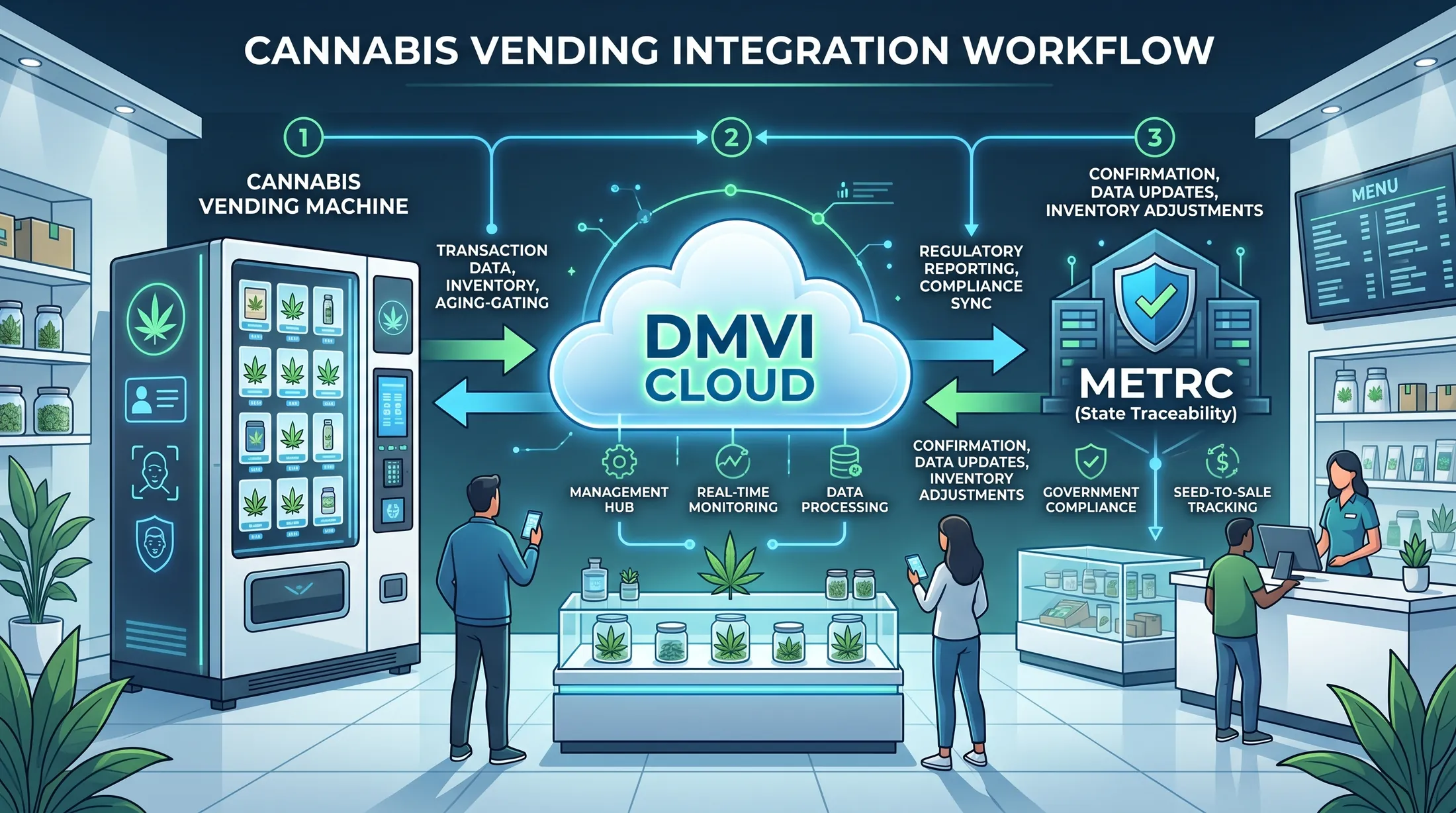
DMVI cannabis vending machines integrate directly with Metrc so the cabinet is not a parallel compliance layer. It is part of the existing reporting flow, giving dispensaries a faster repeat-purchase lane without abandoning the workflow the team already knows.
Pricing typically starts around $4,995 for the wall-mounted format and scales upward for refrigerated, locker-dispense, biometric, or larger custom and M-Series builds. The real questions are product fit, verification, payment path, and whether the machine helps the store move routine packaged sales more efficiently (Wikipedia: Vending machine).
How a Cannabis Vending Machine Fits the Dispensary
Every licensed dispensary already runs Metrc. The serious question is whether the vending cabinet plugs into that existing track-and-trace flow or forces budtenders into a parallel manual process every time someone buys a pre-roll from a machine instead of the counter.
Inventory decrement has to stay clean. Each transaction needs to report back through the same POS or ERP path that already pushes to Metrc so stock levels stay reconciled at the package-tag level.
Customer verification has to match the store and the jurisdiction. Phone-led verification, machine-side ID review, biometric age verification, or staffed handoff can all be part of the answer depending on what the deployment can actually support.
Reporting and exception handling have to stay in the same daily workflow. Failed verifications, jammed dispenses, refunds, and after-hours lockouts should feed back into the same close routine the store already runs.
Product fit still matters. Pre-rolls, jars, cartridges, edibles, tinctures, and cartons do not all behave the same way, so the cabinet has to match the actual mix the dispensary plans to sell.
Legal review still matters. Cannabis vending is not blanket plug-and-play. State rules, local permissions, and the licensed retail workflow still govern where, how, and to whom the machine can dispense.
THE MACHINE SHOULD FIT THE METRC WORKFLOW YOUR STORE ALREADY USES
How the Machine Fits Into Your Current Metrc Workflow
The machine works when it looks like another dispensary sales lane rather than a separate system the team has to defend by hand. DMVI's Metrc integration is designed to fit the reporting path the store already uses, so product movement, verification, reporting, and exceptions stay inside one operating model.
What the Machine Has to Do
Once the Metrc fit is clear, the cabinet still has to match the way your dispensary actually sells packaged cannabis.
Match the actual product mix
Pre-rolls, jars, tubes, cartridges, edibles, tinctures, and cartons do not all behave the same way. The cabinet has to match the physical reality of the SKU instead of forcing every product into one compromise path.
Handle age and identity verification properly
Phone-led verification, machine-side ID review, biometric age verification, or staffed handoff all need to fit the store, the jurisdiction, and the customer journey the operator can actually defend.
Work as a real repeat-purchase lane
The strongest use case is usually straightforward packaged purchases, where repeat customers can move faster without tying up the budtenders who should be focused on higher-touch consultations.
Fit the existing reporting handoff
The cabinet should report back through the same POS or ERP channel that already pushes to Metrc so inventory decrement and sales reporting stay inside the same store workflow.
Keep exceptions visible
Jams, failed scans, cancelled transactions, refunds, and after-hours lockouts need a clean operator path so inventory, reporting, and customer trust do not drift apart.
Respect the cannabis payment reality
Payment handling has to be scoped around the cannabis retail environment before the cabinet ships. That usually means debit-oriented or other approved paths, not pretending ordinary credit assumptions apply unchanged.
Questions to Answer Before You Buy
The best cannabis vending projects start with straight answers on Metrc fit, cabinet path, verification, product handling, payment, and failure recovery.
Will this fit the Metrc workflow we already use?
The first question is whether the machine can sit inside the store's existing reporting and inventory process without creating duplicate steps or leaving staff to clean up gaps by hand.
Is this the right machine path?
The store still needs to confirm whether the job points toward a wall-mounted machine, a larger smart cabinet, a locker-dispense format, refrigeration, or a fuller custom build. That affects serviceability, hardware, and how credible the rollout plan really is.
How will customer verification work?
Phone-led, machine-led, biometric, staff-assisted, or another controlled path each creates a different experience. The right answer depends on the store layout, the jurisdiction, and how the dispensary wants repeat purchases to move.
Can it handle the product mix we actually sell?
The dispensary needs to know whether the machine can handle the real package mix, how much usable capacity it has, and whether the dispense path is appropriate for the formats going into the cabinet.
What happens when something fails?
Serious projects need clean answers for jams, failed scans, cancelled transactions, reporting interruptions, overrides, payment exceptions, and any moment where inventory or customer trust could drift out of sync.
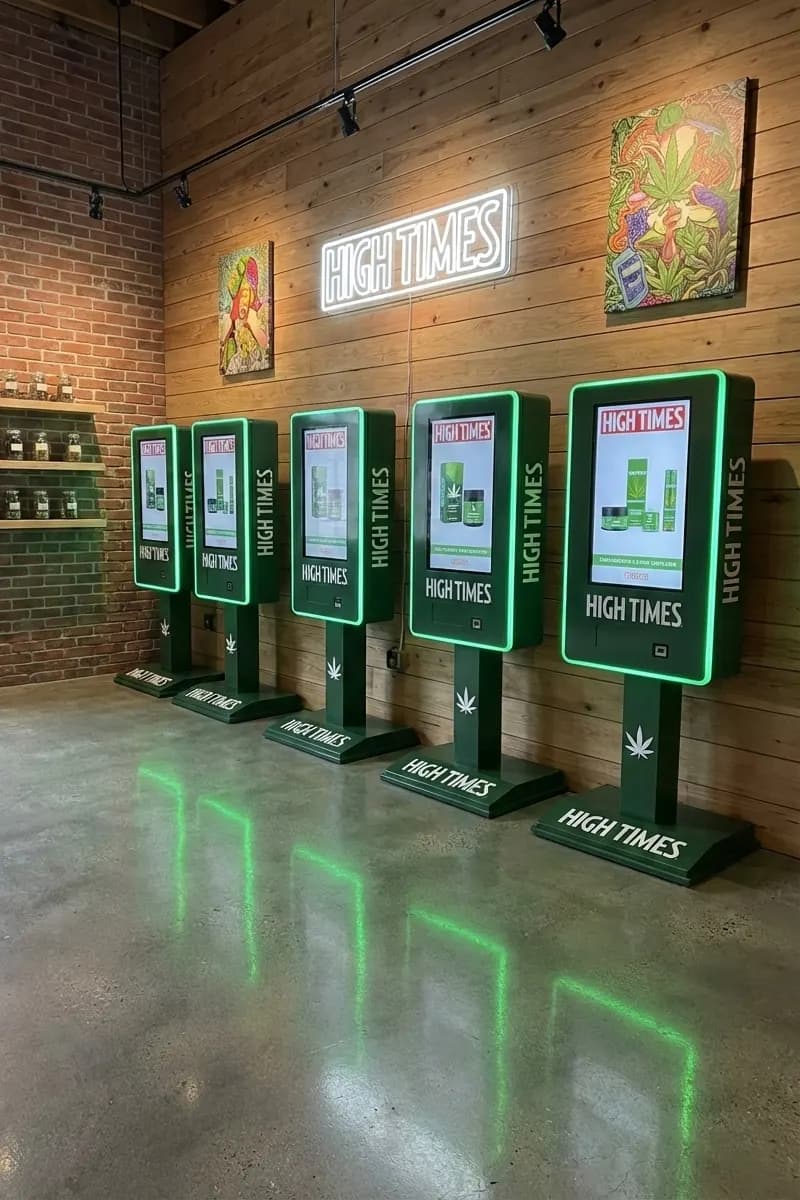
Why Dispensaries Deploy Cannabis Vending
When the machine fits the Metrc workflow and the store workflow, the upside is straightforward: faster sales, better control, and less pressure on the front counter.
Faster repeat-purchase checkout
Regulars buying the same pre-roll twice a week no longer have to queue behind a first-time consultation. The line decongests, and staff are freed for the conversations that actually need a human.
Less front-counter congestion
A controlled self-service cabinet can absorb the most repetitive transactions so the store feels organised at peak instead of understaffed.
More budtender time for real selling
When the machine handles more low-complexity purchases, staff can focus on consultations, upsell opportunities, customer education, and exception handling instead of repetitive counter work.
Better control over packaged cannabis sales
A well-scoped deployment can give owners tighter control over access, verification, transaction flow, and inventory-sensitive product movement than a purely manual counter process.
Extended-hour and lobby-adjacent retail potential
Where the licence and placement allow, the machine can support extended retail windows or specific airlock and lobby placements that a fully staffed counter cannot always run economically.
See Whether Cannabis Vending Fits Your Store
If you are evaluating cannabis vending for a real dispensary deployment, DMVI can help review cabinet fit, Metrc integration, verification, payment flow, product mix, and cost range before you commit to the wrong setup.
FAQs
A wall-mounted cannabis vending machine starts around $4,995 in the DMVI range. Biometric age verification, refrigerated cabinets, larger touchscreen builds, and M-Series configurations range higher depending on the cabinet format, Metrc integration scope, payment hardware, and installation brief.
Cannabis vending is not blanket plug-and-play. Legal viability is decided state by state, municipality by municipality, and licence type by licence type. DMVI can scope the cabinet, workflow, and software fit, but the licensed dispensary owns the legal posture and has to confirm permissibility before deployment.
Cannabis vending machines can be scoped around packaged regulated retail SKUs such as pre-rolls, flower jars, vape cartridges, disposable vapes, edibles, tinctures, topicals, and multi-pack cartons. Cabinet format — coil, elevator, locker, or refrigerated — should match the physical reality of the SKU rather than forcing every product into the same path.
DMVI cannabis vending machines integrate with Metrc through the dispensary's existing POS or ERP path. Each machine transaction reports through the same channel that already pushes to Metrc, so inventory decrement and sales reporting stay tied to the store's existing workflow rather than living in a parallel manual system.
A marijuana dispensary vending machine is an age-verified, controlled-access cabinet inside a licensed cannabis retail outlet that sells packaged cannabis products via self-service. It works inside the same Metrc framework the dispensary already uses, with the verification path shaped around the jurisdiction and the store workflow.
Yes. DMVI sells cannabis vending machines directly, including wall-mounted units starting around $4,995, custom builds with refrigerated or locker dispense, and larger M-Series configurations for premium dispensary placements. The right cabinet still starts with the workflow, product mix, verification path, and jurisdiction review.