
Vending Industries
DMVI solutions are not tied to one narrow category. We support automated retail, smart vending, lockers, and controlled-access self-service programs across multiple sectors where product access, customer flow, and operational control all matter.
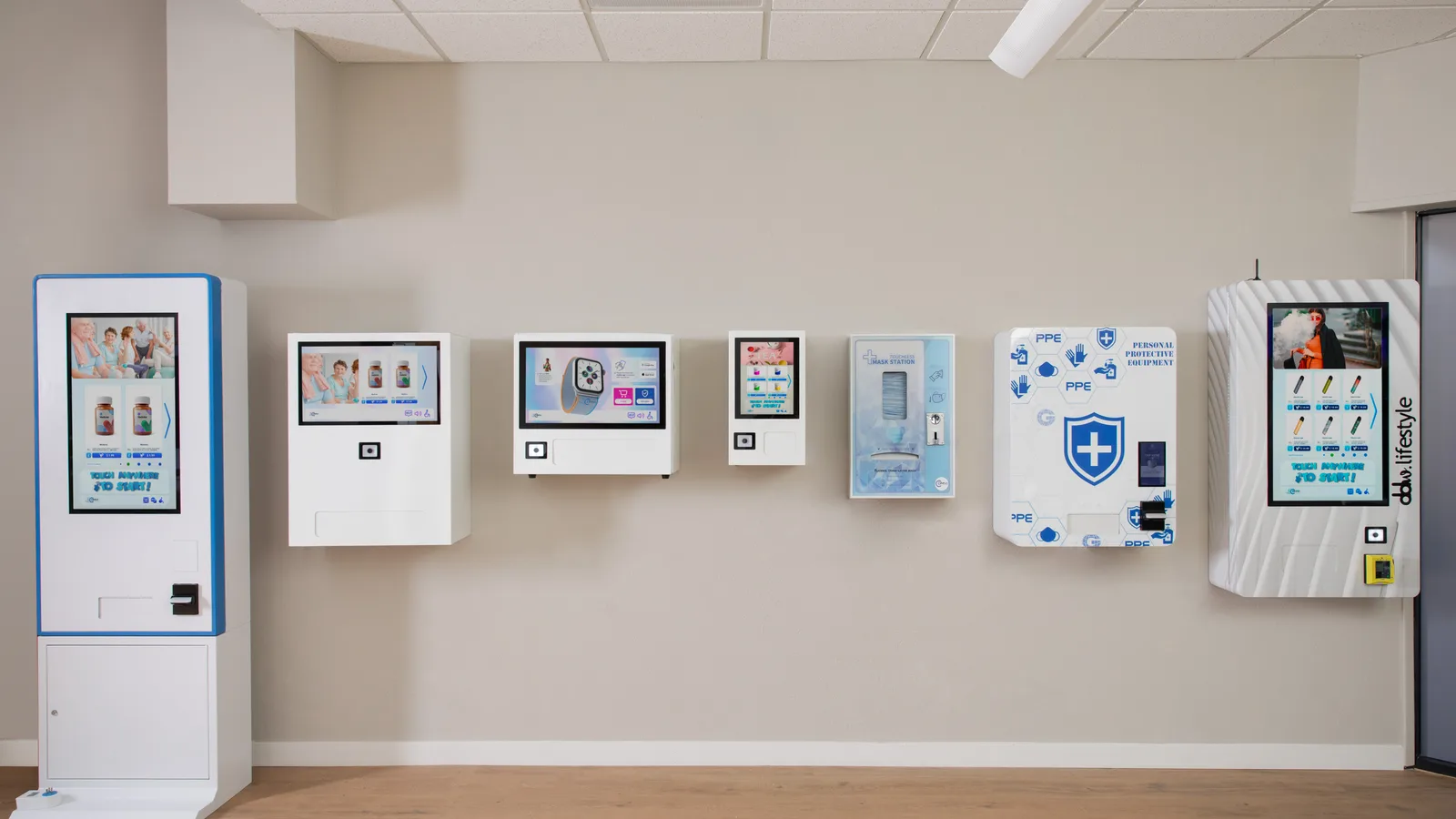
Browse by industry
Popular DMVI industry pages
If you already know the kind of business, venue, or environment you care about, start here. These are the industry pages people are most likely to want first when narrowing down the right DMVI solution.
Drink vending machines
Refrigerated smart vending for bottled drinks, canned drinks, premium beverages, and broader cold-drink programmes where product mix and merchandising matter.
Coffee vending machines
Bean-to-cup and hot-drink self-service for offices, hospitality, campuses, and workplace environments that need a dedicated coffee lane rather than generic snack vending.
Smart snack and soda vending machines
A cleaner food-and-beverage angle for offices, hotels, campuses, gyms, and public venues that need touchscreen, cashless snack-and-drink retail.
Digital vending machines
A category page for buyers searching the broader touchscreen-plus-software concept rather than starting with one narrow vertical or product format.
Cupcake vending machines
Bakery-led automated retail with gentler product handling, touchscreen merchandising, and high-traffic grab-and-go placement.
Pickleball vending machine
Compact wall-mounted retail for clubs, courts, resorts, and tournament venues that want player essentials on demand without staffing every small sale.
Pokémon vending machine
Three-format trading-card retail for booster packs, boxed products, touchscreen merchandising, and collectible-led unattended sales.
Toy & collectible vending machines
Impulse-led retail for cards, figures, boxed collectibles, and fan merchandise in airports, arcades, malls, and conventions.
Jewelry vending machine
Premium automated retail for boutique jewelry makers, giftable accessories, hospitality venues, and brands that want a more luxurious self-service presentation.
Towel vending machines
Amenity monetisation and towel-shrink control for hotels, gyms, spas, pools, and premium leisure environments.
Protein powder vending machines
Fresh-mixed shake and performance-beverage automation for gyms, campuses, apartment communities, and wellness-focused locations.
Hair vending machines
Beauty retail automation for wigs, weave, accessories, and branded merchandising in salons, stores, campuses, and travel retail.
Luxury vending machines
Premium unattended retail positioned around DMVI’s M-Series platform for hotels, flagship venues, high-end merchandise, and brand-led automated retail experiences.
Cannabis vending machines
Regulated dispensary automation with Metrc-aware workflow thinking, controlled access, and faster repeat-purchase retail flow.
Vape vending machines
Age-aware, cashless wall-mounted retail for bars, casinos, lounges, and nightlife venues that want a compact high-margin add-on.
Liquor vending machines
Age-verified alcohol retail for licensed environments that need controlled access, cashless checkout, and a deployment plan grounded in real compliance workflow.
Narcan vending machines
Public-health and harm-reduction deployments for counties, hospitals, and nonprofits that need multilingual access, local-resource support, and cloud-managed oversight.
Harm reduction vending machines
A broader institutional page for counties, health systems, universities, and community organisations evaluating naloxone access, approved supplies, and managed public-health distribution.
Industry fit is really workflow fit
The same underlying DMVI platform can serve very different environments, but only if the deployment is scoped around the reality of that sector. Product characteristics, customer flow, access control, staffing model, and reporting needs all change what the right configuration looks like.
That is why we treat market sectors as a commercial lens rather than a rigid template. The goal is to identify where automated retail, smart vending, lockers, or controlled self-service can solve a real problem in the field.
If you already know the environment and simply need to buy vending machines, the broader catalogue page is the quickest way to compare the main DMVI machine formats before narrowing by sector.
If the sector is still secondary and the bigger question is how DMVI approaches touchscreen-led self-service more generally, start with the digital vending machines page before diving into the vertical pages.
Strong reasons to scope by industry
- Different user types and access rules
- Different temperature, storage, and custody needs
- Different software, reporting, and compliance expectations
Industries where DMVI solutions can fit well
These are not the only categories we can support, but they are representative of the environments where unattended retail, controlled access, and connected self-service tend to make commercial sense.
Retail & convenience
Smart vending, automated retail cabinets, and controlled-access programs for modern store environments.
Healthcare & harm reduction
Programs where controlled distribution, product access, and auditability matter more than generic vending copy.
Cannabis & age-restricted retail
Use cases where compliance, ID verification, custody, and operational control are part of the commercial brief.
Transportation & high-traffic venues
Deployments that need compact self-service, resilient hardware, and clear customer journeys under heavy usage.
Education & campus environments
Student-facing and staff-facing programs where availability, cashless flow, and unattended access are valuable.
Workplace & employee access
PPE, supplies, devices, food collection, and locker-led workflows for teams, facilities, and distributed operations.
Hospitality & food service
Guest-facing and back-of-house self-service concepts where speed, convenience, and labour efficiency matter.
OEM & white-label programs
Projects where the operator needs a configurable platform and strong branding control rather than an off-the-shelf look.
Sports, leisure & entertainment
Club, resort, venue, and attraction deployments where unattended retail can support impulse buys, amenities, and branded merchandise.
How DMVI scopes an industry deployment
- What is being dispensed or stored? | The product mix drives cabinet format, temperature, delivery method, replenishment logic, and physical layout.
- Who needs access — and under what rules? | Public access, employee access, authorised-user access, and age-restricted flows all require different control models.
- What environment will the system live in? | A hospital, campus, c-store, transit site, hotel, and warehouse all impose different operating realities on the same technology.
- What software and reporting matter? | Payments, telemetry, inventory visibility, route logic, compliance evidence, and user permissions vary by sector and workflow.
- What commercial model is the operator pursuing? | A revenue-driven unattended retail program behaves differently from an internal-distribution or controlled-access deployment.
Need help mapping the right sector play?
If you know the environment but are not yet sure which hardware, access model, or software layer fits, DMVI can work backwards from the workflow and help shape the right commercial approach.
FAQs
The strongest fit is where self-service access creates a real operational or commercial advantage: retail, higher-control distribution, workplace supply, campus environments, transportation, hospitality, and regulated or age-restricted categories.
No. The sector helps frame the conversation, but the actual solution is scoped around the workflow, the product characteristics, the environment, and the control requirements rather than a generic template.
Yes. Some projects are best approached as white-label or deeply branded deployments where the hardware, UX, and commercial presentation need to align with the operator’s own brand strategy.
The most useful inputs are what you want to dispense or store, who needs access, whether any compliance rules apply, how many sites are in scope, and what software or reporting needs matter operationally.
The most profitable categories usually combine strong turnover with healthy gross margin: packaged drinks, salty snacks, protein bars, healthier convenience items, impulse accessories, and niche specialty products that suit the location. The right answer depends less on a universal best-seller and more on matching the assortment to the audience, the daypart, and the environment.
The newer opportunities are generally in automated retail rather than old-school snack-only routes: controlled-access dispensing, premium unattended retail, health and wellness programs, fresh-food concepts, pickup lockers, campus essentials, sports and leisure merchandise, and location-specific convenience programs. Growth tends to come from environments where labour is tight, access matters, or customers want fast self-service beyond drinks and crisps.
The strongest momentum is typically in hospitality, campuses, workplaces, transport hubs, health and wellness, specialty retail, and higher-control sectors where access, reporting, or compliance matter. In practice, the common thread is not the label of the industry but whether self-service improves convenience, staffing efficiency, inventory control, or revenue capture.
Start with the workflow rather than the cabinet. Product size, assortment breadth, age or user controls, replenishment model, placement footprint, and brand presentation all shape the right format. A compact wall-mounted machine, a smart vending cabinet, a luxury M-Series build, or a locker-led solution can all be correct — but for different operational reasons.