Harm Reduction Vending Machines for Public-Health Programs
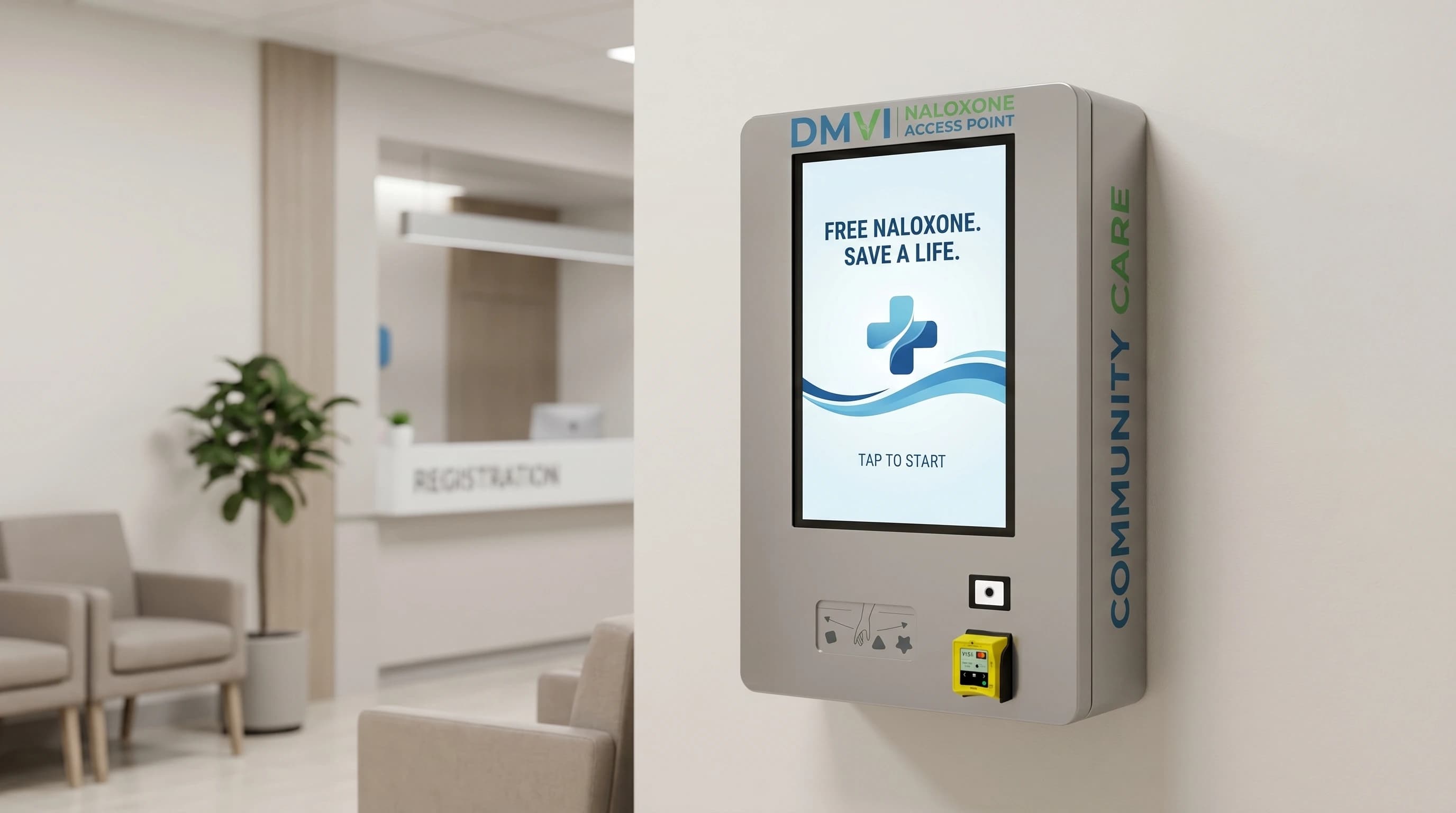
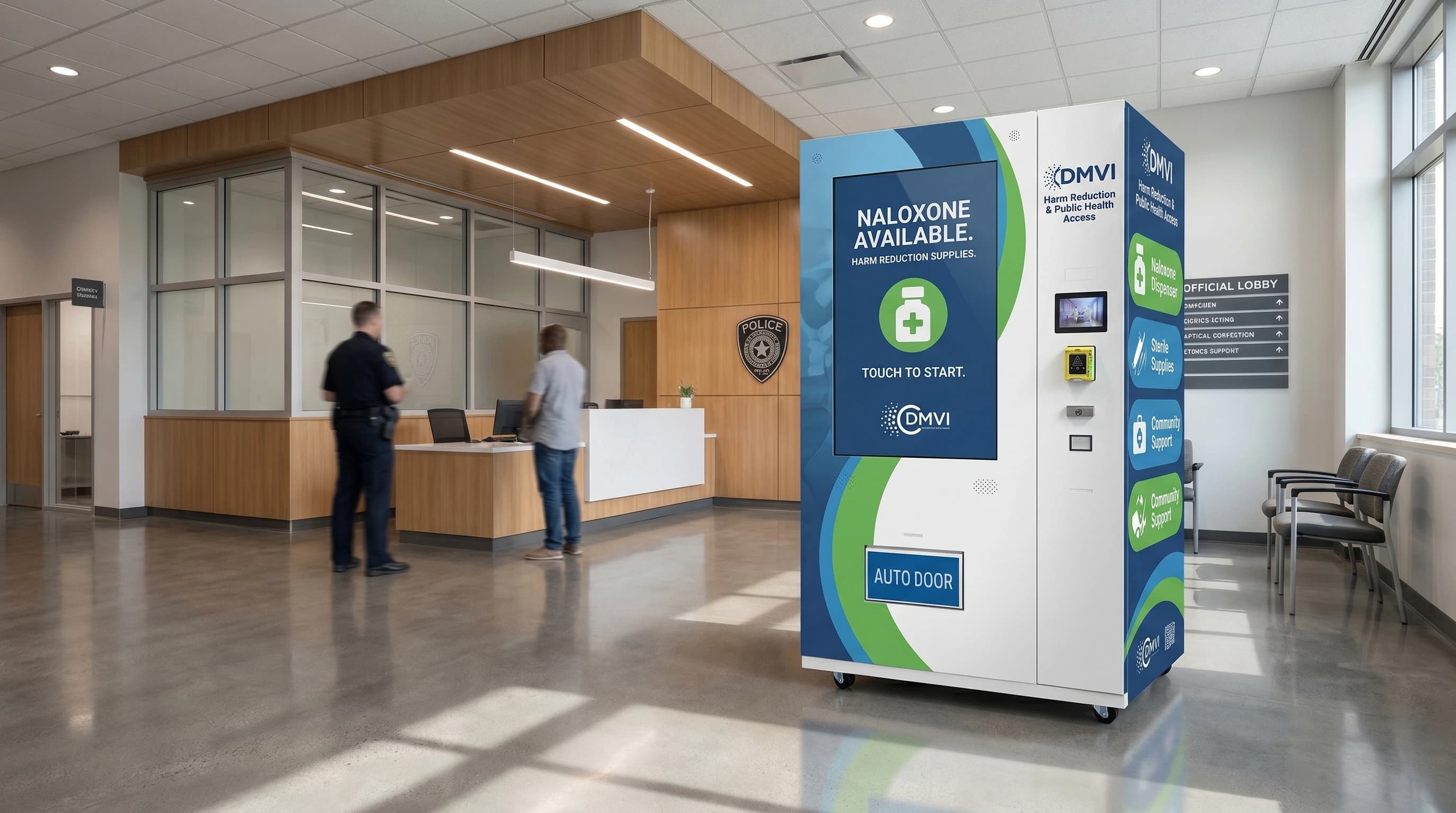
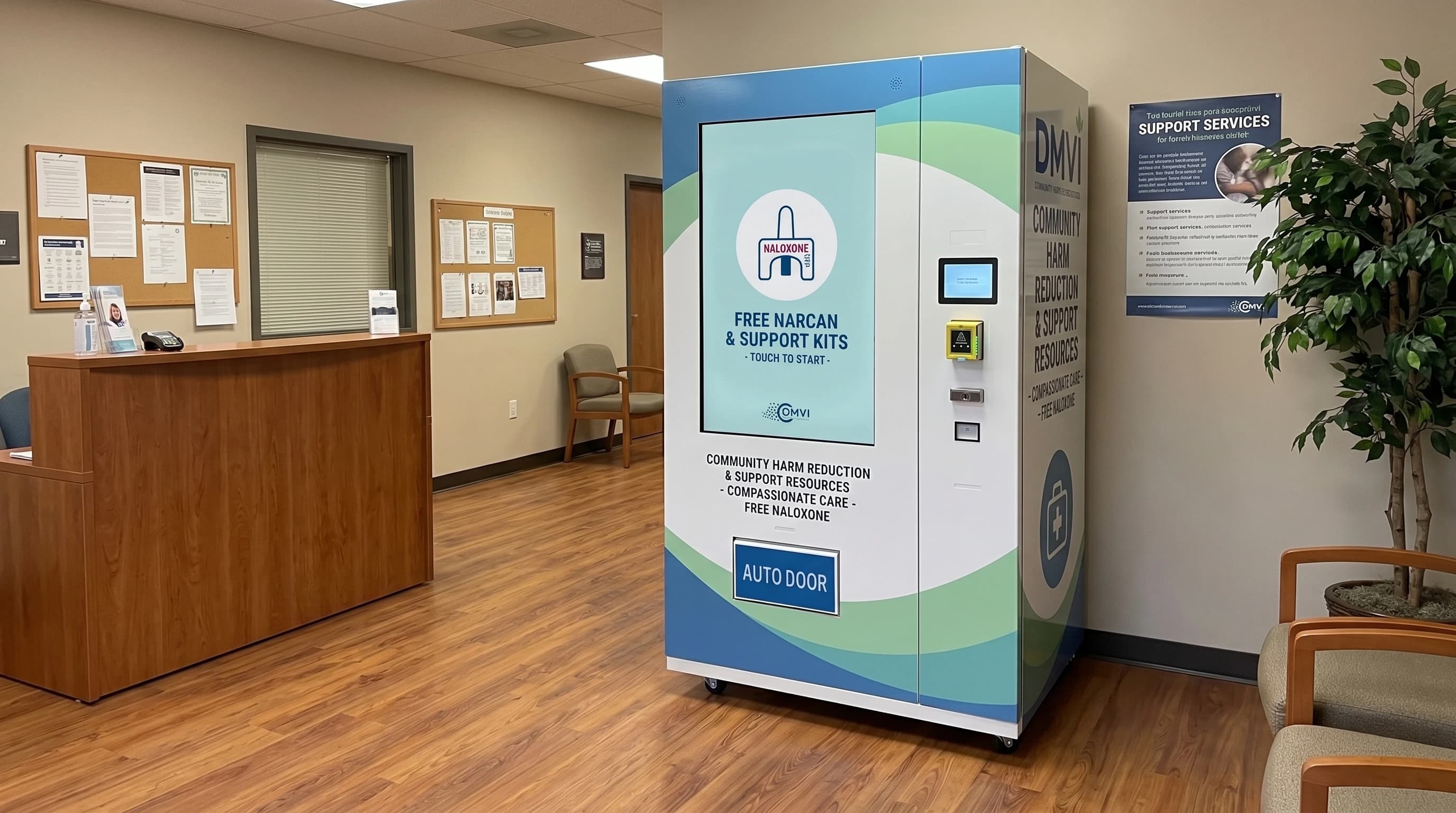
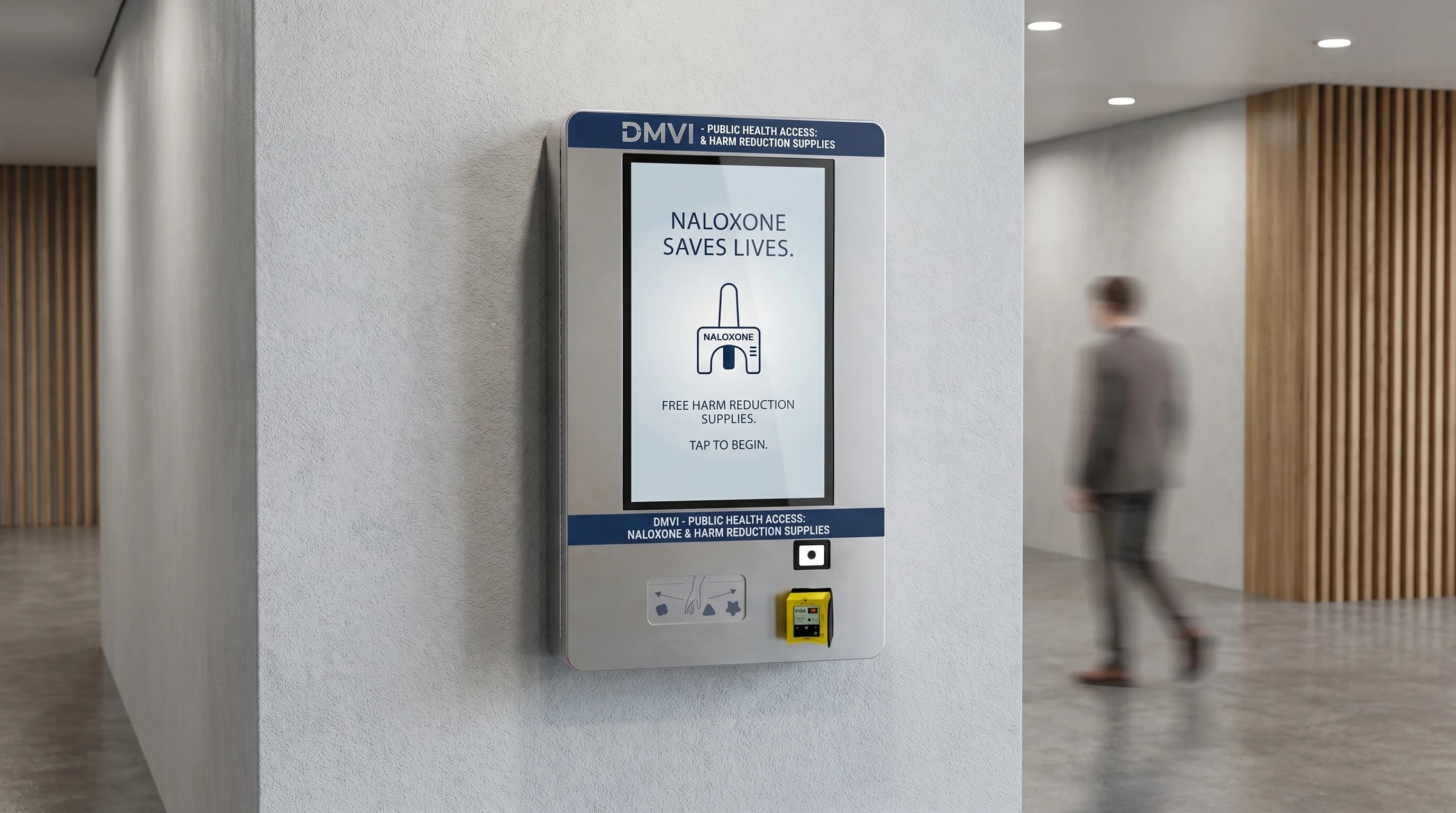
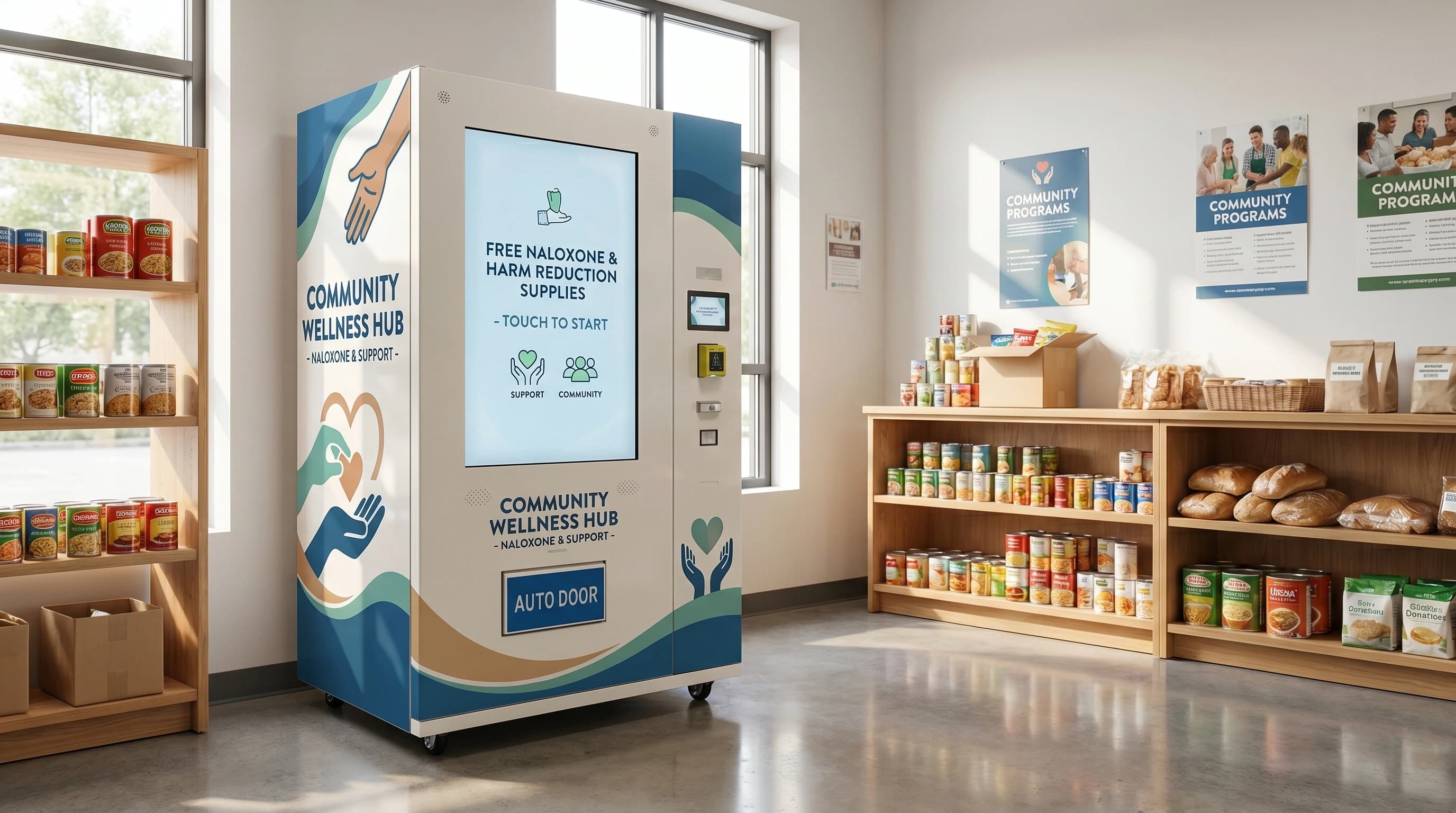
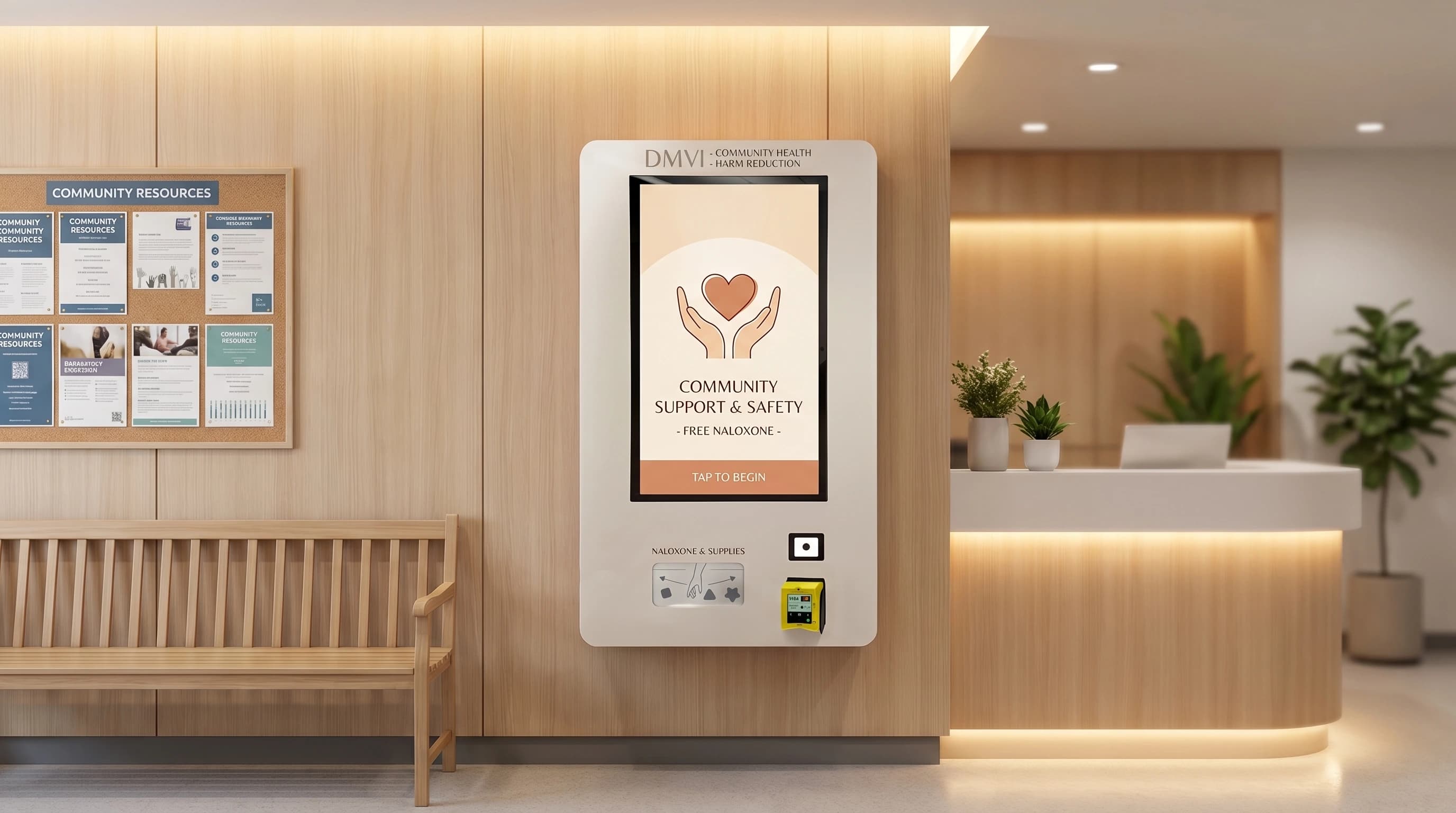
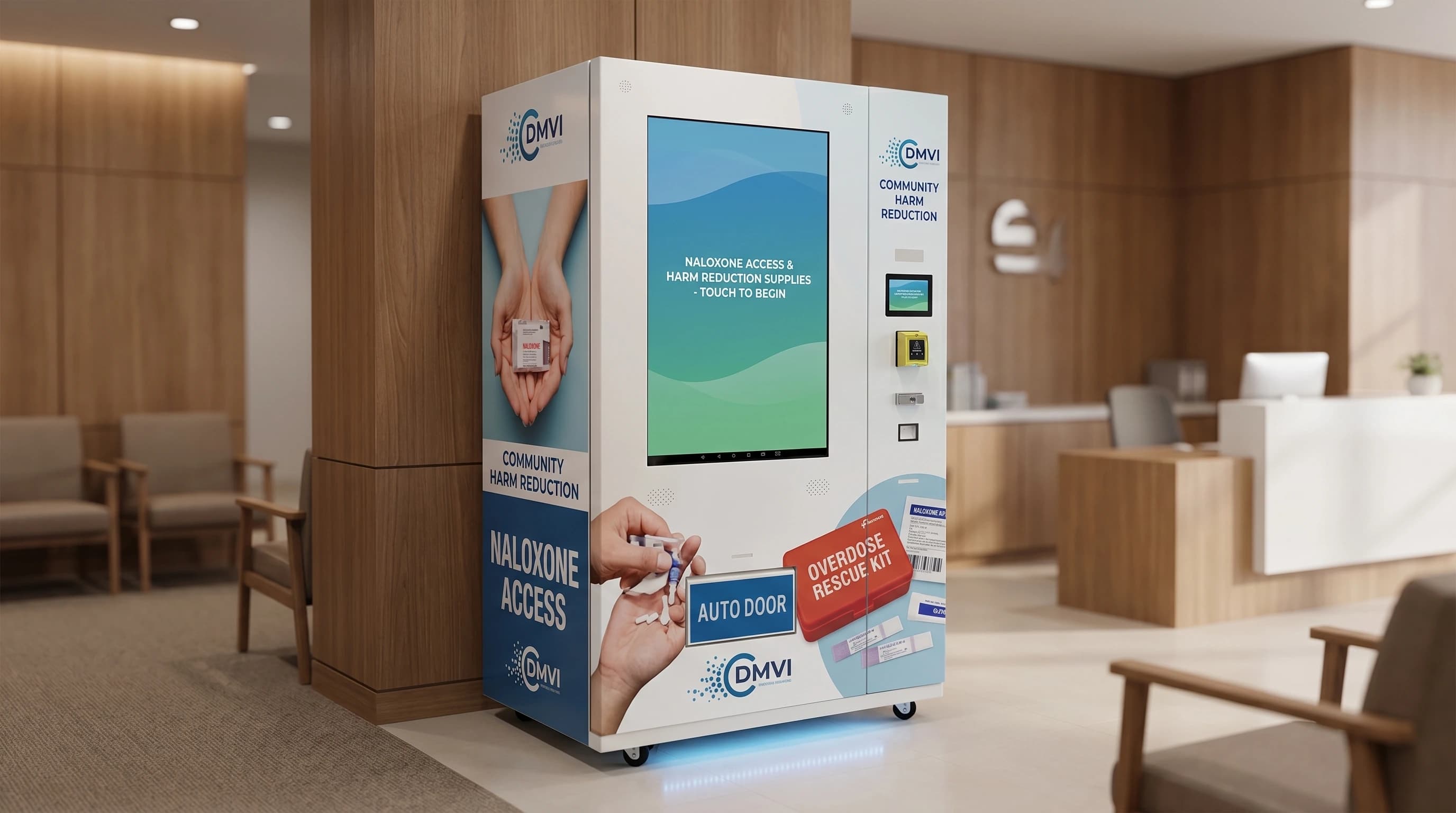
A harm reduction vending machine is an institutionally-managed self-service cabinet used by counties, public-health departments, hospitals, universities, and nonprofits to provide lower-barrier access to approved harm-reduction supplies — most commonly naloxone (Narcan), but also fentanyl test strips, hygiene items, wound-care supplies, safer-use materials, and educational resources. Naloxone is a safe, life-saving medication that can reverse an opioid overdose — including overdoses involving fentanyl, heroin, and prescription opioids — when given in time, and it is now available over the counter in all 50 US states (CDC). A harm-reduction vending machine extends that over-the-counter access into venues where stigma, hours, or geography otherwise block someone from carrying it.
This page is for institutional buyers evaluating a program. If the specific need is a naloxone-anchored procurement, see the companion Narcan vending machines page. If the question is the software layer behind the cabinet, see DMVI's harm-reduction vending software resource on VendingTracker.
What institutions should evaluate before launching a harm-reduction vending program.
The deployments that work are planned like public-health programs, not equipment purchases. Buyers — counties, hospitals, public-health departments, universities, nonprofits — usually need clear answers in five areas:
- Products in scope: Naloxone is typically the anchor SKU. Many programs also evaluate fentanyl test strips, wound-care supplies, hygiene items, safer-use materials, and printed educational content. The cabinet has to fit the actual SKU mix and packaging dimensions, not a generic vending shape.
- Access model: Free access, anonymous access, site-specific controls, or grant-funded distribution. The model decides the credentialing requirement, the on-screen flow, and the reporting needs.
- Replenishment ownership: A harm-reduction cabinet that runs empty stops being useful. Operators need clarity on inventory visibility, replenishment cadence, vendor contract, and stock-out alerts before the cabinet ships.
- Multilingual UI and content governance: Diverse community settings need on-screen flow in the user's language. Program leadership needs version control on the educational content the cabinet displays.
- Reporting and oversight: Cloud-managed visibility (stock, dispenses, deployment health) is what turns a single cabinet into a program that funders can defend.
Common institutional use cases.
County and public-health-department programs
Agencies running grant-backed naloxone access, fentanyl test strip distribution, and wound-care provisioning who want a managed access point with auditable dispense reporting.
Hospital and health-system harm-reduction programs
Emergency departments, addiction-medicine clinics, and outpatient programs deploying naloxone access in lobbies, parking structures, and discharge corridors.
University and college campus programs
Student-health, counseling, and residential-life programs deploying naloxone in dorms, student unions, libraries, and campus parking.
Nonprofit and community-organization programs
Syringe-services programs, drop-in centers, shelters, and community-health partners running grant-funded distribution.
Workplace and large-employer programs
Construction, manufacturing, hospitality, and logistics employers placing naloxone access on site as part of an occupational-health program.
Narcan & Naloxone Access Gallery
Showing 20 of 25
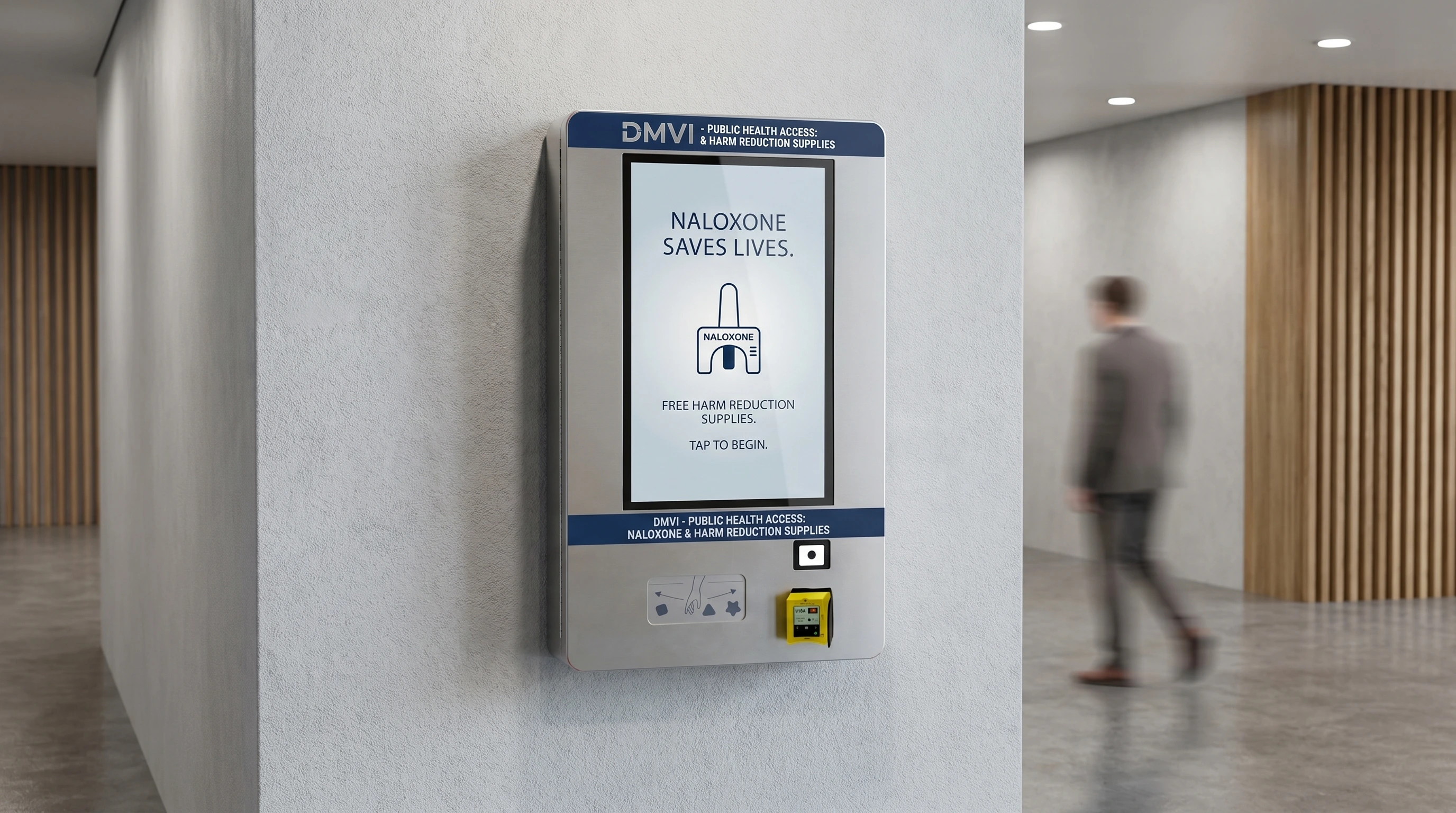
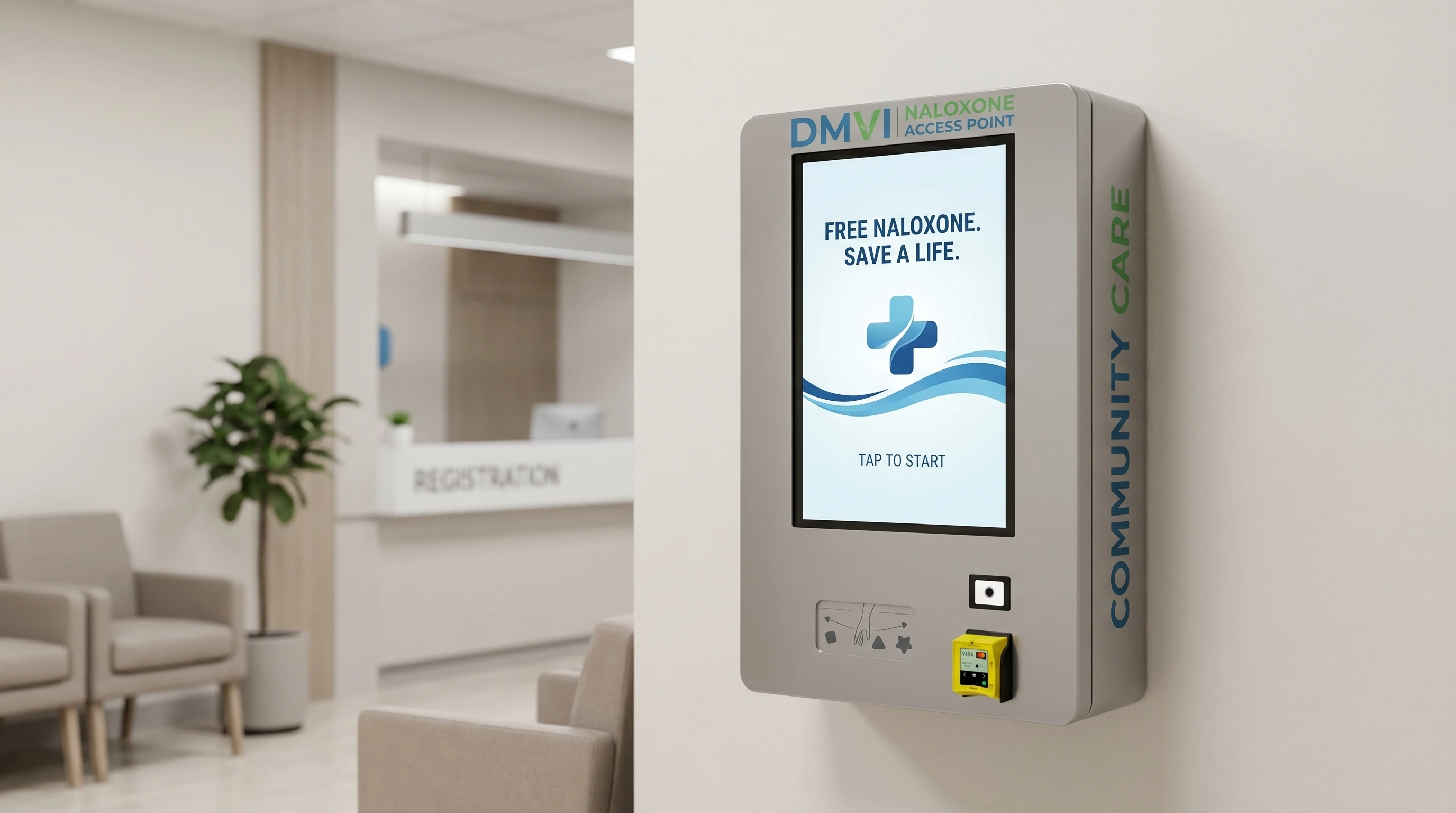
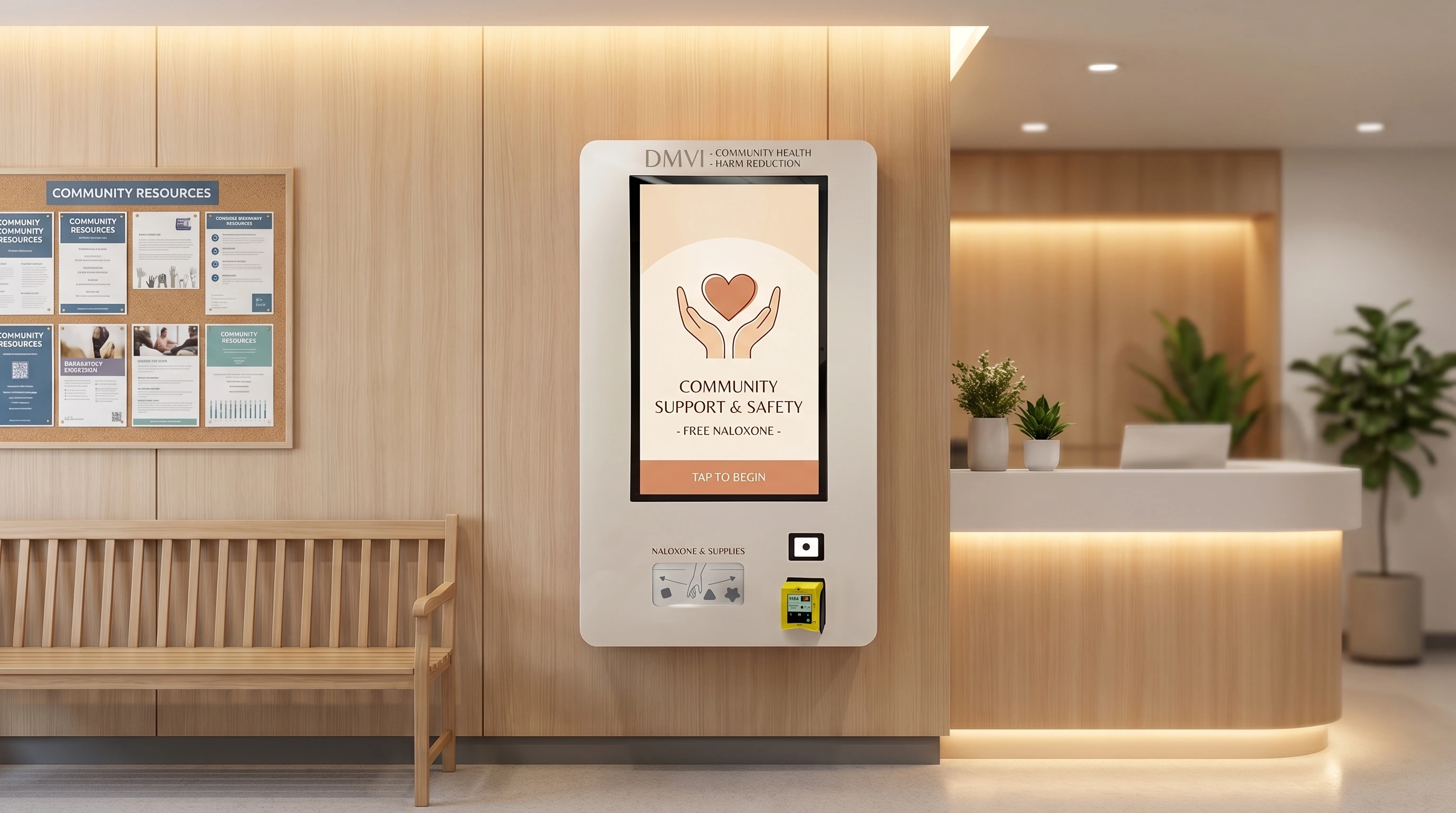
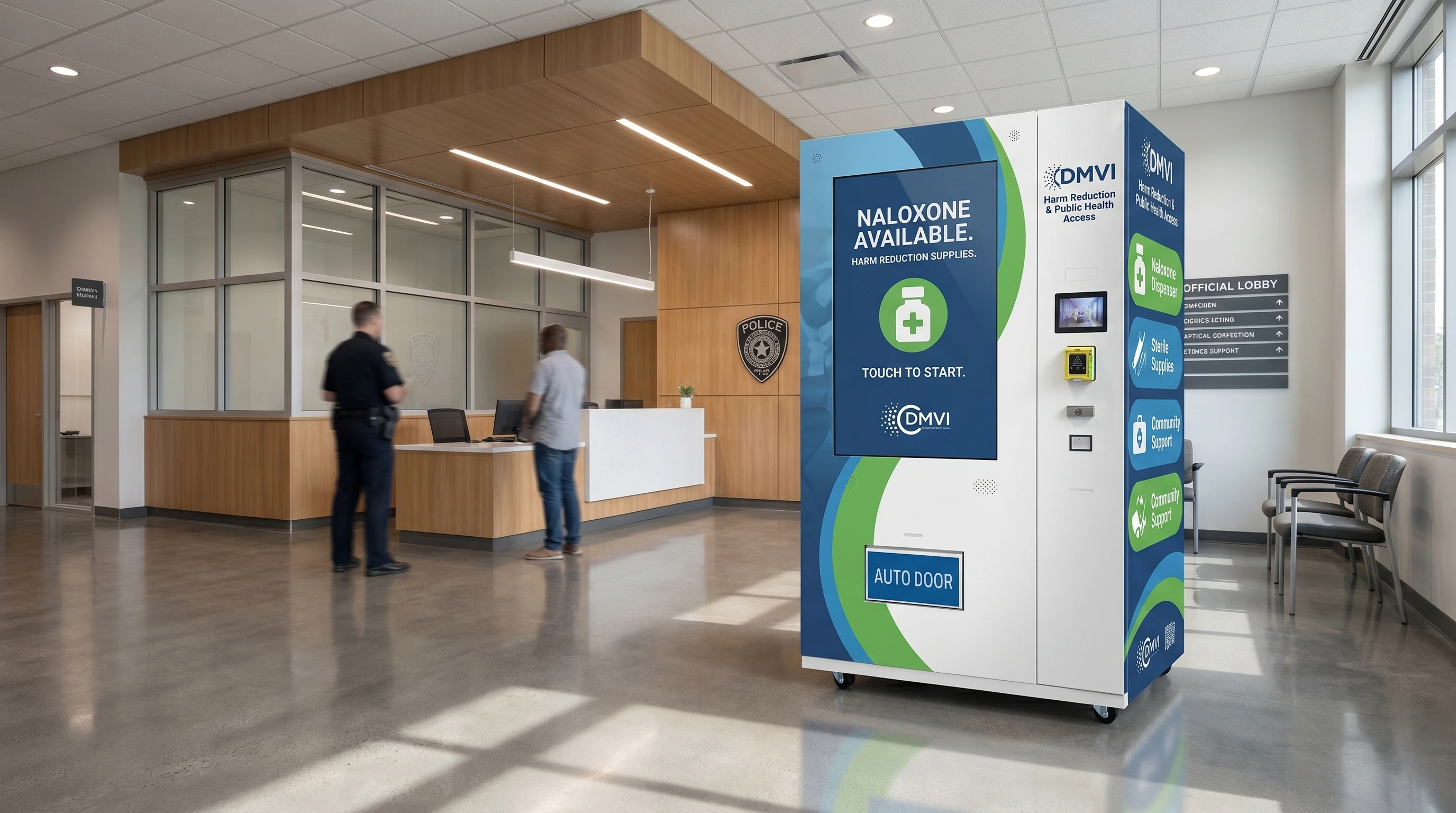
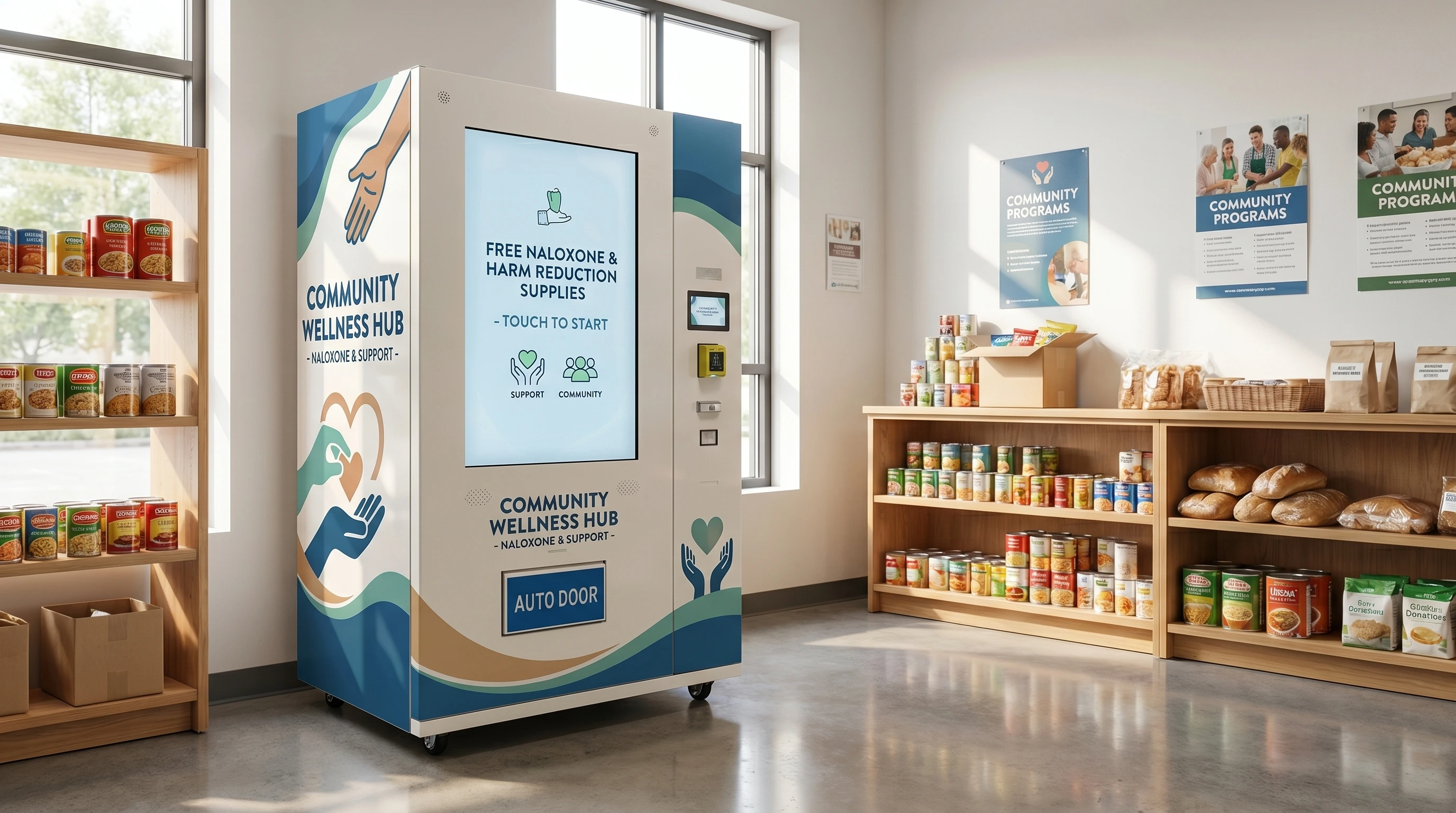
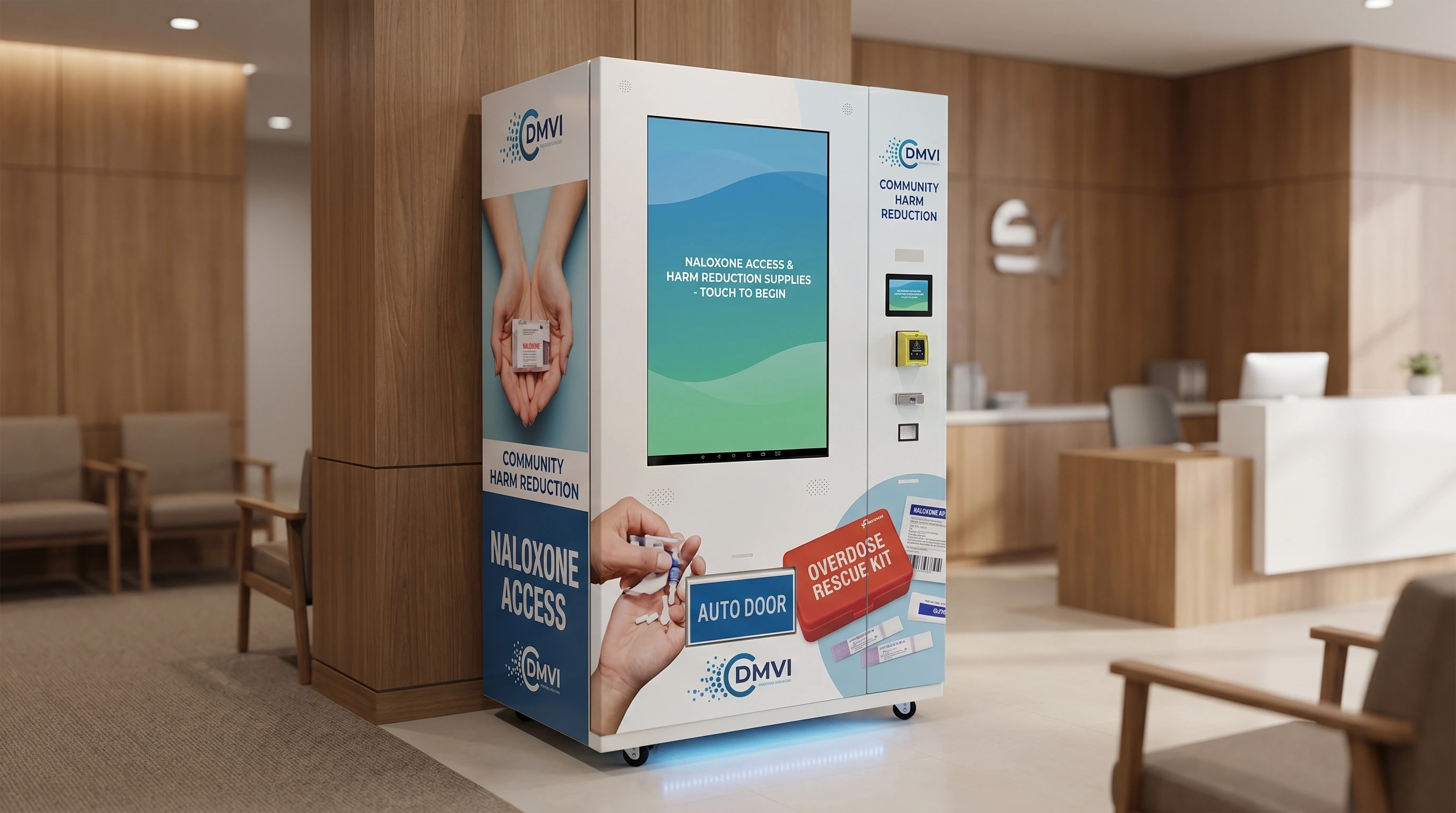
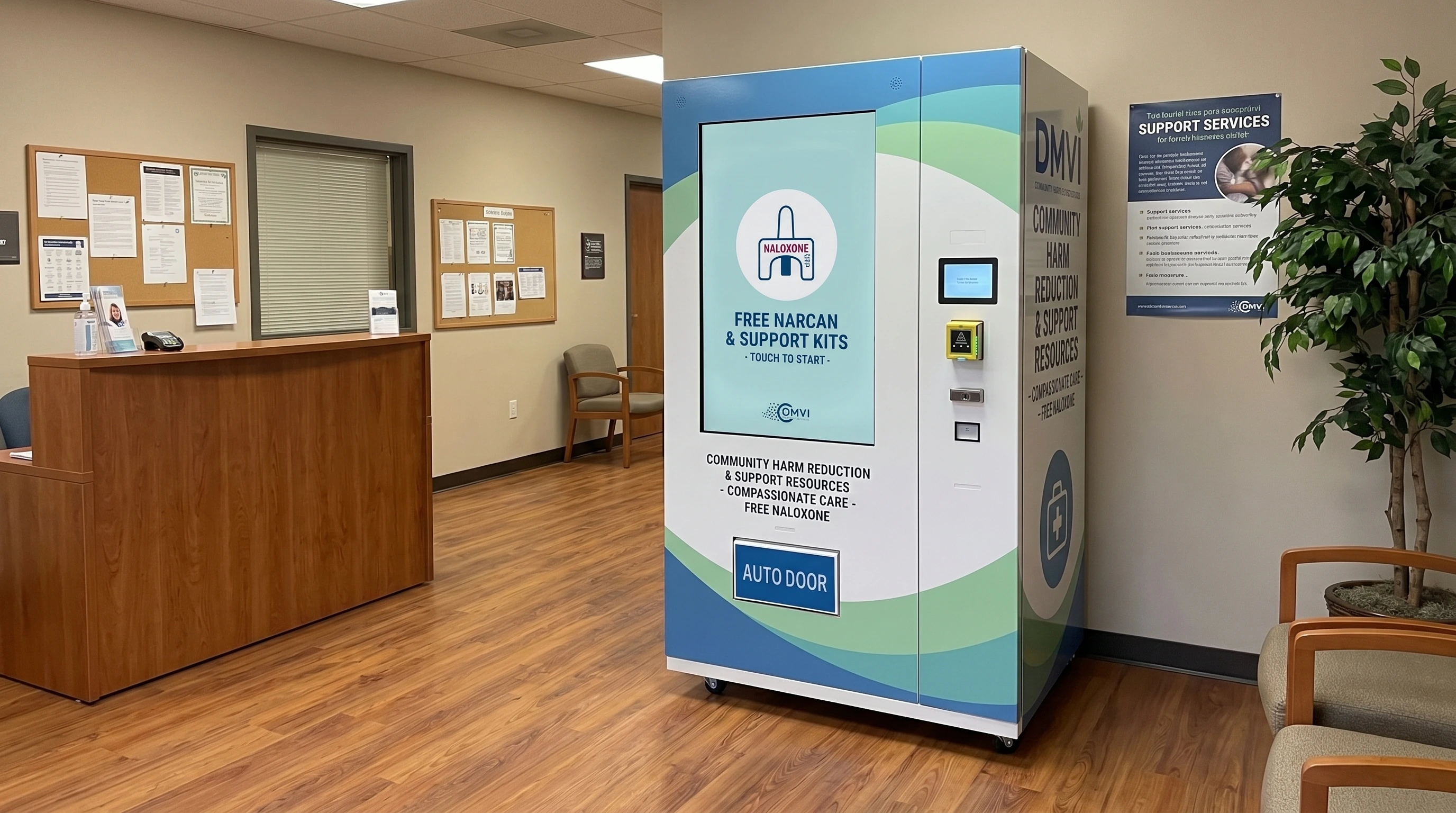
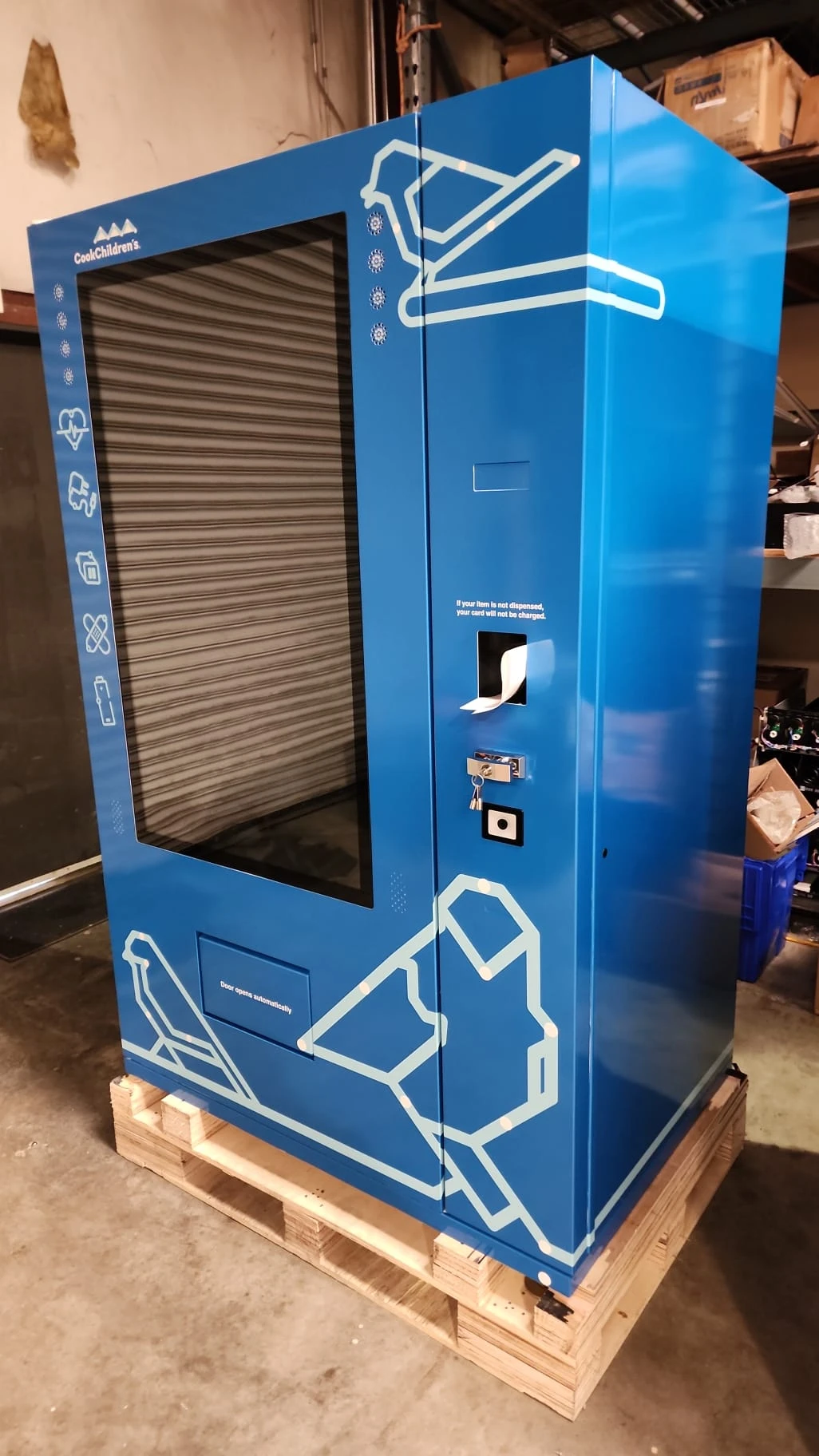
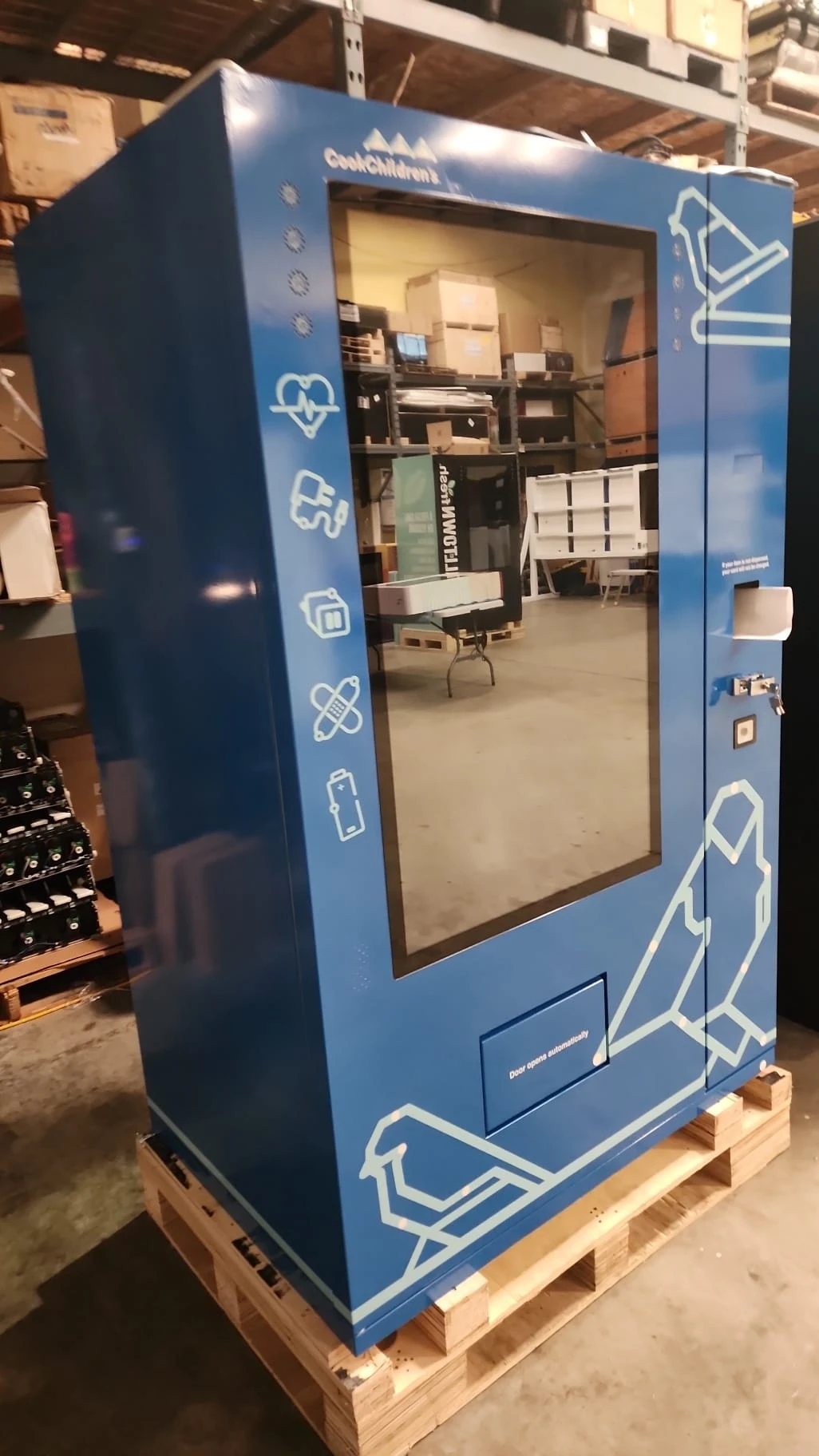
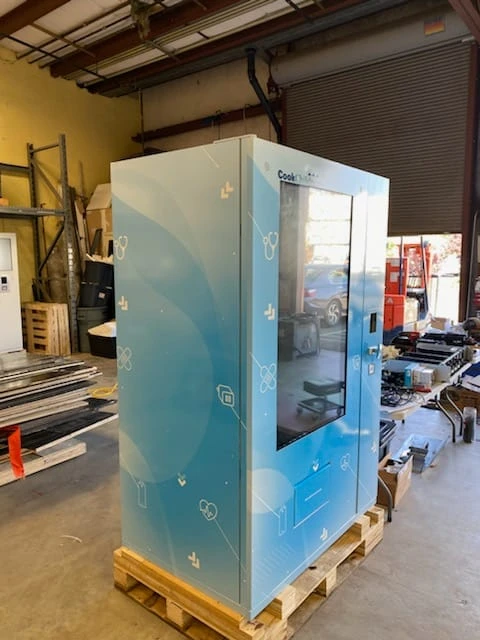
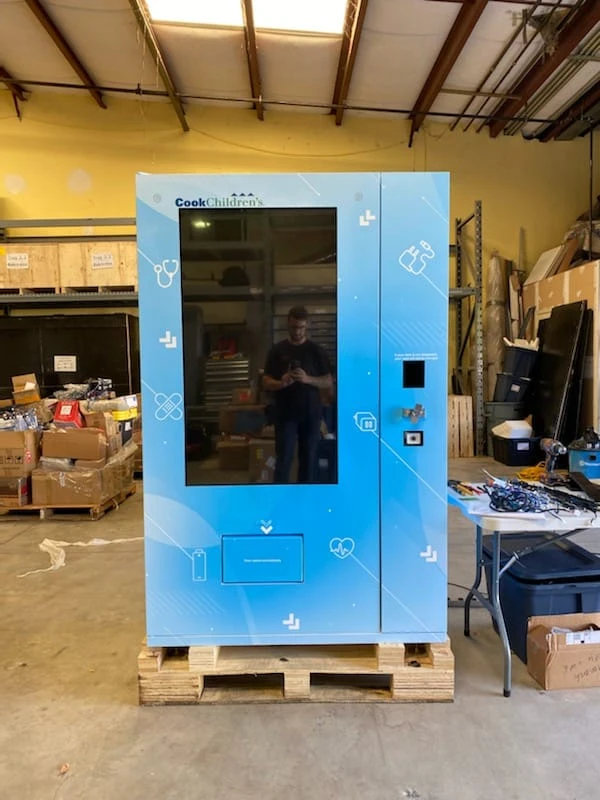
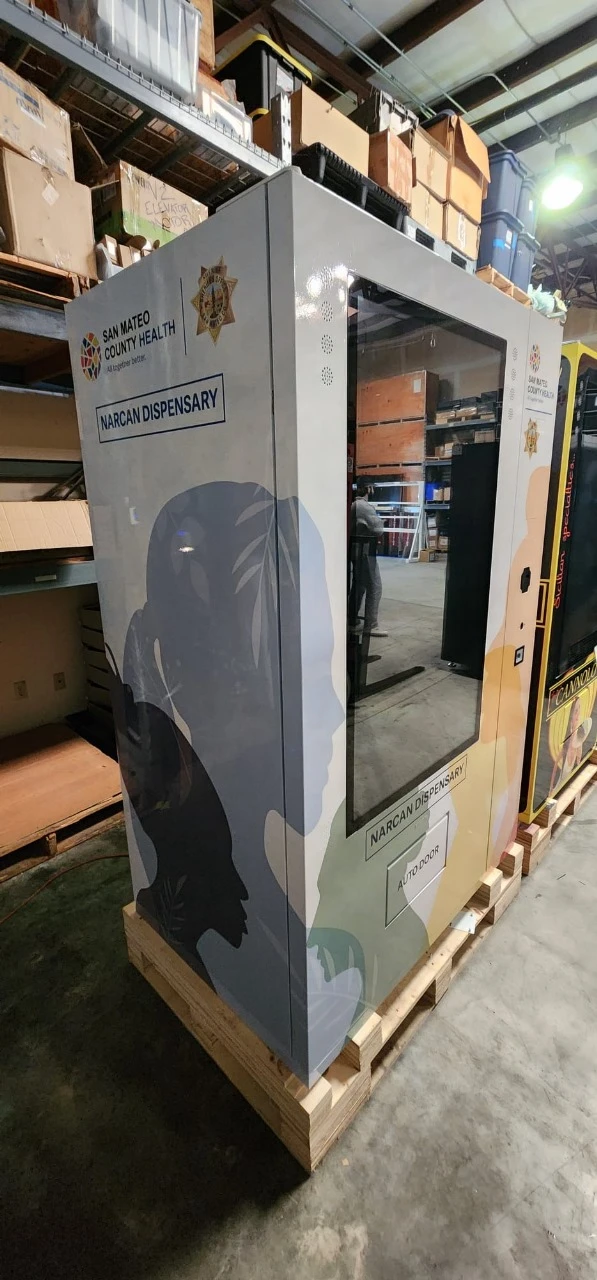
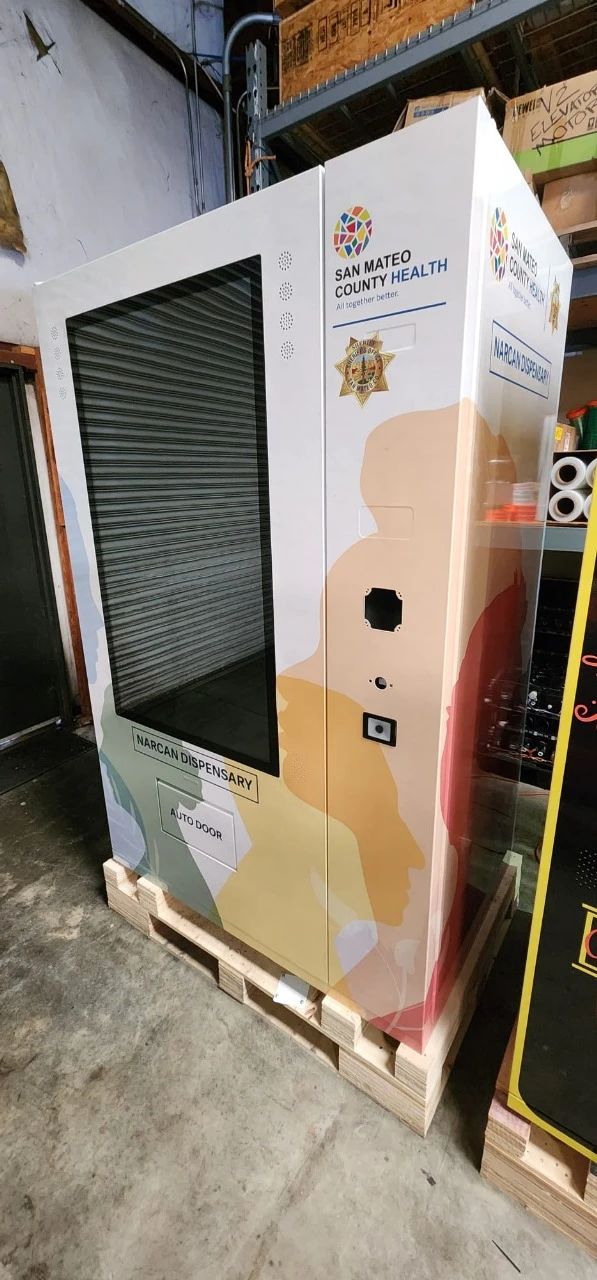
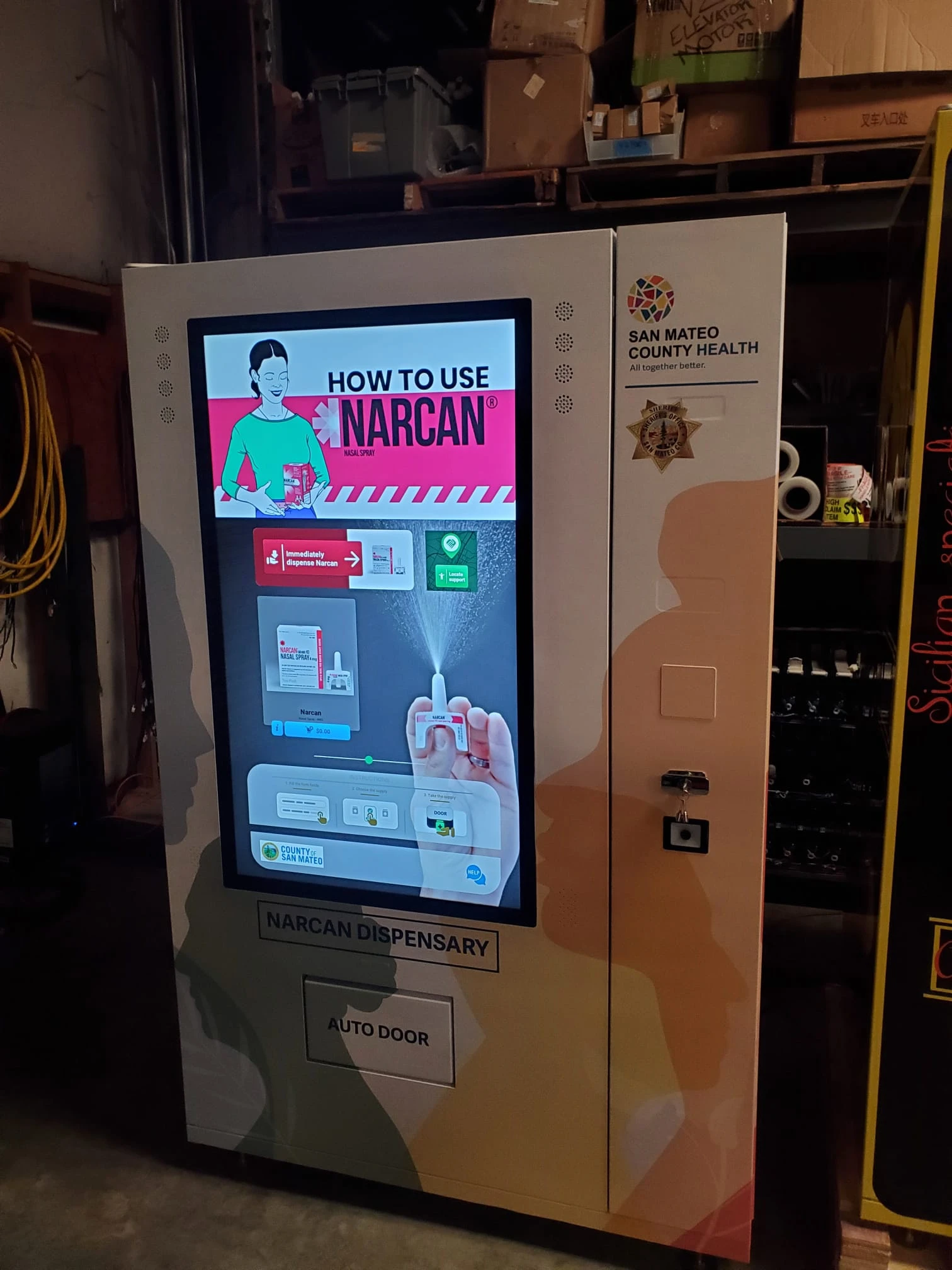
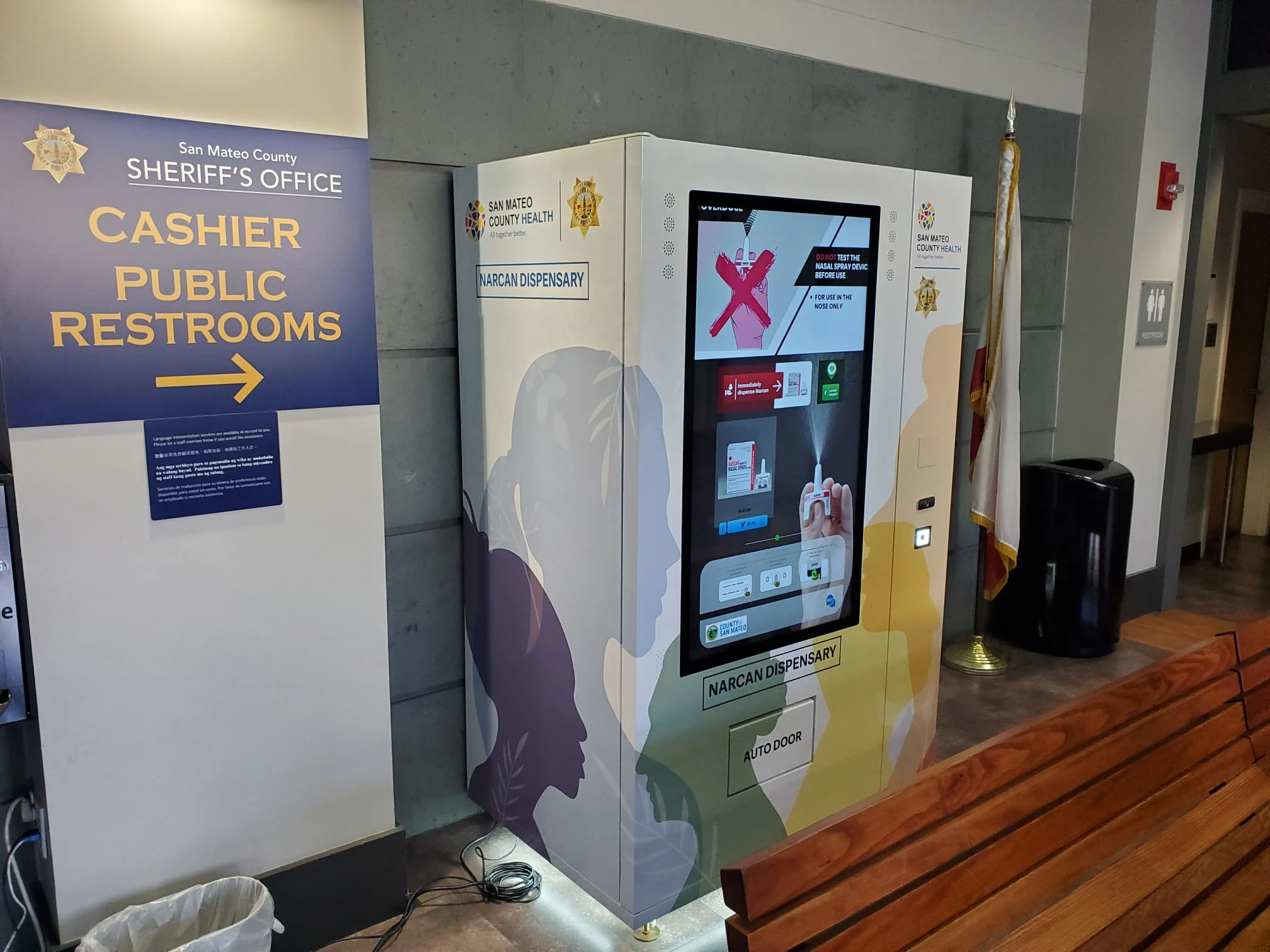
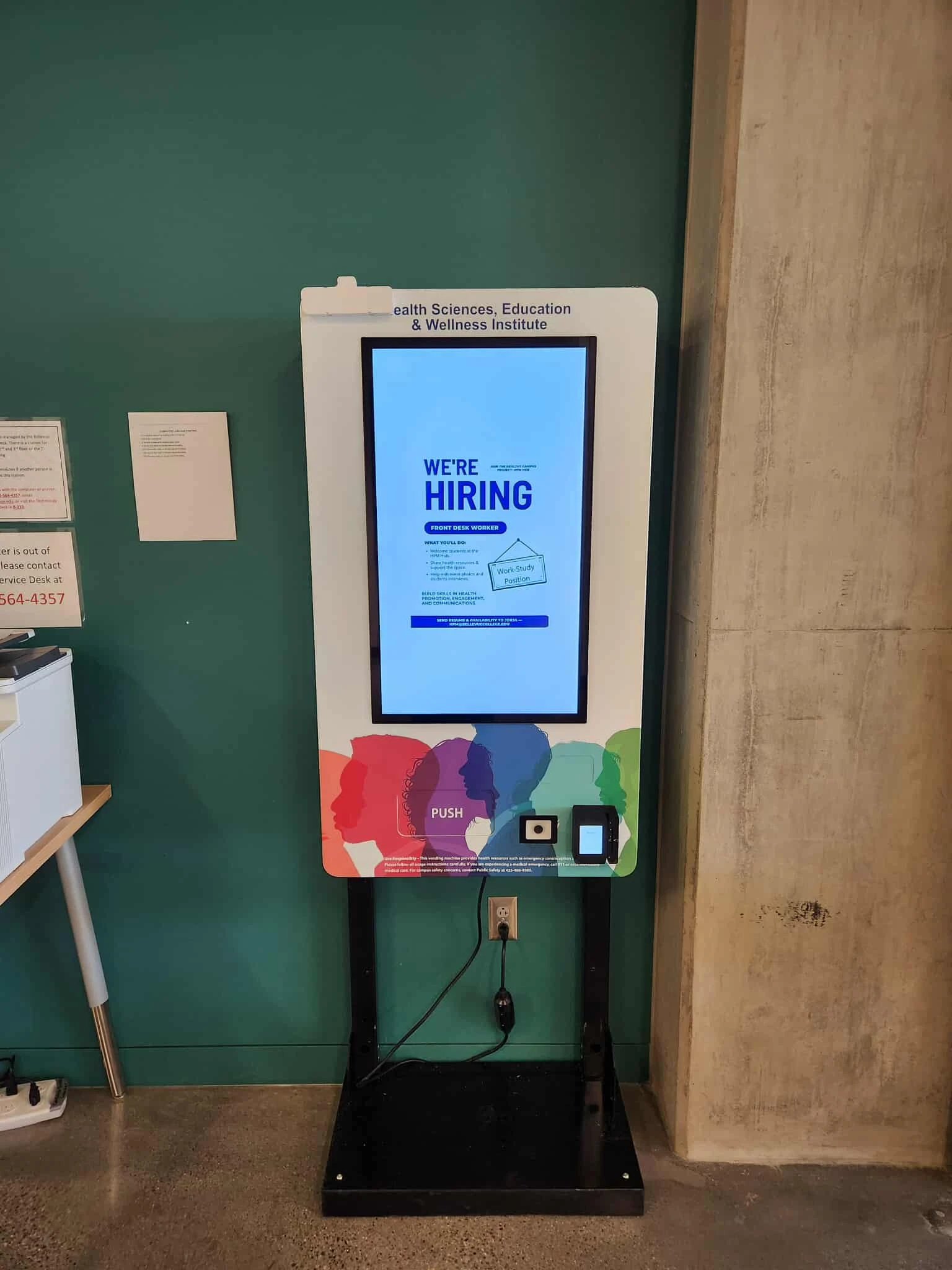
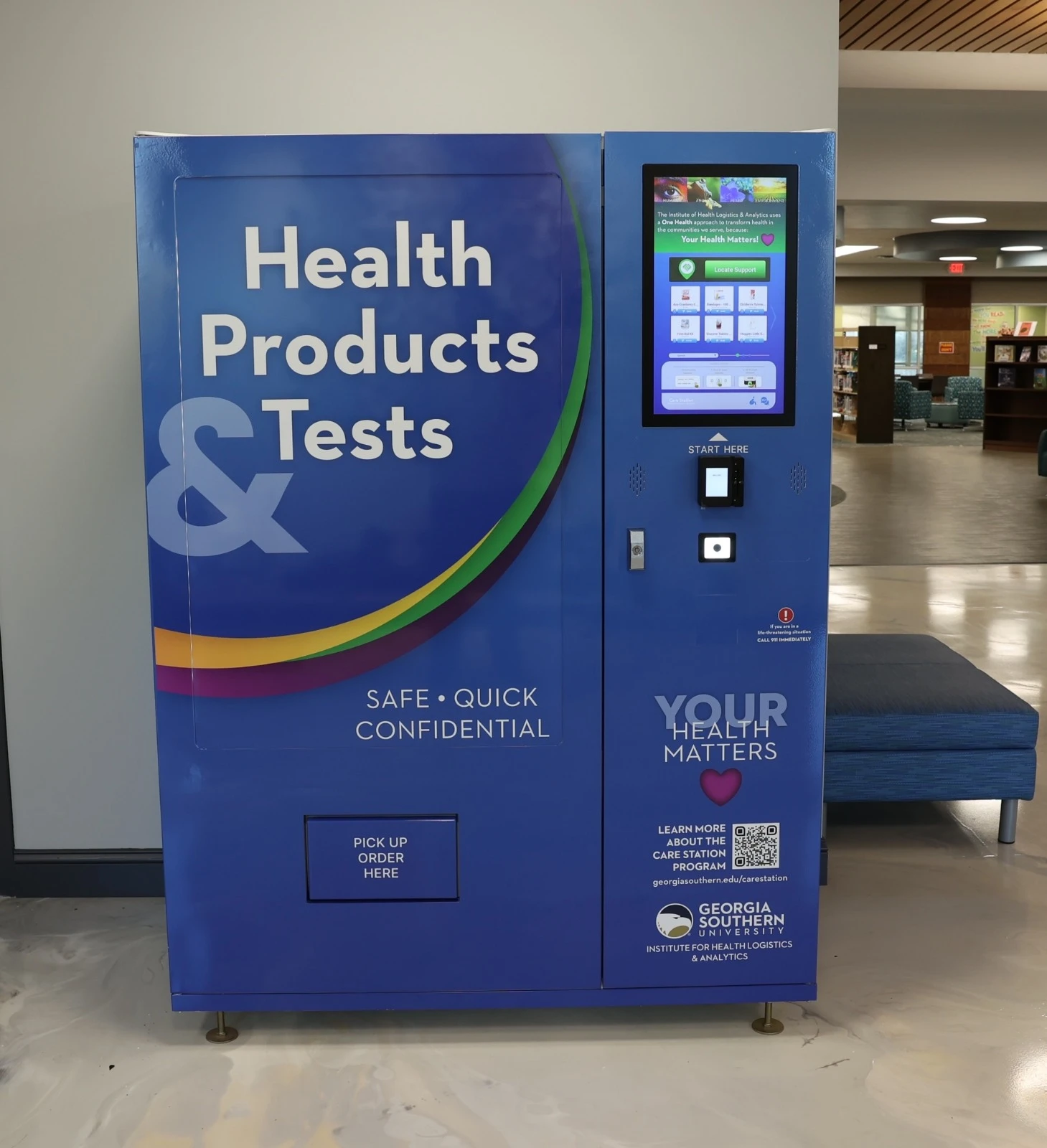
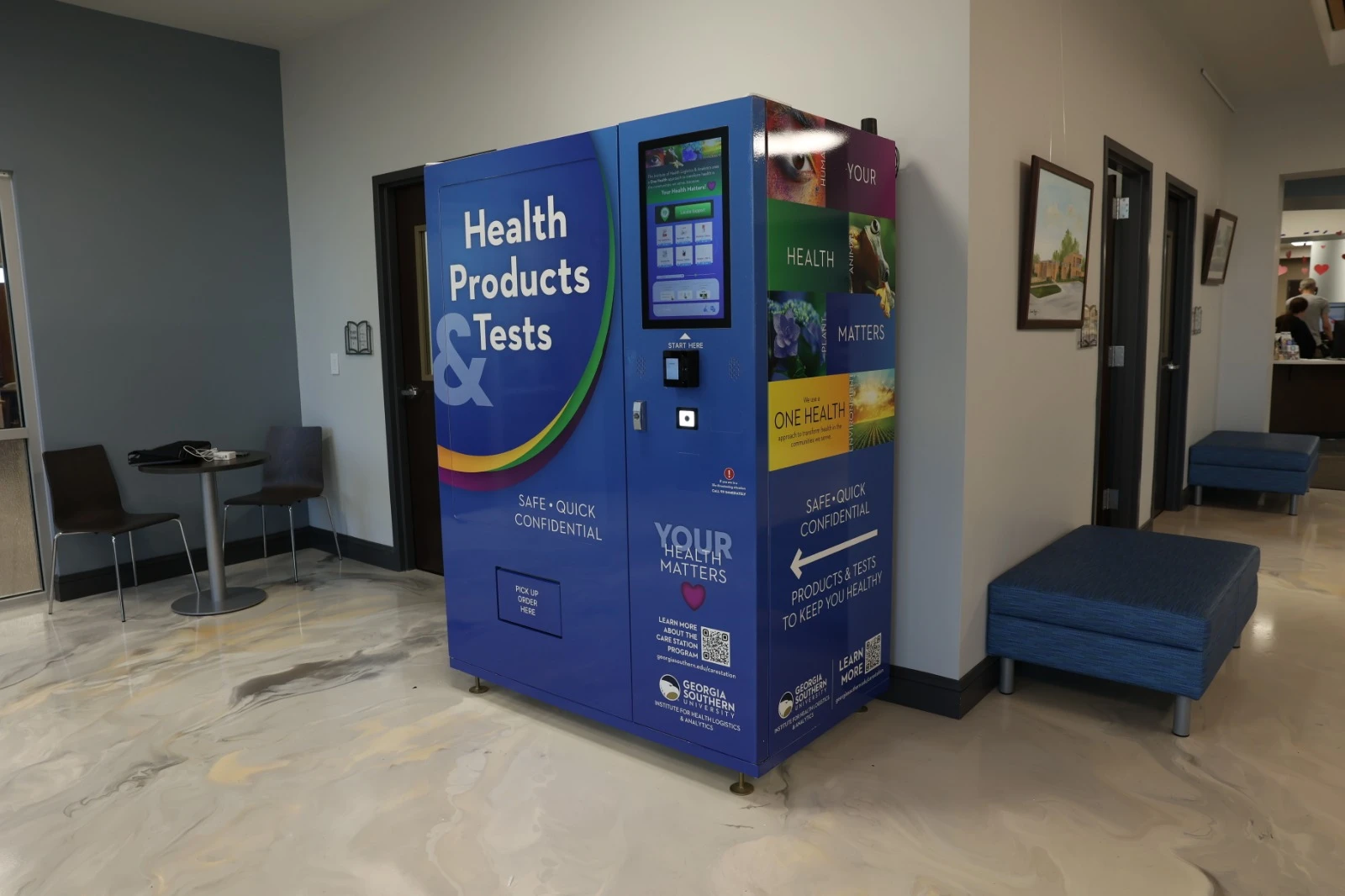
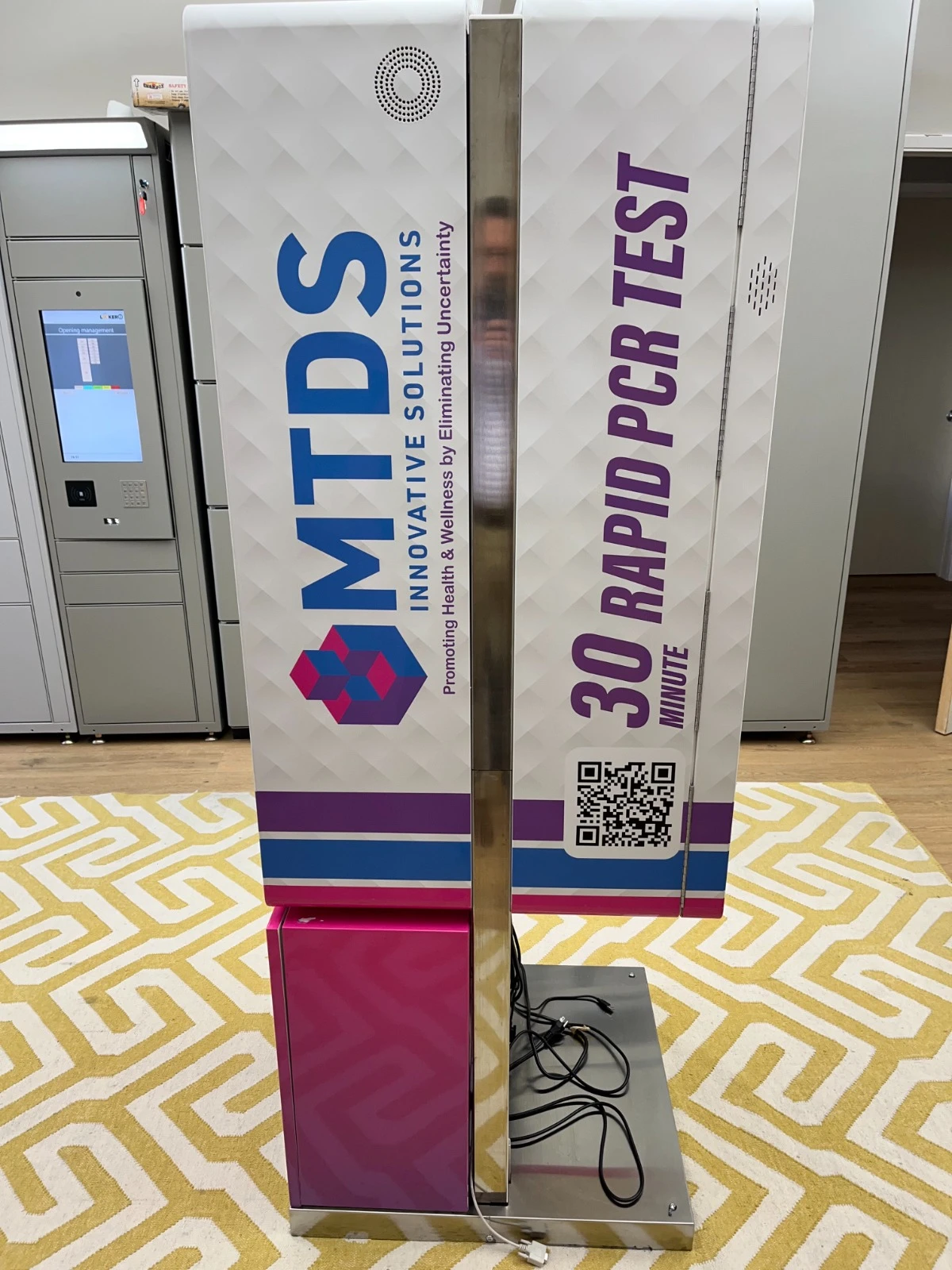
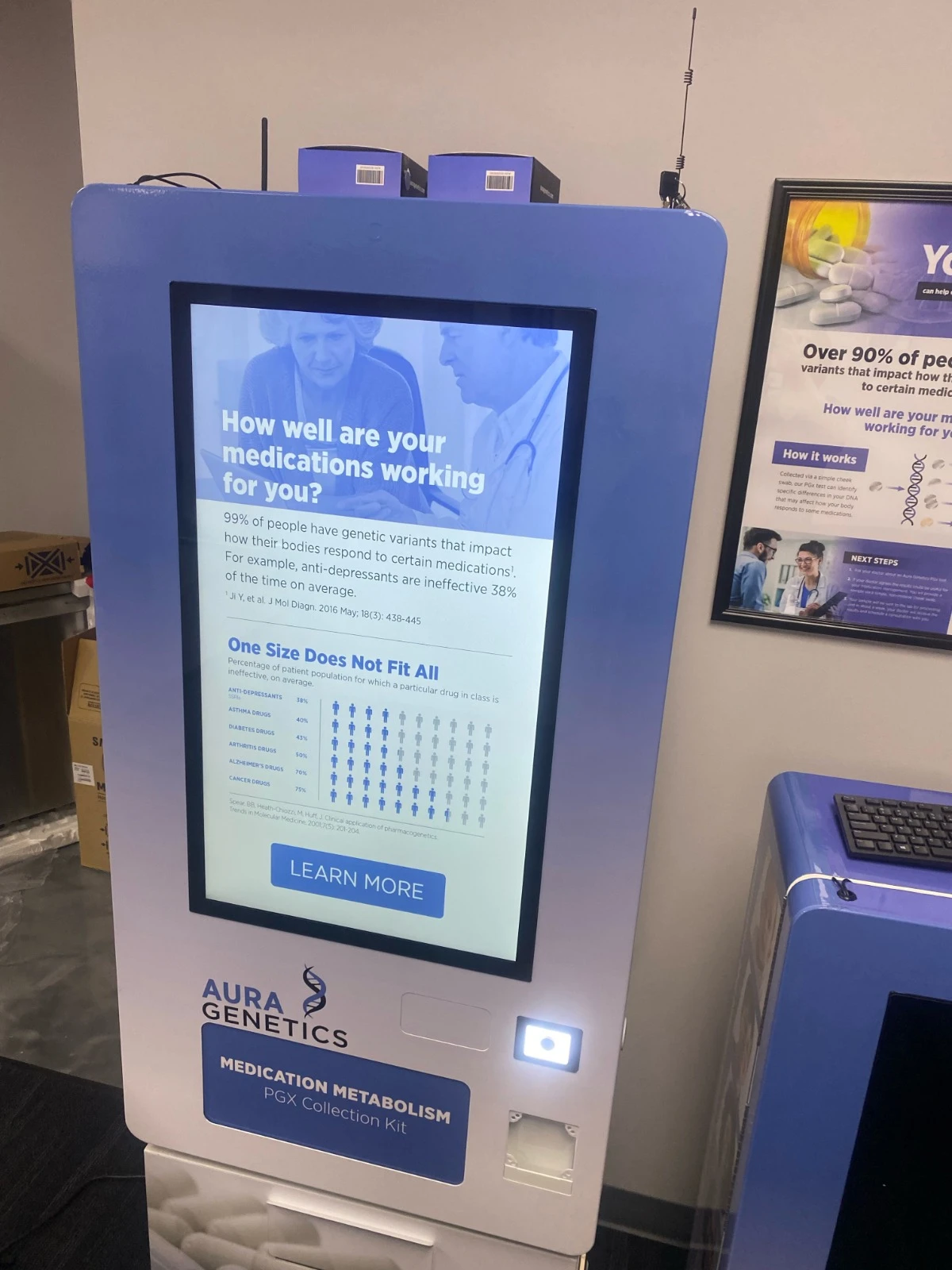
Image 1 of 20
Narcan vending machine in a police station
FAQs
A harm reduction vending machine is an institutionally-managed self-service cabinet that provides lower-barrier access to approved harm-reduction supplies — most commonly naloxone (Narcan), plus fentanyl test strips, wound-care, hygiene items, and safer-use materials. It is operated by counties, hospitals, public-health departments, universities, or nonprofits as part of a managed public-health program rather than a retail concept.
Harm reduction vending machines typically dispense naloxone (Narcan), fentanyl test strips, hygiene supplies, wound-care items, safer-use materials, and printed educational content. Naloxone is the anchor SKU because it can reverse an opioid overdose involving fentanyl, heroin, or prescription opioids when given in time, and it is now available over the counter in all 50 US states.
The most common institutional buyers are counties, public-health departments, hospitals and health systems, universities and college campuses, nonprofits and community organizations, syringe-services programs, shelters, and large employers running occupational-health programs. DMVI scopes deployments around the program's existing reporting framework and the operator's grant-funding context rather than a generic retail brief.
A Narcan vending machine is the naloxone-specific cabinet — the commercial spec for the machine that dispenses naloxone, with multilingual touchscreen guidance and program-specific dispensing logic. A harm reduction vending machine is the broader institutional category that may include naloxone plus fentanyl test strips, hygiene supplies, wound-care, and safer-use materials under one managed program.
Yes. Naloxone is available over the counter in all 50 US states with no prescription required, and can be purchased at local pharmacies, convenience stores, grocery stores, and gas stations, or obtained from community-based naloxone programs and most syringe-services programs. A harm-reduction vending machine extends that over-the-counter access into venues where hours, stigma, or geography otherwise block uptake.