
Secure Handover Lockers — Controlled-Release Lockers with Chain-of-Custody Proof
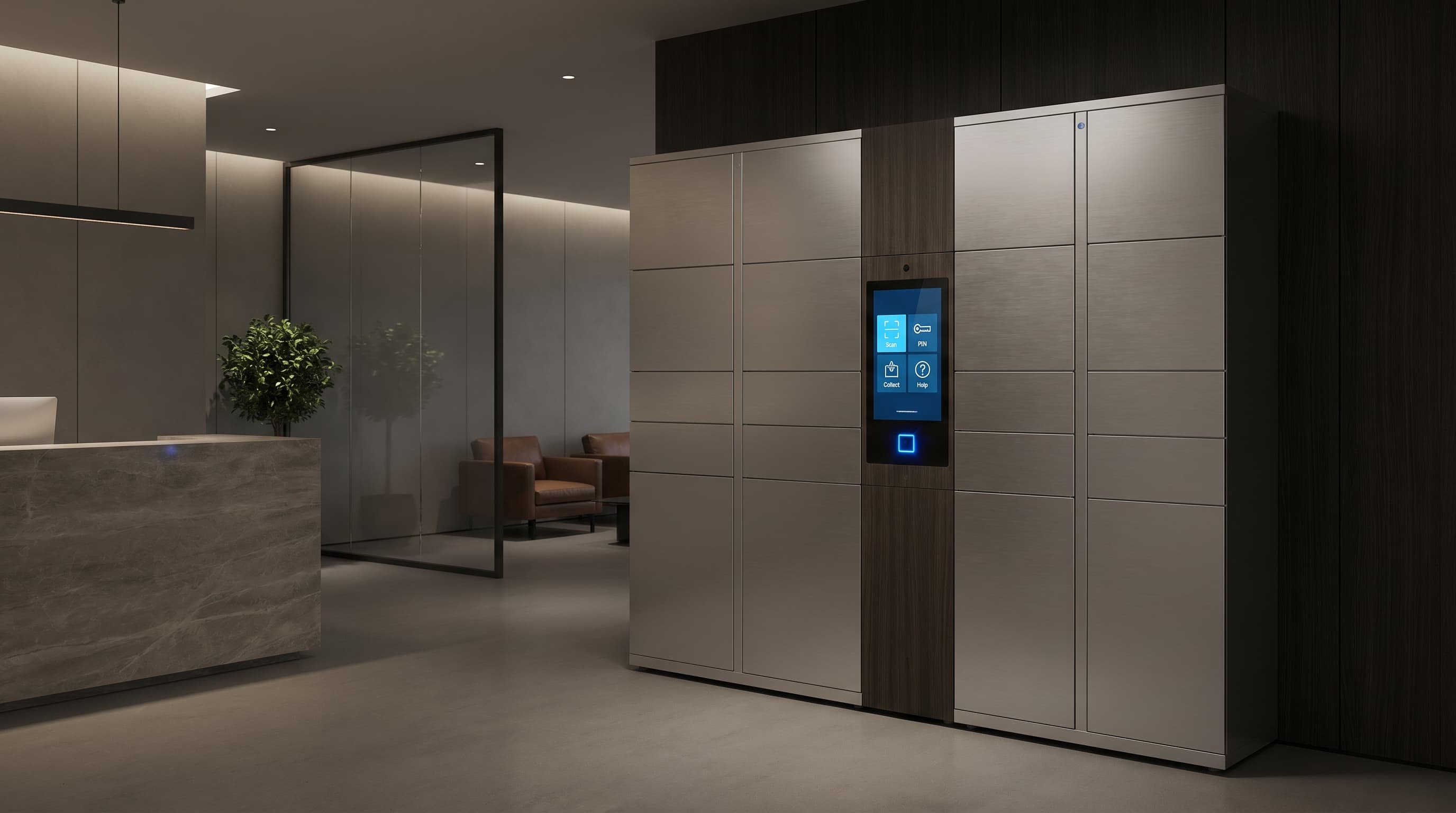
A secure handover locker is an electronic locker system designed for controlled, authenticated release of a specific item to a named recipient, with a verifiable chain-of-custody record from deposit to collection (Wikipedia: Smart lock). It is not a general parcel locker and not a recurring asset locker — it sits in the gap between them, where a single release event needs a one-time credential, a proof-of-collection record, and an escalation path if the handover does not happen on time. DMVI builds these systems for keys, signed documents, repaired devices, service parts, evidence, samples, and any other accountable item where custody integrity matters more than volume throughput.
Why custody breaks at the staffed desk
Sensitive handovers fail in two specific ways at a staffed desk. The first is identity drift: the item is released to whoever turns up claiming the right name, with no auditable verification beyond a glance at the queue. The second is record drift: the handover happens, but the record of it depends on someone remembering to log it, scan it, or sign it.
Both failure modes evaporate inside a secure handover locker workflow. Identity verification is bound to a one-time credential issued to the specific named recipient. The collection record is created automatically — deposit timestamp, recipient credential, locker number, access timestamp, every event in the audit trail — without depending on staff memory or post-hoc paperwork.
Compare nearby workflows
Sensitive handovers fail in two specific ways at a staffed desk
- Identity drift: the item is released to whoever turns up claiming the right name.
- Record drift: the handover happens, but the record depends on someone remembering to log it.
- Identity verification is bound to a one-time credential issued to the specific named recipient.
- The collection record is created automatically in the audit trail.
Controlled-Release Workflows
Sensitive document collection
Signed paperwork, legal packs, controlled records, and confidential documents that should not live on a reception desk or in an open in-tray.
Key and credential release
Vehicle keys, premises keys, access cards, and controlled credentials handled through an auditable release path rather than a drawer-and-notebook handover.
Repair and replacement collection
Repaired or swapped equipment released to the named owner later, with proof of collection rather than a staffed counter handover.
Parts and field-service pickup
Urgent parts and service items released to authorised recipients without making every collection depend on a staffed stores window.
One-time authenticated collection
Single-use release credentials for specific recipients, expiring after collection or after a defined window — the right model for events, contractors, and one-off transfers.
Out-of-hours secure handover
Sensitive collection live outside normal office hours with the custody record intact.
Evidence and sample handover
Items where the custody chain is the actual deliverable — laboratory samples, evidentiary items, calibration kit moving between authorised holders.
What the Software Controls
Recipient credentials
A one-time PIN, QR, or app credential issued to the specific named individual, not a generic shared code. The credential is bound to the recipient, the locker, and the release window.
Release authorisation windows
When the item becomes collectable, when collection expires, and what happens at expiry — reassignment, escalation, return-to-depositor, or operator override.
Chain-of-custody proof
Deposit event, every authorisation, every access attempt, every override, every operator action — all logged with user, timestamp, and locker, all retrievable from the audit log.
Failed-collection recovery
Configurable rules for missed pickups: reminder cadence, expiry timing, reassignment logic, and operator notification.
Escalation alerts
Uncollected sensitive items, repeated failed access attempts, and manual interventions surface in the operator queue rather than sinking into background noise.
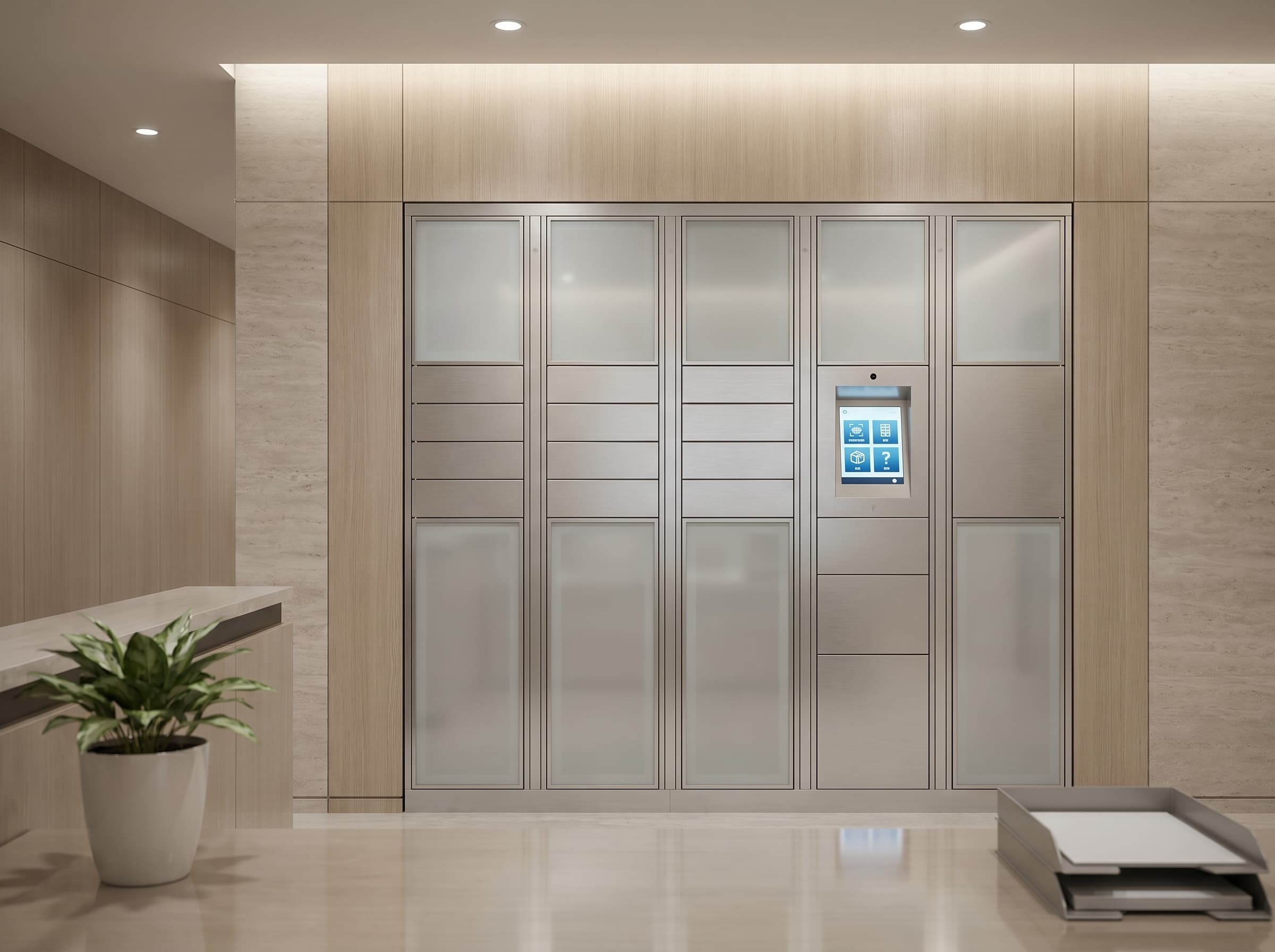
Why controlled-release projects need custody-first scoping
- Custody-first scoping | Who deposits, who collects, what proof is needed, and what the failure mode looks like — those four answers fix the design before cabinet count is decided.
- Appropriate access design | Sensitive release workflows do not share a release-credential model with public parcel pickup. Single-use credentials, named-recipient binding, and time-windowed release are the design starting point.
- Operational realism | Site environment, escalation paths, integration with existing identity or case-management systems, and staffing reality are scoped as part of one practical plan rather than left to operations to figure out post-launch.
- Operational release design | DMVI scopes secure handover projects around recipient proof, release timing, escalation, and site reality rather than treating them like a generic electronic-lock upgrade.
Explore related locker workflows
Compare nearby controlled-access workflows
Secure handover often sits next to asset control, parcel pickup, and broader transaction-led locker projects, so these are the most useful direct-routing comparisons.
Asset Management Lockers
Use asset lockers when the same equipment circulates repeatedly between authorised users and a longer-running issue-and-return record matters.
Parcel Lockers
Use parcel lockers when the workflow is mainly courier deposit and routine recipient collection rather than higher-custody release to a named person.
Locker Vending Systems
Use locker vending systems when the workflow mixes release, return, public collection, or broader self-service transactions beyond one controlled handover model.
Need controlled release without a staffed counter?
Tell DMVI what is being handed over, who should be allowed to collect it, and what audit or timing rules matter. We can scope the right secure handover setup from there.
Frequently asked questions
A secure handover locker is used when an item needs to be released to a specific authorised recipient through a self-service workflow with a verifiable record of who collected what and when. It replaces a staffed desk handover for sensitive items — keys, documents, repaired devices, service parts, samples — where the custody chain matters more than throughput.
Common examples include keys, signed documents, service parts, loan and repaired devices, access credentials, evidence items, calibration kit, and samples. Compartment size, internal restraint, environmental control, and locking mechanism are scoped to the actual items rather than sold as a one-size cabinet, because a key locker, a document locker, and a sample locker do not share the same physical requirements.
Yes. One-time credentials — PIN, QR, or app token — bound to a specific named recipient and a defined release window are a core capability. The credential expires after collection or at the end of the window, and unused credentials trigger configurable escalation rather than sitting indefinitely in an inbox or a drawer.
No. The model is useful anywhere a manual handover is inefficient or creates avoidable custody risk, even in commercial environments that are not formally high-security. Reception parcel handovers, repair-shop collections, professional-services document release, and field-service parts pickup all benefit from the audit-grade workflow without needing a regulated environment.
Parcel lockers prioritise routine pickup volume from couriers and click-and-collect orders. Asset lockers prioritise recurring issue-and-return of shared equipment. Secure handover lockers prioritise one-time controlled release of a specific item to a named recipient with custody proof. The hardware overlaps; the software workflow does not.