Narcan Vending Machines with Touchscreens: Naloxone Access First, Program Data Second
Watch the Narcan & harm-reduction software demo
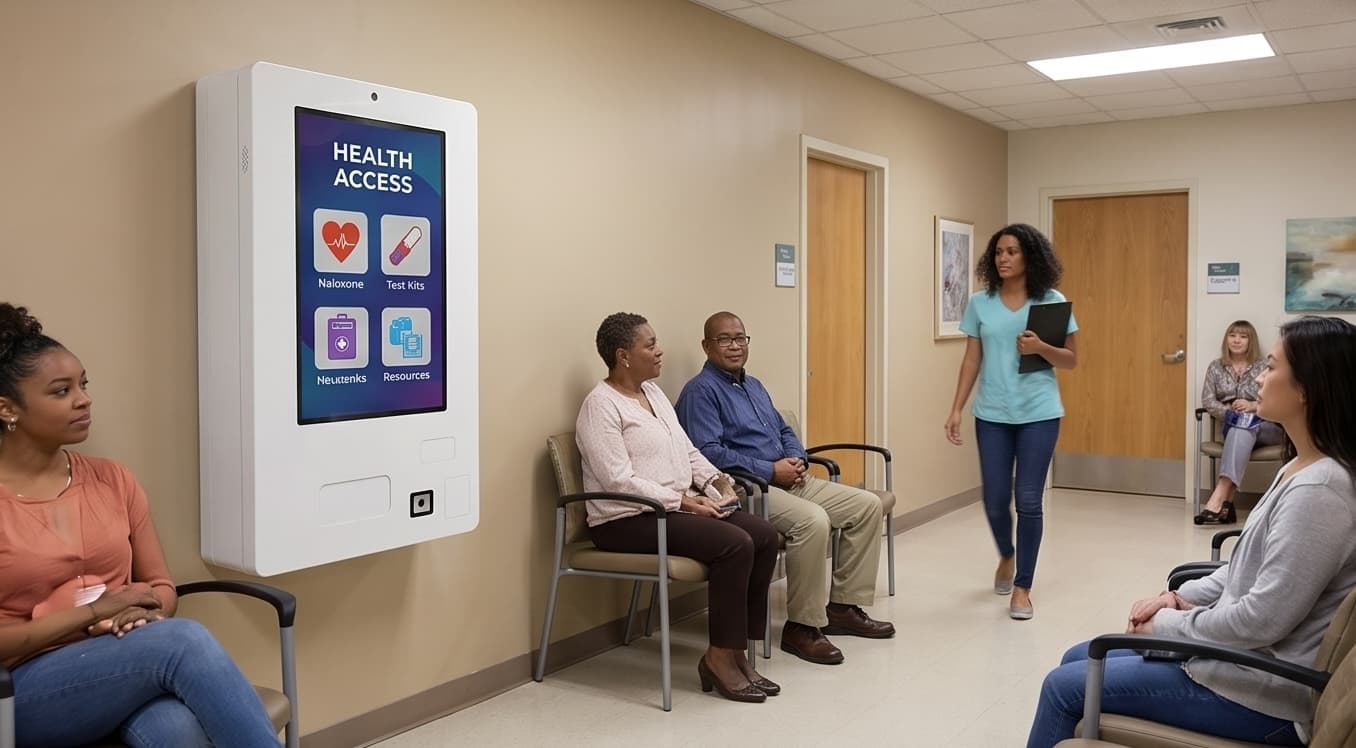
A Narcan vending machine with a touchscreen is, first and foremost, a public-health access point for naloxone. That has to stay in the top position. The touchscreen may support optional program questions, resource prompts, or operator-defined intake, but the cabinet exists to improve access to overdose-reversal medication — not to turn a person in a vulnerable moment into a data-harvesting opportunity.
That distinction matters because the older framing of this topic has the priorities backwards. The cabinet should deliver naloxone quickly, with as little friction as the program can responsibly manage. Any touchscreen data collection must be secondary, anonymous by default, and designed around trust. This page is informational only and is not medical or legal advice. In a suspected opioid overdose, call emergency services immediately and follow the instructions on the naloxone product packaging.
What the cabinet is for, in priority order
A naloxone cabinet serves three roles, in order. First, it provides access to a life-saving product. Second, it acts as a visible harm-reduction touchpoint in the community. Third, if the program chooses, it can support limited anonymous program-evaluation data. When operators reverse that order and start talking as though “gathering essential user data” is the headline, they damage the very trust that makes the deployment work.
The right cabinet design treats access as the mission and data as a carefully bounded optional layer on top.
How touchscreen intake should actually work
If a program enables touchscreen questions, the flow should be short, optional, and explicit about privacy. That usually means a handful of operator-defined questions about things like how the user heard about the program, whether they have accessed naloxone before, or what general area they are coming from. It should not mean collecting names, phone numbers, government identifiers, or anything else that would make a user wonder whether accepting help comes with surveillance attached.
Good harm-reduction design makes the skip option obvious, makes clear that naloxone access does not depend on answering questions, and stores only the minimum information needed for program evaluation. Privacy by design is not a flourish here. It is the price of legitimacy.
What “essential user data” really means
For a well-run naloxone program, essential data is program data, not personal data. Operators may need to understand cabinet usage patterns, restocking demand, rough time-of-day demand, general geographic reach, repeat access patterns in aggregate, and whether users would value additional resources or training. None of that requires identifying any individual person. The useful questions are the ones that help improve access and distribution strategy without creating fear.
If the operator cannot explain exactly why a question exists and why it can be asked anonymously, it probably does not belong on the screen.
Operating realities for naloxone cabinets
Naloxone distribution still requires ordinary operational discipline. Inventory has to be rotated by expiration date. Cabinets should live in suitable environmental conditions. Tampering, diversion, or unexpectedly rapid depletion have to be reviewed as program events, not just hardware quirks. Connected telemetry helps by showing dispense activity, door events, service needs, and abnormal patterns, but the machine is only one part of a broader public-health workflow.
That is why the strongest deployments sit inside a partnership structure: a public-health agency, licensed harm-reduction organisation, hospital, municipality, or other program owner that governs the medication supply and the user-facing protocol while the cabinet operator handles the hardware and audit layer.
What operators should confirm before deploying one
Before a touchscreen naloxone cabinet goes live, the program should be clear on who supplies the naloxone, who approves the on-screen language, what data is collected and why, how long any data is retained, who responds to tampering or cabinet outages, and what follow-up resources are presented to users. That governance work matters more than whichever touchscreen UI looks cleverest in a demo.
The cabinet’s job is to make access reliable and privacy-aware. The surrounding program’s job is to make that access clinically and ethically sound.
Planning a Narcan or naloxone vending deployment?
DMVI supports harm-reduction and public-health programs with cabinet hardware, telemetry, and placement guidance designed to keep naloxone access first while fitting the governance needs of the sponsoring organisation.