Create Your Own Custom Vending Machine: Personalize the Cabinet, Planogram, and Snack Experience
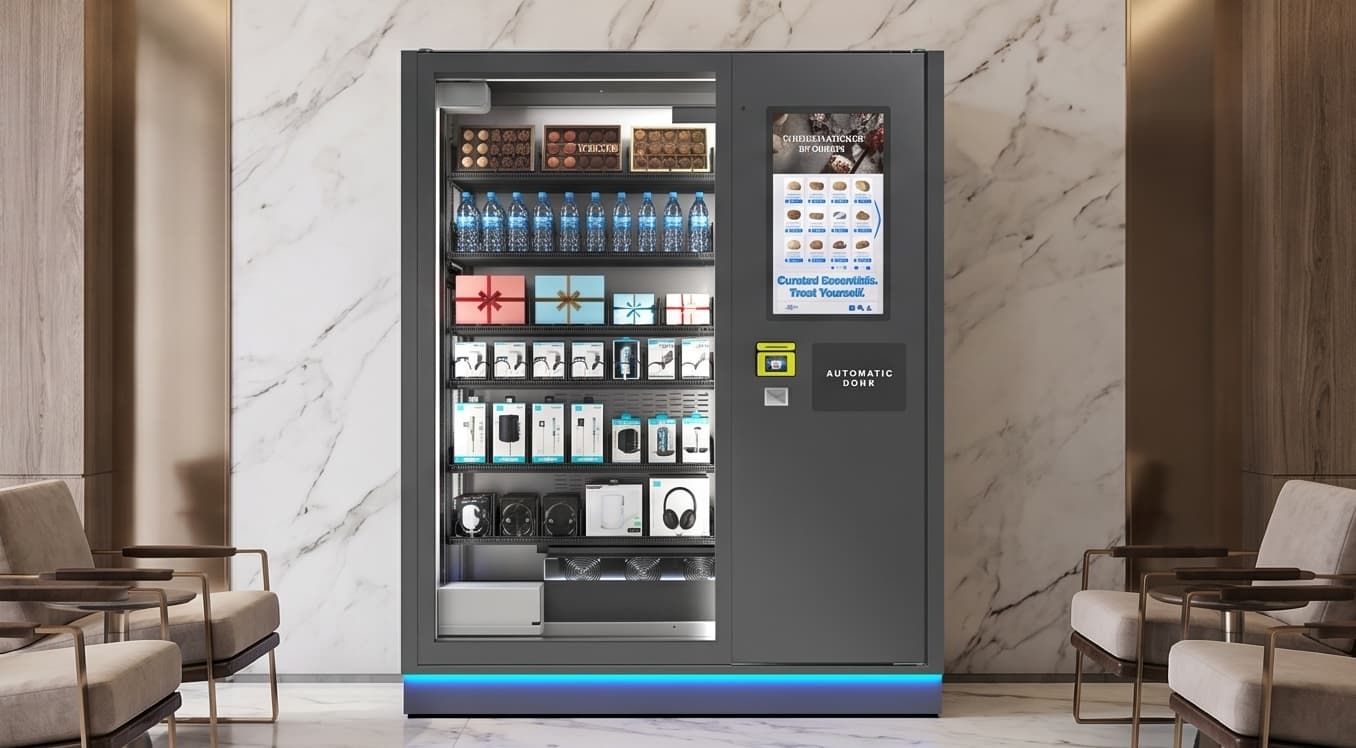
A create-your-own custom vending machine is a personalized smart vending cabinet where the buyer chooses the cabinet format, the graphics and wrap, the touchscreen theme, the planogram and SKU mix, and, when necessary, the underlying dispensing logic. That can describe two very different projects under the same heading. At the lighter end, it means configuring a proven cabinet with your own branding and your own product mix. At the heavier end, it means a bespoke machine engineered around a specific product, venue, or workflow. Both are legitimate. The trick is knowing which one you actually need before you light time and money on fire.
This page is the customer-facing “design your own vending machine” guide — the personalisation journey. If the brief is really about cabinet engineering, controlled workflows, or a brand programme at scale, the better starting point is our B2B custom vending solutions hub.
Personalise the snack experience — the planogram is usually the easy win
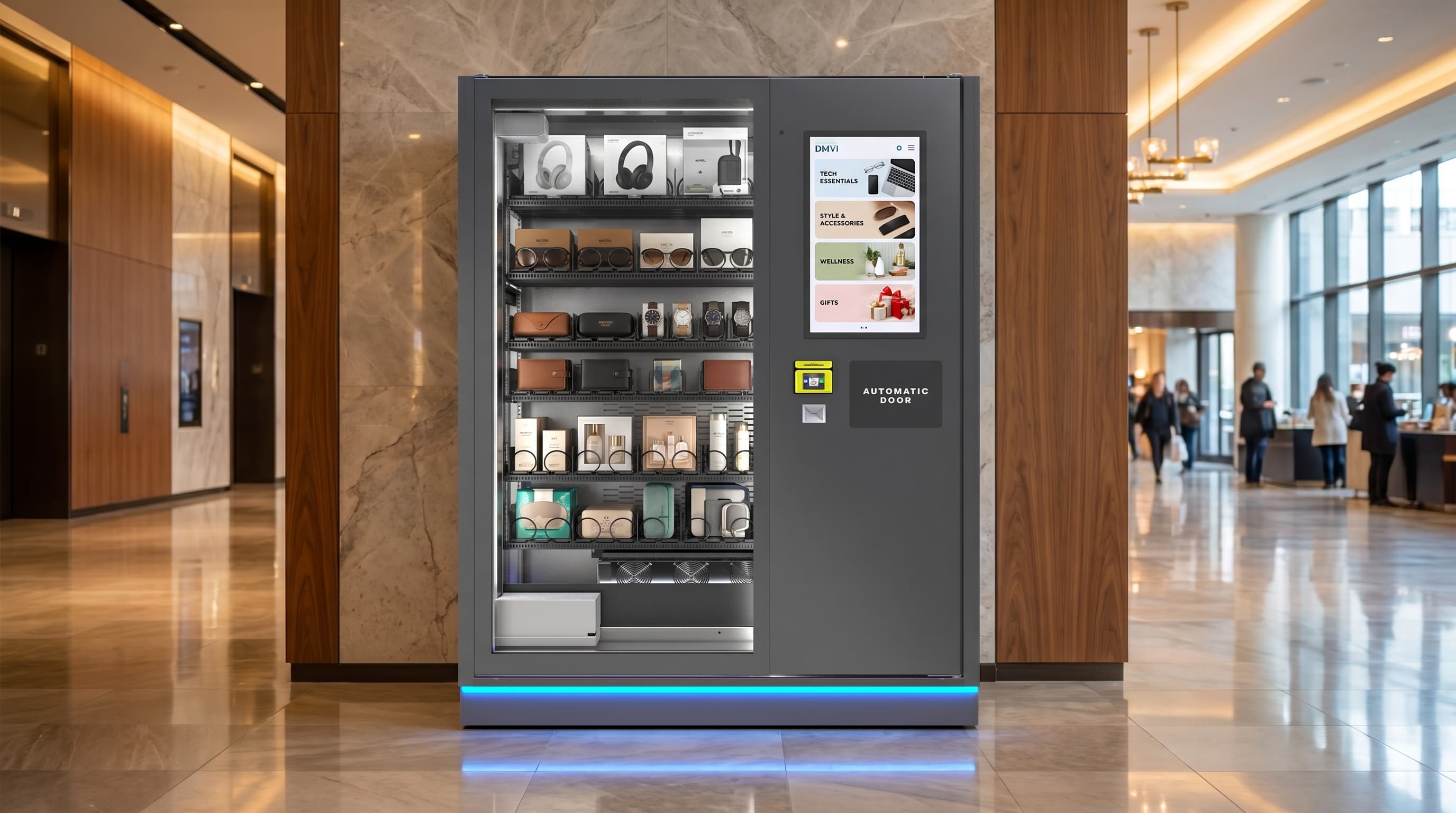
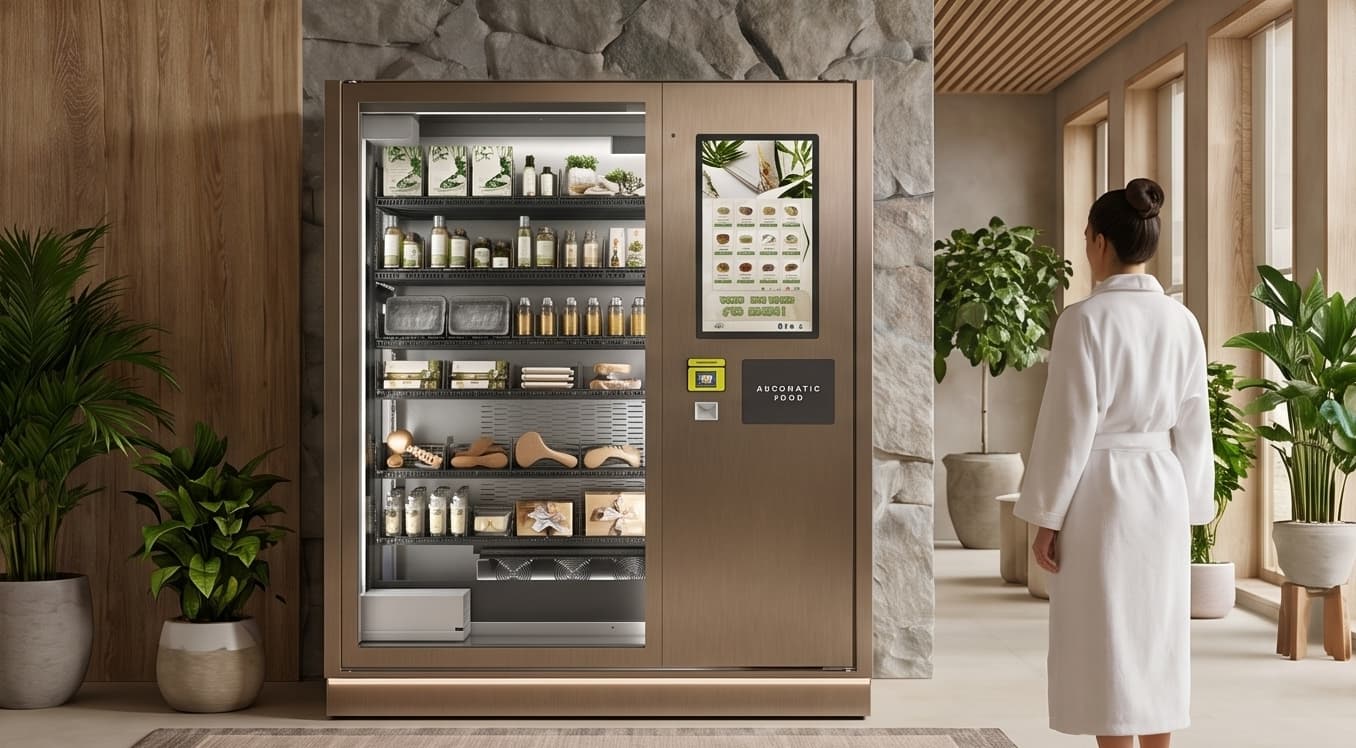
Most buyers who search for a customized vending machine do not actually need a brand-new machine architecture. They need a cabinet they can make their own. That usually starts with the planogram: choosing the SKU mix, category balance, and visual layout inside a smart vending machine that already has a touchscreen, cloud telemetry, and remote management. Protein bars, hydration drinks, confectionery, wellness products, branded merchandise, or a mix of all five can be managed from the dashboard without pretending the cabinet itself needs reinvention.
That is why the planogram is often the most commercially useful layer of personalisation. It changes the customer experience immediately, can be refined from live sales data, and does not require a heroic engineering story to justify itself.
Customized vending machine vs. bespoke vending machine
In the vending trade, the word custom gets thrown around with a bit too much enthusiasm. Customized usually means a standard smart vending cabinet with a branded wrap, a custom touchscreen theme, a personalized planogram, and a payment stack that is already proven in the field. The cabinet structure, the MDB/ICP-connected payment flow, and the DEX telemetry remain standard. Bespoke means the cabinet, the dispensing mechanism, the control electronics, or the retrieval workflow has been engineered around a product or venue that a stock machine cannot handle honestly.
That distinction matters because most “create your own vending machine” projects live comfortably in the customized category. Bespoke is the right answer for the minority of projects where the product, footprint, or workflow genuinely breaks the stock platform.
How to design your own vending machine from the outside in
The sensible design process starts with the visible layer: the vinyl wrap, logo placement, brand colours, and how the machine should sit in the venue. Then move to the touchscreen experience — what the welcome screen says, how categories are presented, what images or motion content support the products, and how selection flows into checkout. Next comes the planogram and SKU mix: what belongs in the machine, what gets priority facings, what is seasonal, and what will be rotated out if sales data says it is dead weight. After that come payments, typically EMV and NFC methods such as Apple Pay and Google Pay, and finally the operating layer — telemetry, restock logic, and route reporting.
In other words, you design a personalised vending machine from the customer journey inward. Only once the buyer reaches the point where the stock cabinet cannot do the job should the project step down into bespoke hardware work.
When a fully bespoke build actually makes sense
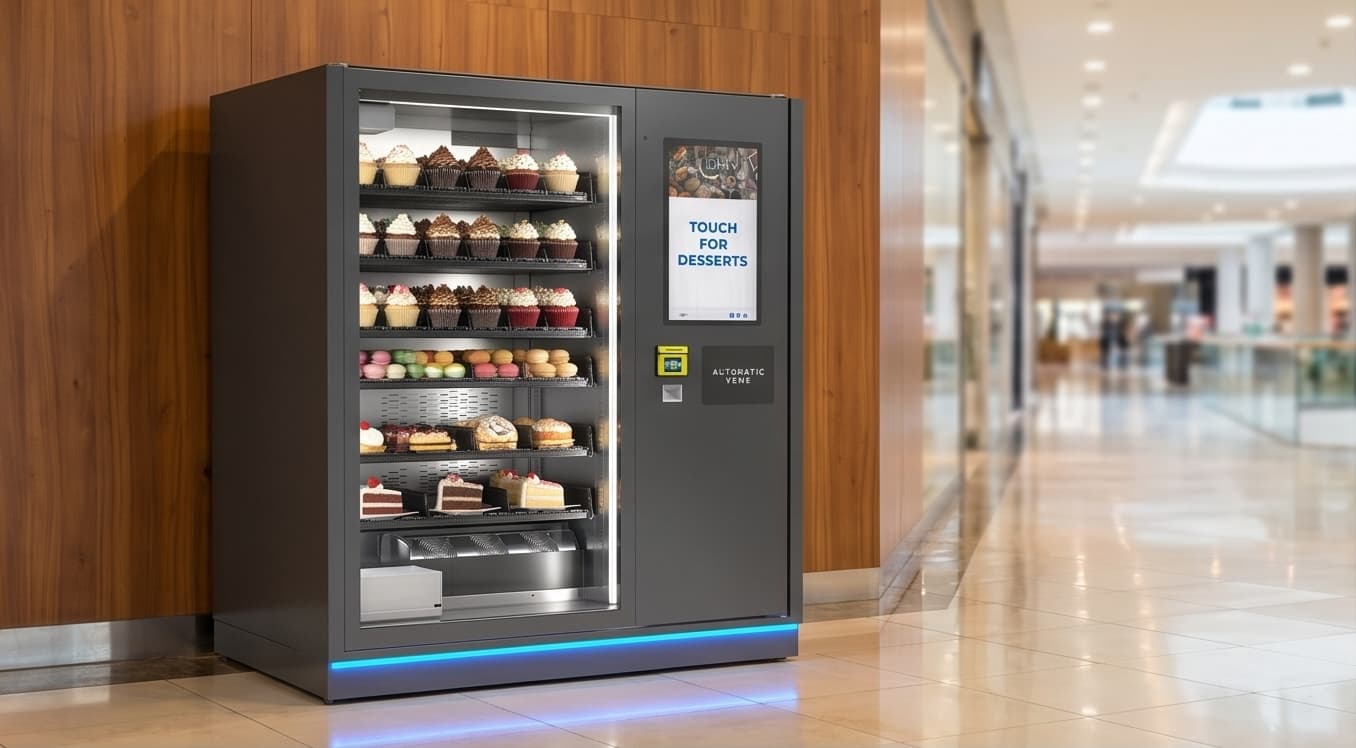
A bespoke build earns its cost premium when the product is fragile, irregular, oversized, temperature-sensitive, age-gated, or high-value enough that a stock cabinet creates damage, friction, or compliance risk. Cupcakes, glassware, electronics, premium bottles, jewellery, vape products, and controlled-access supplies all fit that pattern better than a standard bag of crisps ever will. Bespoke also makes sense when the venue brief rules out a standard cabinet footprint or when the machine itself has to function as a designed brand asset instead of a wrapped commodity.
If the machine is selling normal packaged products in an ordinary corridor, bespoke is usually unnecessary drama. A configured smart vending platform with the right wrap, screen experience, and planogram will do the job faster and more cheaply.
Custom vending machine pricing and lead time
Configured personalisation is usually the fastest and cheapest tier. A stock cabinet with custom wrap, touchscreen theme, standard payments, and a personalised planogram is typically far quicker to launch than a semi-custom or bespoke project. Once the project starts changing column geometry, refrigeration logic, retrieval hardware, or cabinet structure, timelines and cost naturally climb. That is why the most useful scoping question is simple: how much of the customisation needs to live in hardware, and how much can live in the wrap, screen, and planogram?
Buyers who answer that question honestly tend to save themselves both money and the special kind of regret reserved for unnecessary engineering.
What to prepare before talking to a custom vending manufacturer
A good scoping conversation covers the product mix, the venue footprint, expected traffic, electrical and network realities, the desired customer experience, and the brand brief. If the products are fragile or regulated, the manufacturer also needs packaging dimensions, handling tolerances, cold-chain needs, age-verification requirements, or controlled-access logic. The goal is not to make the conversation sound more technical than it is. The goal is to identify early whether this is a customised stock-cabinet job or a true bespoke build.
The best manufacturers will tell you when a configured platform is enough. Anyone who insists every enquiry needs ground-up engineering is either selling ego, or trouble, or both.
Want to design your own vending machine without overbuilding it?
DMVI can help you scope the wrap, touchscreen experience, planogram, and cabinet format first — then decide whether the project needs configured personalisation or a true bespoke build.