Pokémon Card Vending Machine Formats: Wall-Mounted, Option 4, or M1 Explained
A Pokémon card vending machine format is the cabinet class chosen for a trading-card retail programme: compact wall-mounted, mid-tier touchscreen, or high-capacity M1. Trademark note, because the internet becomes odd when this is left unsaid: Pokémon and its associated brand elements belong to their respective owners, and the official Pokémon Automated Retail Vending Machines are owned and operated by The Pokémon Company International rather than sold to third-party operators. This page is operator-side guidance for sealed trading-card vending programmes generally, using Pokémon card demand as the category signal rather than implying DMVI sells official Pokémon machines.
The right format depends on assortment width, per-SKU depth, venue footprint, and replenishment reality. A cabinet that is perfect for a card-shop corridor is not automatically the right answer for a mall, airport, or convention floor. Underspec the machine and it runs dry too quickly; overspec it and the investment looks heroic in a way finance departments rarely enjoy.
Wall-mounted with optional stand: the compact entry format
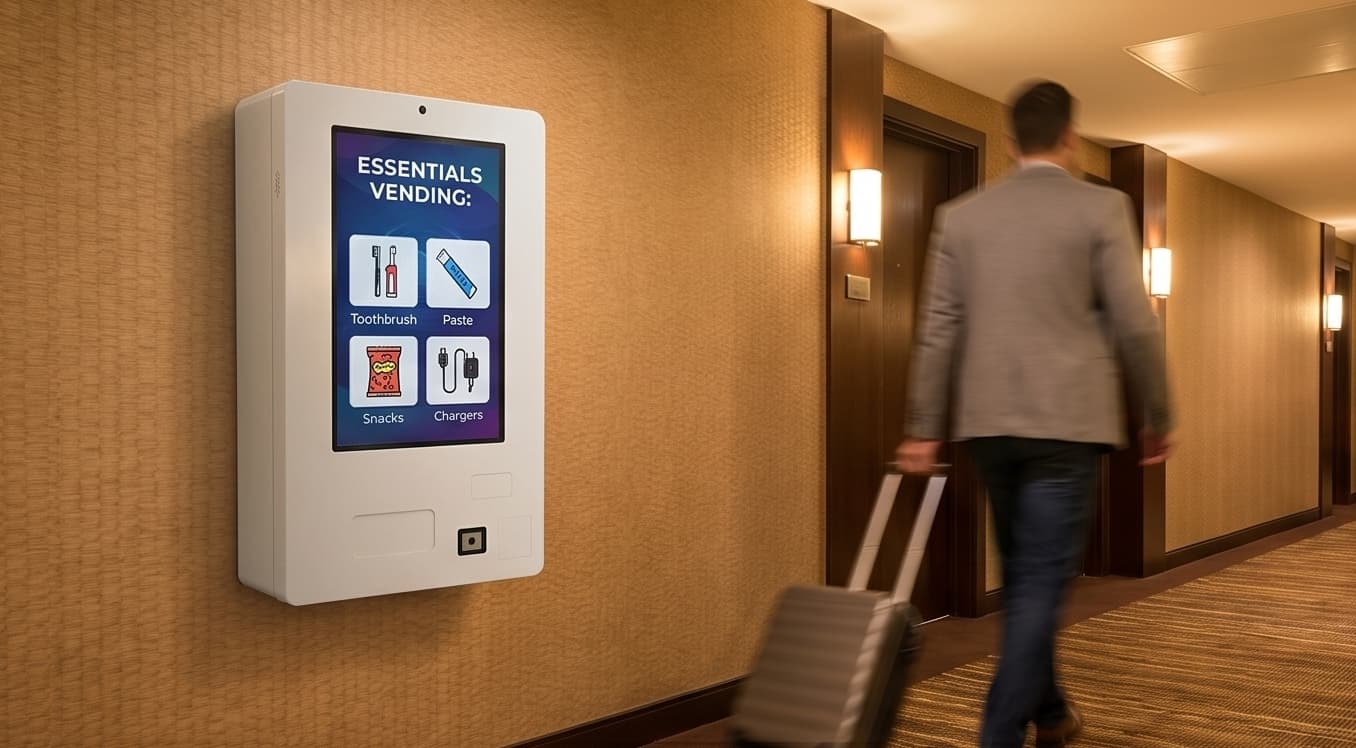
The wall-mounted machine is the tight-footprint answer for operators who want a curated assortment without giving up modern payment, telemetry, or touchscreen logic. In a trading-card configuration it supports up to twenty SKUs and up to twenty-two booster packs per SKU, which makes it well suited to compact card shops, toy retailers, hospitality corridors, and controlled retail extensions where a floor-standing machine would feel oversized.
The optional stand is the alternative when wall mounting is impractical but the same compact commercial logic still applies. This is not the flashy flagship choice. It is the disciplined answer when the programme needs a narrow edit and a modest footprint.
Option 4: the fifty-inch touchscreen mid-tier
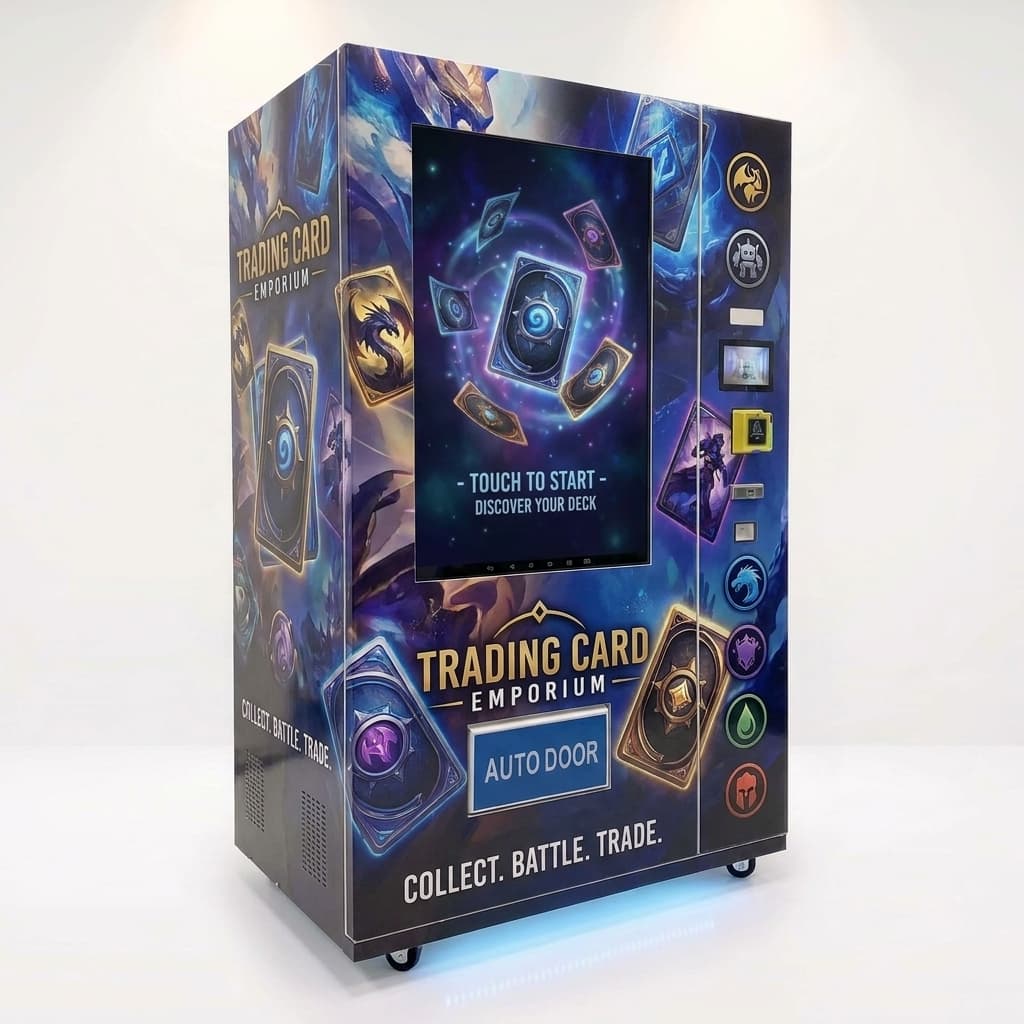
The Option 4 is the stronger choice when the programme needs broader assortment, a more visible merchandising experience, or more retail presence than the wall-mounted machine can provide. It supports up to sixty SKUs and up to twenty-two booster packs per SKU, and it can handle larger case-style booster-pack boxes in the right configuration.
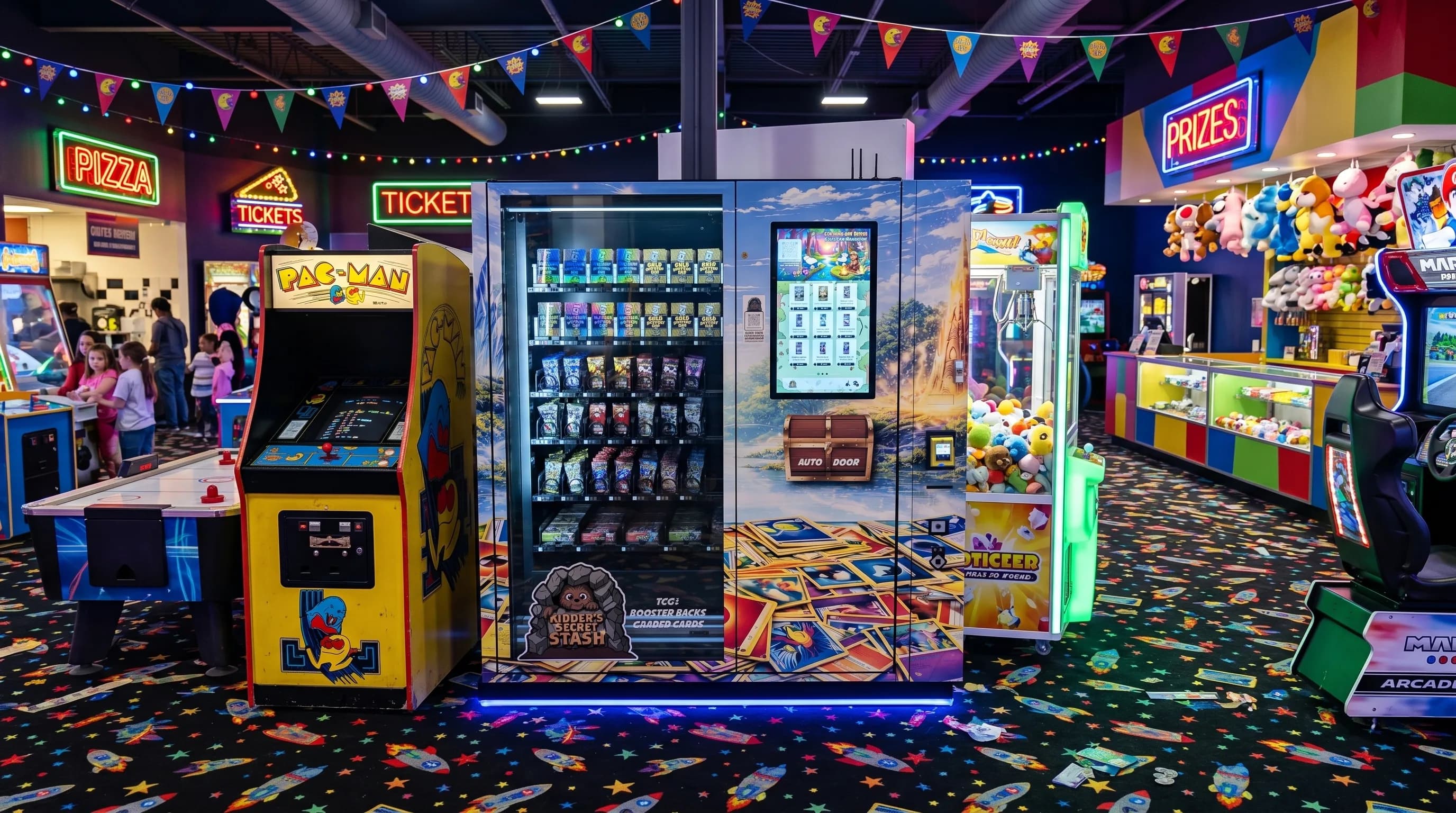
This is usually the balanced commercial choice for malls, cinemas, family entertainment venues, and toy retailers that want enough assortment to feel substantial without immediately stepping into M1 footprint or M-Series scale. The bigger touchscreen also changes the buying experience meaningfully by making browsing, visuals, and product discovery feel like retail rather than a small utilitarian vend.
M1: high-capacity for the broadest assortment and heaviest demand
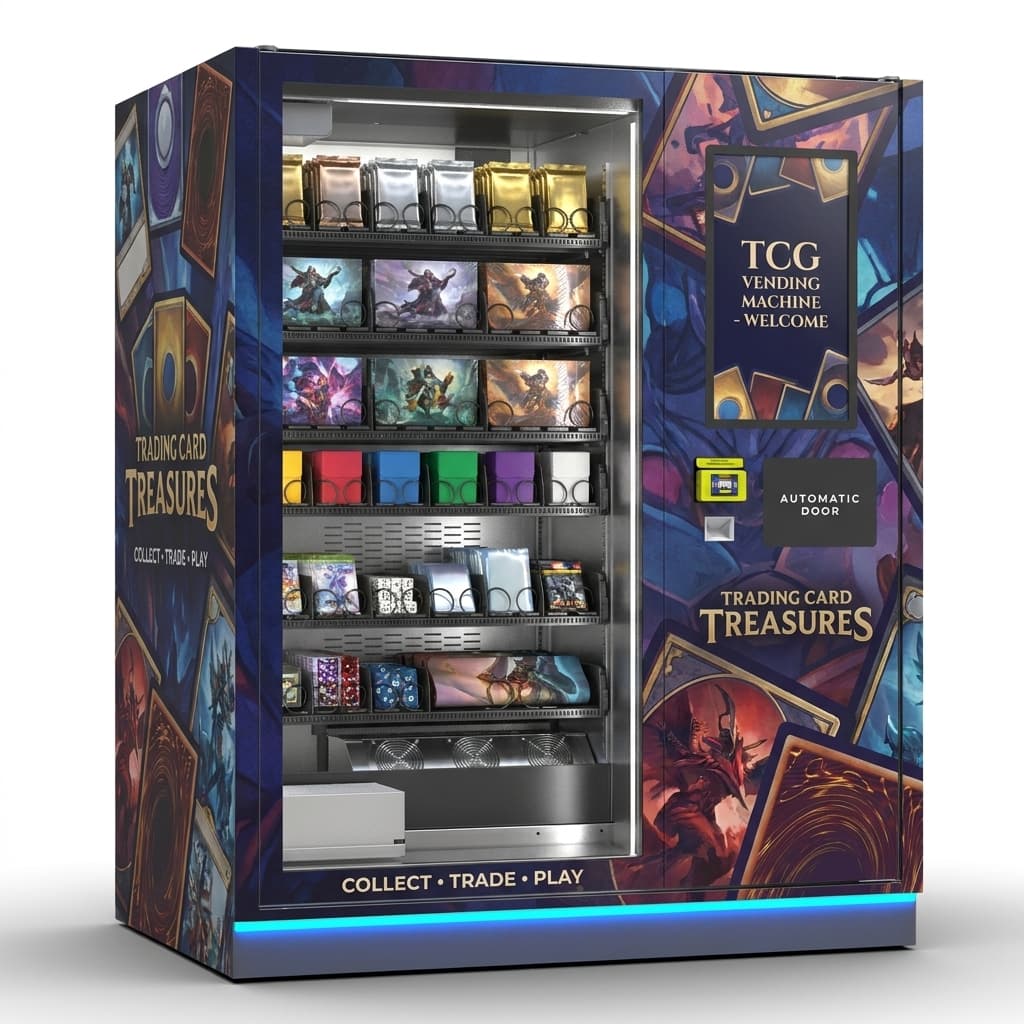
The M1 is the high-capacity answer when the deployment needs real depth. It supports up to one hundred and forty SKUs and up to twenty-nine booster packs per SKU, with materially broader flexibility for larger boxed trading-card products alongside standard booster packs. It is the format that makes sense for flagship retail presence, convention demand, large entertainment venues, and operators who need a wider collectible mix without absurd restock frequency.
M1 is usually the answer when the question is no longer “Can we fit the programme in?” but “How do we stop the machine running out of half the good stuff by mid-afternoon?” High throughput and broad assortment are where the larger cabinet earns its keep.
How to choose the right format without getting theatrical about it
Format decisions usually reduce to four criteria: SKU count, per-SKU depth, venue footprint, and venue archetype. Under roughly twenty SKUs points toward wall-mounted. Twenty to sixty usually points toward Option 4. Over sixty, or any programme needing much broader boxed-product flexibility, usually points toward M1. Tight real estate constrains the answer no matter how ambitious the buyer feels that morning.
The venue matters just as much. Card shops and tighter retail corridors tend to favour wall-mounted or Option 4. Malls and cinemas often fit Option 4 cleanly. Airports, conventions, and flagship entertainment sites are far more likely to justify M1 capacity because the replenishment burden and assortment breadth outgrow the smaller formats quickly.
Operator responsibility on sourcing, trademark, and product fit
DMVI supplies the vending platform: cabinet, touchscreen experience, payment hardware, telemetry, and management layer. Operators source the trading-card inventory. That means the operator is responsible for sourcing genuine, licensed product through the appropriate distribution channels and for complying with the reseller, merchandising, and trademark obligations that apply to the inventory being sold.
The honest operational check is simple: confirm the product dimensions, packaging integrity, and assortment strategy against the selected cabinet before launch rather than discovering after delivery that the machine and the product politely dislike each other.
Need help choosing the right trading-card vending format?
DMVI can scope the right cabinet around SKU count, product mix, venue footprint, and replenishment reality before you commit to the programme.