Wall-Mounted Vending Machines for Hotels, Resorts, and Travel Environments
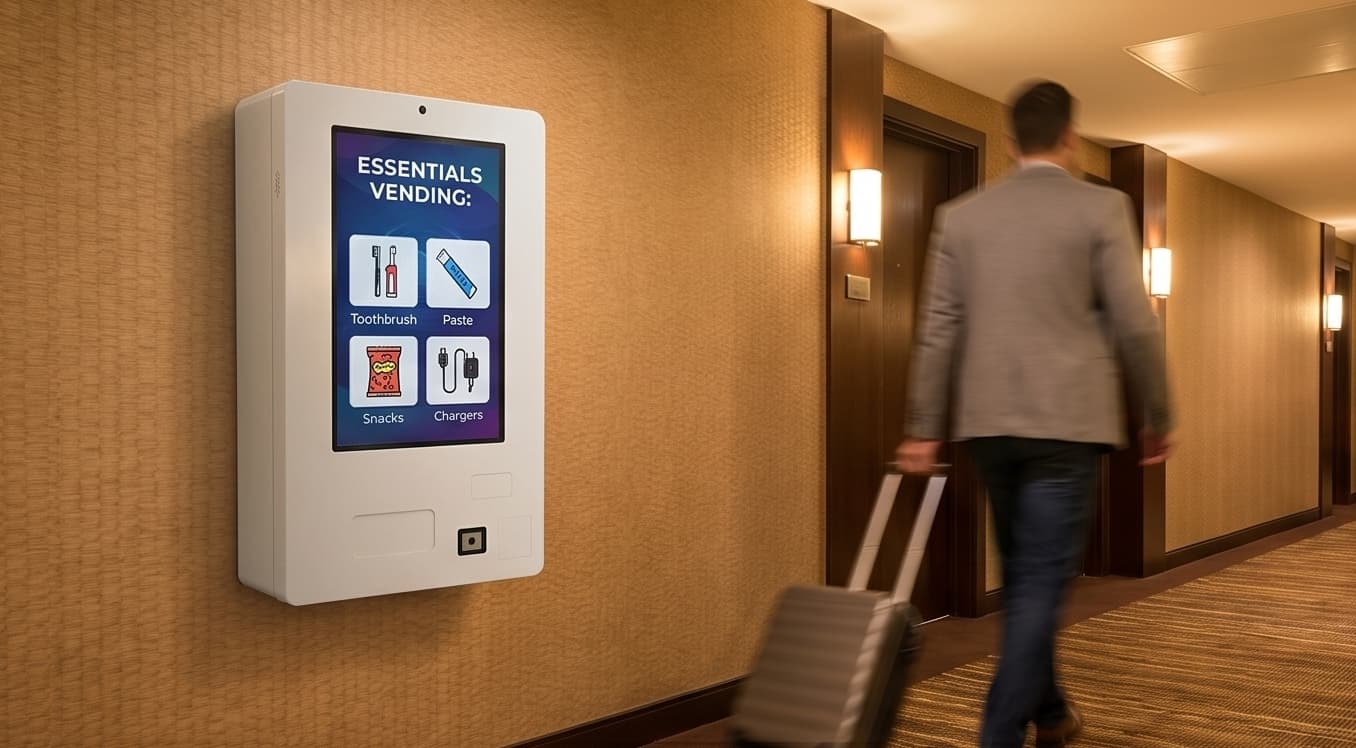
A wall-mounted vending machine is a compact, surface-mounted automated retail unit designed for tight hospitality footprints where a full floor cabinet is the wrong fit. In hotels, resorts, and travel environments, it solves a simple off-hours retail problem: guests want essentials, chargers, medicines, snacks, or bottled drinks at 2 AM, and the front desk is not the right retail format for those low-friction purchases. Modern units pair a touchscreen interface, contactless cashless payment, and cloud-connected telemetry so the property or operator can run a corridor retail point without dedicating staffed square footage.
This guide covers what wall-mounted vending machines actually do well in hospitality, which products fit the format, and the placement, payment, and service decisions that determine whether the installation becomes useful ancillary revenue or just another underperforming amenity.
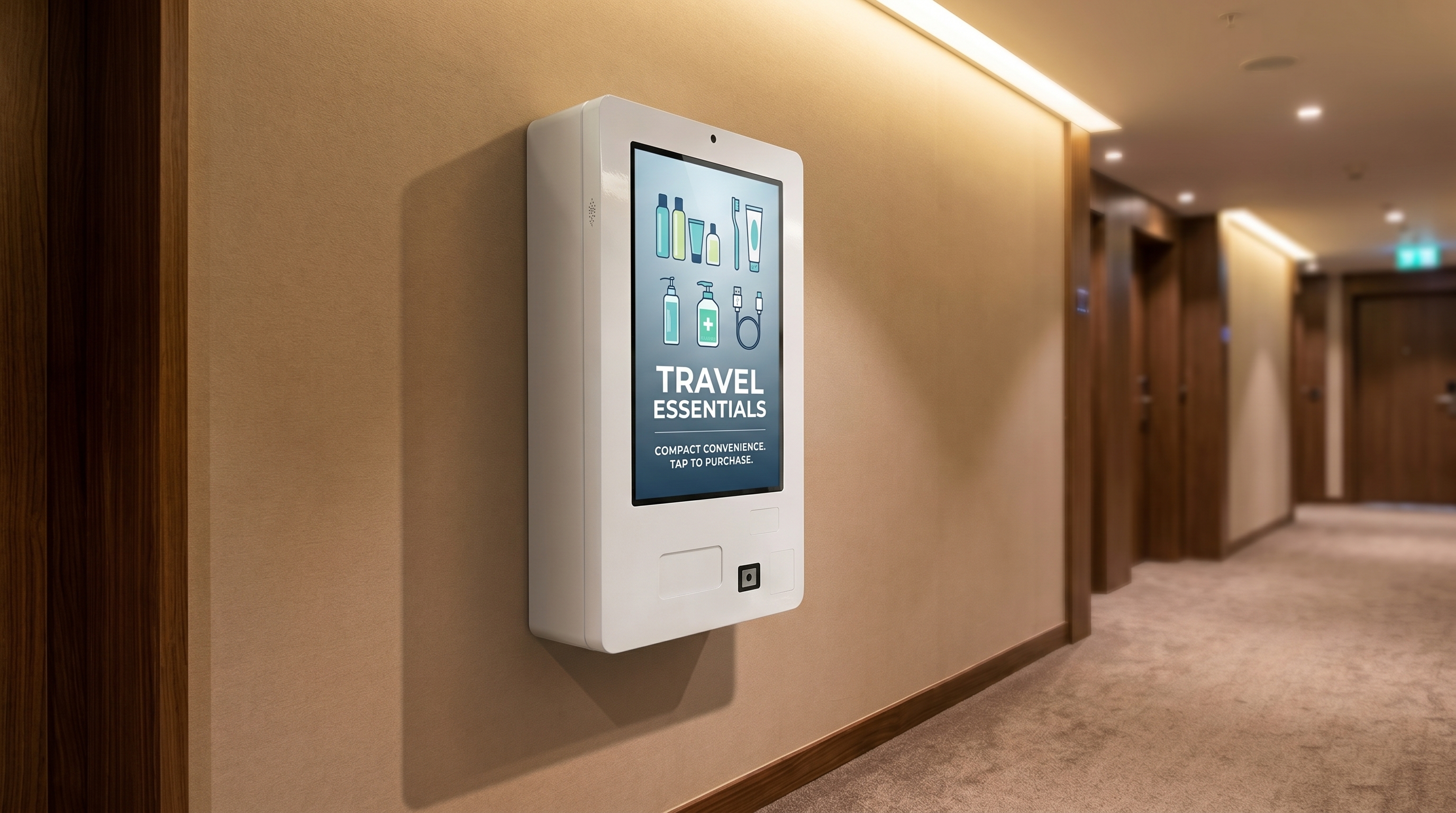
What Makes Wall-Mounted Vending Different
Unlike a full-size cabinet, a wall-mounted vending machine is built for compact, standardized SKUs and short dwell-time purchase missions. The strongest use cases are immediate-need transactions: toiletries, pain relief, chargers, cables, snacks, and drinks guests want right now without calling downstairs or leaving the property.
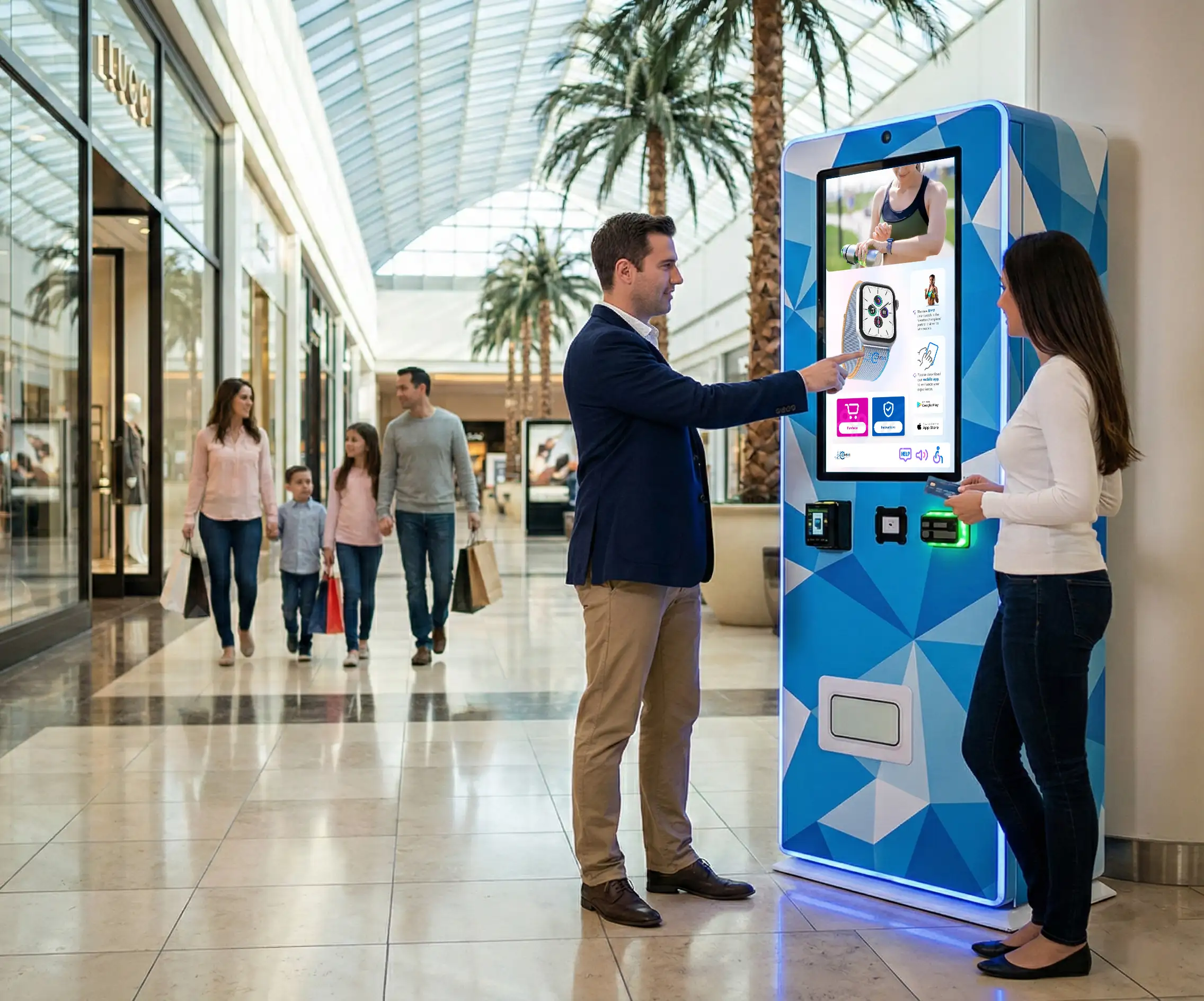
That compact format is why a small touch screen vending machine can outperform a larger cabinet in guest-floor lift lobbies, small lobby alcoves, spa corridors, and other premium circulation areas. The best installations treat the machine as a tightly curated retail point rather than trying to force a mini convenience store into a narrow wall bay.
What Products Work Best in Hotel Wall-Mounted Vending
The strongest categories are the products guests forget, run out of, or need urgently outside front-desk and gift-shop hours:
- Travel essentials: toothbrushes, toothpaste, deodorant, razors, shaving cream, sunscreen, and travel-format toiletries
- OTC medications: pain relief, antacids, sleep aids, eye drops, and cold-and-flu basics where local policy allows
- Phone and tech accessories: USB-C and Lightning cables, travel adapters, charging plugs, and earbuds
- Snacks and drinks: bottled water, premium snacks, and simple grab-and-go beverages that fit the cabinet geometry
- Personal care items: feminine hygiene products and other discreet essentials guests may need immediately
The right planogram depends on the property. A business hotel near a convention center usually sells more chargers, pain relief, and water. A resort or leisure property may move more sun care, hydration, and pool-adjacent convenience items. Product fit matters more than trying to maximize slot count.
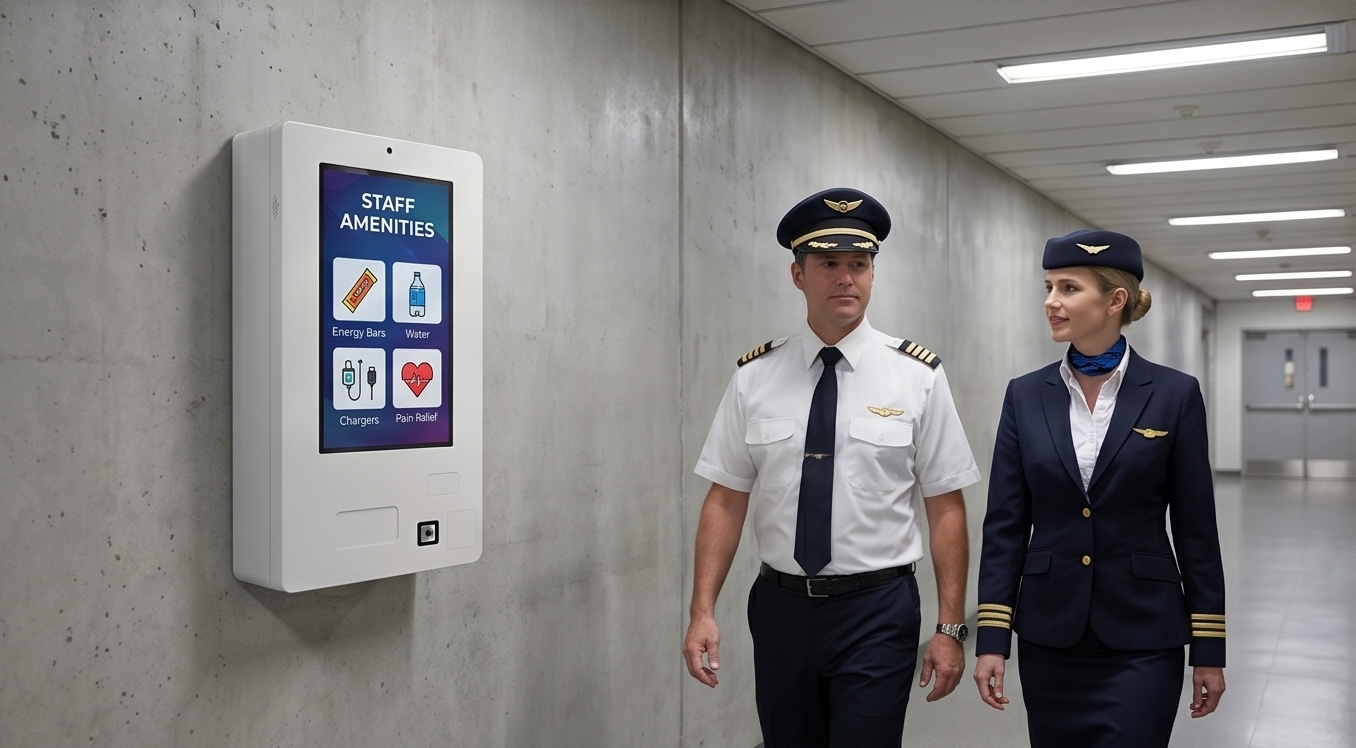
Cashless Payment and Guest Experience
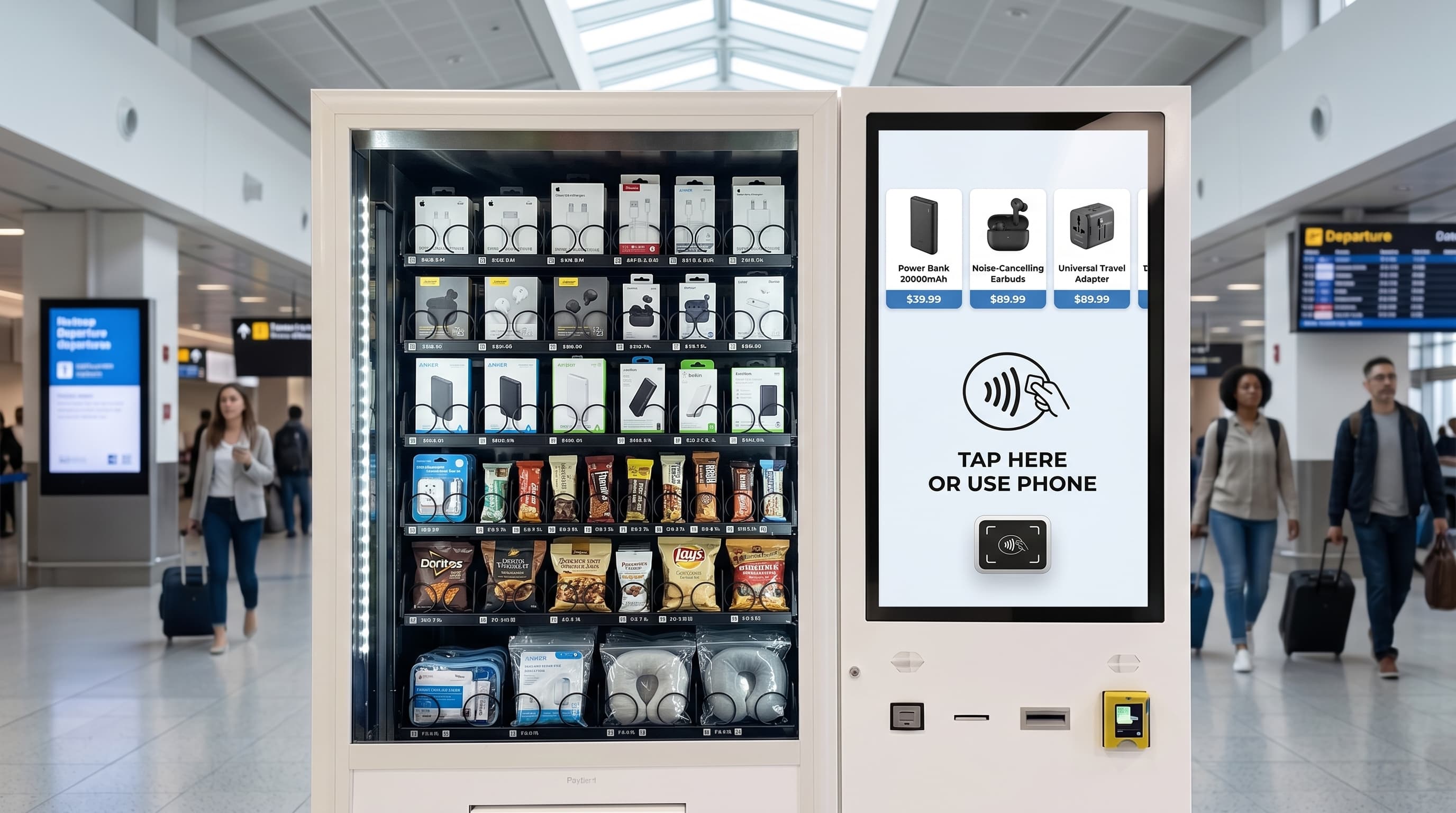
A hospitality wall-mounted vending machine that only accepts coins leaks transactions. International guests, business travelers, and late-night buyers expect contactless checkout. Modern units use MDB-compatible payment hardware, the vending communication standard described in MDB/ICP, to support tap cards, Apple Pay, Google Pay, and other contactless flows. Providers such as Nayax pair that payment layer with telemetry and remote fleet visibility built for vending operators.
The interface matters too. Guests judge the machine partly as part of the property experience, not just as a utility box. A clear touchscreen with obvious pricing, product imagery, and a fast tap-to-pay path makes the machine feel aligned with modern hospitality rather than like an afterthought.
Placement and Installation Decisions That Matter
The strongest placements are the parts of a property where guests already pause and where the purchase need is obvious:
- Guest-floor lift lobbies: natural pause points for forgotten essentials and late-night convenience purchases
- Lobby and reception-adjacent alcoves: visible but compact placements for arrivals, departures, and off-hours retail
- Gym, spa, and pool access corridors: useful for hydration, personal care, and amenity-led impulse purchases
- Staff-facing hospitality areas: back-of-house or mixed-access corridors where a compact machine solves a repeat convenience need
Installation still needs real planning. The wall must support the loaded unit, power has to be available, network reliability needs to be good enough for cashless operation, and the service door needs clearance for restocking. Those practical details matter more than the brochure render.
Remote Management Turns It Into an Actual Program
Cloud-connected telemetry is what makes a multi-machine hospitality rollout manageable. Operators can see sales, low-stock conditions, and service exceptions remotely instead of walking each corridor on a fixed schedule. That turns restocking into a planned response to actual demand rather than guesswork.
That is especially useful when a property mixes compact wall-mounted units with a broader smart snack and soda vending program or wants a dedicated wall-mounted vending machine specification across guest and staff areas. The more distributed the estate, the more valuable the dashboard becomes.
What to Ask Before You Install One
- Is there real off-hours demand? A machine works best when it solves a repeated late-night or convenience-access problem.
- Do the products genuinely fit the cabinet? Wall-mounted units are strongest with compact, standardized packaging.
- Is cashless connectivity reliable at the install point? Weak network performance undermines conversion quickly.
- Who owns restocking and assortment tuning? Someone has to treat the machine like a retail point, not a set-and-forget amenity.
- Is the property trying to improve guest experience, add revenue, or both? The answer shapes merchandising and placement decisions.
Planning a hotel or resort wall-mounted vending rollout?
DMVI builds compact wall-mounted vending machines for hospitality environments with touchscreen retail, cashless payment, and cloud-connected telemetry. Talk with the team about placement, product mix, and deployment options.