Airport Vending Machines: Travel-Retail Specs, SKUs, and Operator Realities
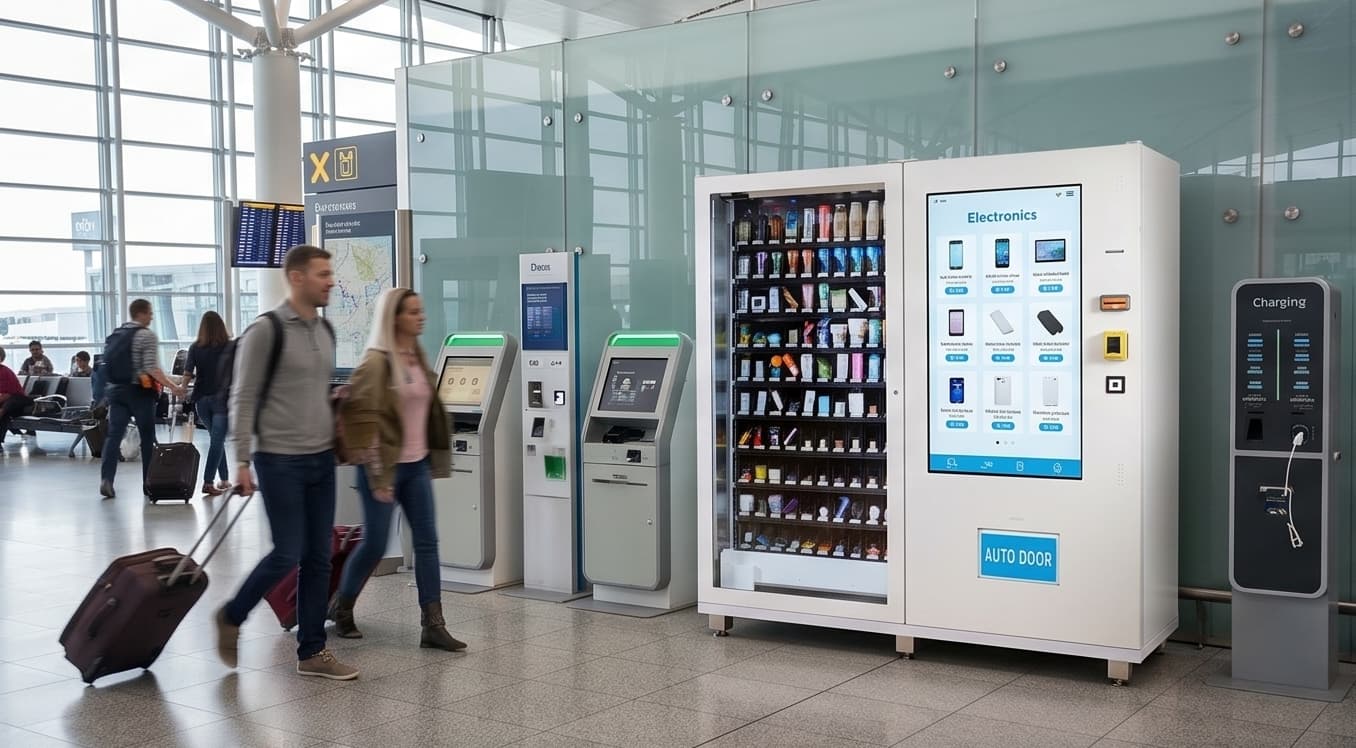
An airport vending machine is an automated retail unit deployed inside a terminal, transit concourse, or related travel environment to sell products to a captive, time-pressured customer base around the clock. Airports are unusually strong unattended-retail environments because travelers are constrained by security, time, and limited alternatives, which means the machine can solve urgent needs that ordinary retail sometimes misses or prices dearly.
That said, airport vending is not just ordinary vending with slightly more expensive water. The operating realities are stricter, the security requirements are higher, the restock windows are tighter, and the product mix has to match travel behaviour rather than generic convenience theory.
Why airport and transit vending can work so well
Airports create the conditions that often make unattended retail commercially viable at scale: sustained foot traffic, long operating hours, strong demand for immediate-consumption items, and a customer population that may urgently need a charger, snack, drink, adapter, personal-care item, or even a replacement device before boarding. Transit hubs share many of the same traits, even if the dwell time and buyer profile differ slightly.
The most important point is that demand is situational. Travelers are not shopping leisurely. They are solving immediate problems while watching the clock. Machines that fit that urgency can perform extremely well. Machines that try to behave like generic corridor vending with no regard for the travel context are much less clever than they imagine.
What airport vending machines actually sell
Strong airport vending categories usually include packaged snacks and beverages, fresh food where refrigerated capability is available, travel essentials such as chargers and adapters, headphones, neck pillows, personal-care and hygiene products, and selected wellness or over-the-counter items where local rules allow. In some terminals, higher-value electronics or pre-order pickup formats also make sense.
The right mix depends heavily on where the unit sits. Landside machines near arrivals, parking, or public entrances may carry a different range than airside units near gates. Post-security machines can lean harder into urgent travel needs because the customer has fewer alternatives once they are past screening. That landside-versus-airside distinction matters more than most glossy brochures admit.
What hardware and compliance realities matter
Airport machines should be built for harder service conditions than an office or hotel corridor unit. Reinforced glass, secure delivery bins, reliable cashless readers, and strong remote visibility into faults and door events are basic expectations rather than luxury extras. Standards such as MDB still matter because the machine has to coordinate payments and peripherals cleanly, while telemetry is critical for stock visibility and service planning.
Accessibility and payment flexibility also matter more in travel environments. International passengers may expect contactless cards, mobile wallets, and other cashless methods, often without local currency in hand. Refrigerated SKUs require proper temperature control and reporting, not wishful thinking and a sticker claiming freshness.
Why airside service is operationally different
Once a machine is inside security, replenishment becomes more complicated. Service crews may need airport badging, sealed-bag rules, limited access windows, and enough discipline to move stock through security without wasting the trip. A missed or poorly picked restock can leave the machine dry for far longer than it would in an ordinary retail setting.
That is why telemetry-driven pre-pick and route planning matter so much. Operators need the right inventory in the right tote before a restocker heads through security. The machine’s data needs to reduce uncertainty, not merely produce dashboards everyone admires while the best-selling charger slot sits empty for six hours.
What buyers and operators should prove before scaling
They should prove the product mix against terminal-specific demand, confirm the security and service model with the airport or concession partner, validate cashless payment performance, and ensure the machine format actually fits the location geometry. A narrow corridor, a gate hold room, and an arrivals hall do not all want the same machine, however much a manufacturer may wish they did.
Airport vending can be highly profitable and highly useful, but only when the deployment respects travel-retail realities. The best units solve urgent passenger needs with reliable hardware and disciplined restocking. The weaker ones merely occupy expensive floor space while pretending the terminal is a shopping mall with more rolling luggage.
Evaluating airport or transit vending for a terminal, concession, or travel-retail program?
DMVI helps operators match machine format, product mix, payment stack, and service workflow to the real operating constraints of airports and other high-throughput travel environments.