Coffee Vending Machines: What Operators Need to Know Before Adding One to a Route
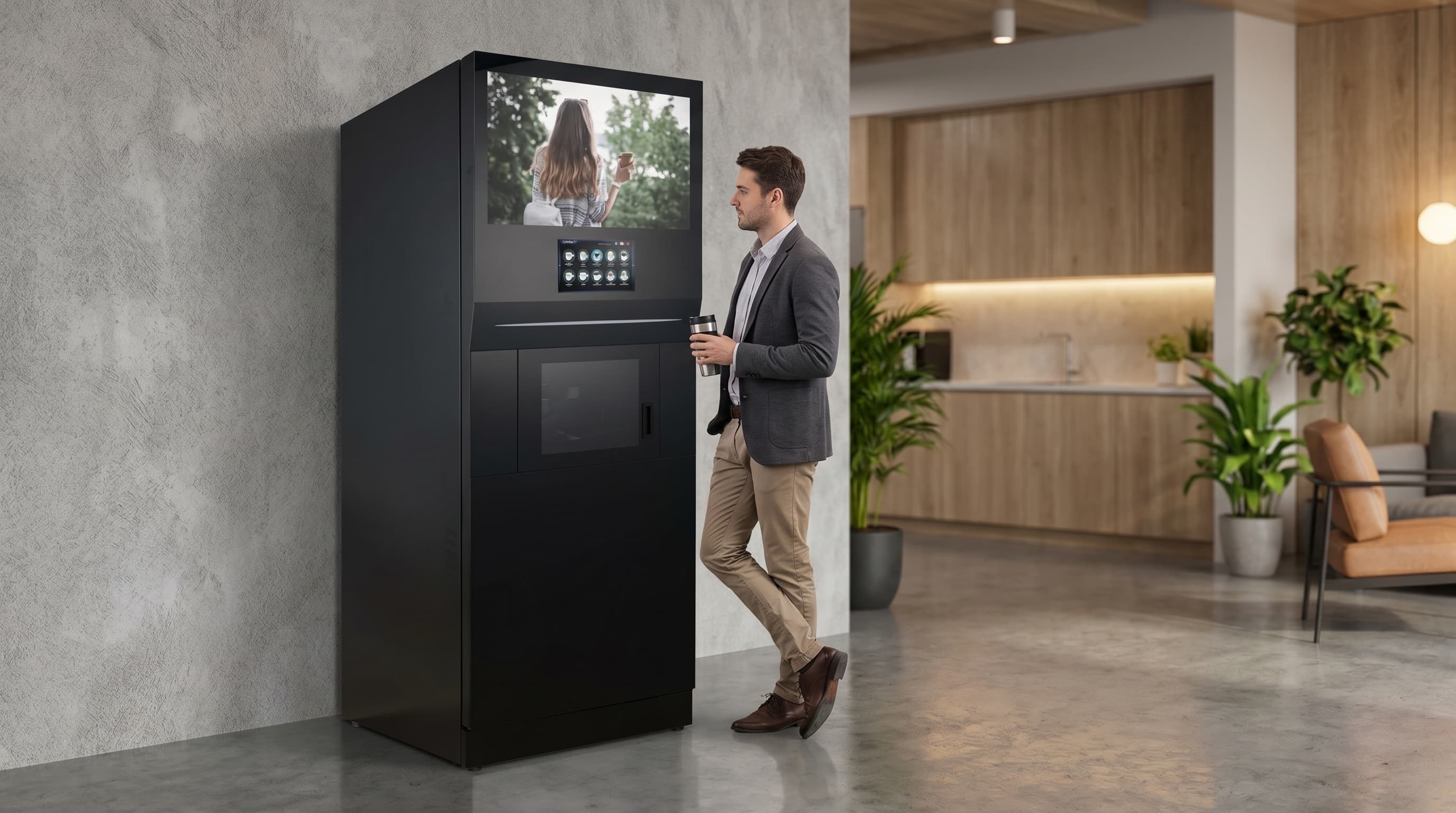
A coffee vending machine is an automated retail unit that prepares and dispenses a hot coffee drink on demand using one of three formats—bean-to-cup espresso, fresh-brew filter, or instant powder—typically paired with a cup-drop, MDB-compatible cashless module, and a cloud-connected telemetry stack for stock and service alerts. Coffee is one of the highest-margin categories in vending, but the machine, the product, and the service rhythm are all different from a snack cabinet. Getting the choice wrong is expensive in cleaning labor, refunds, and ruined cups.
This guide is for operators evaluating whether coffee belongs on a route, what machine format fits the site, and where the operating burden becomes the difference between a profitable installation and a service headache.
How Coffee Vending Machines Work
A coffee vending machine prepares each drink at the point of sale rather than dispensing a pre-packaged product. Three formats dominate the market and each has a different cost-of-quality profile, as outlined in Coffee vending machine:
- Instant or freeze-dried machines. Dry granules combine with hot water per cup. Lowest capex, lowest cleaning burden, and lowest perceived quality. They fit low-traffic sites where the alternative is no hot-drink offer at all.
- Fresh-brew filter machines. Ground coffee is brewed per cup or in small batches. Mid-range capex, stronger drink quality, and a practical fit for healthcare, education, and staff environments that want a real coffee without a full espresso program.
- Bean-to-cup machines. Whole beans are ground on demand and dispensed as espresso-based drinks. Highest capex, highest perceived quality, and the heaviest cleaning burden. They are usually the right answer when the location can support premium pricing and daily service discipline.
Cashless modules usually communicate with the controller through the MDB/ICP standard, while mixed routes still rely on DEX audit reads for vending data collection. Those details matter because a coffee machine is not just a drink dispenser—it is a higher-service, data-sensitive endpoint that needs to fit the rest of the fleet.
The Maintenance Reality Most Operators Underestimate
The cleaning schedule is the biggest operational difference between coffee vending and standard packaged vending. Bean-to-cup machines need brew-group rinses multiple times a day and a full chemical clean daily or after a set number of cups, depending on the model. Skip the routine and you get rancid oils, bacterial growth, poor drink quality, and refunds inside a short operating window.
The most common failure pattern is simple: a promising coffee unit is added to a route that is still being serviced on a snack-machine cadence. Weekly attention is enough for chips and cans. It is not enough for a fresh-drink system. Before the machine is delivered, the operator needs a realistic answer to one question: who is responsible for daily cleaning, and how will that task actually happen?
Ingredient Management Is Different from Snack Restocking
A coffee machine consumes multiple inventory streams that deplete at different rates: beans or powder, milk or whitener, cups, lids, sugars, and stirrers. What runs out first depends on the drink mix the location actually buys. That makes remote visibility far more important than it is on a simple snack cabinet.
Cloud-connected platforms such as Nayax cashless vending turn coffee service into a data problem instead of a guesswork problem. Operators can monitor sales, ingredient depletion, and service exceptions remotely, then pair a coffee deployment with a broader smart snack and soda vending program or a dedicated coffee vending machine deployment without adding blind service stops.
Where Coffee Vending Performs Best
Coffee vending needs repeat demand to justify the machine and the cleaning labor behind it. The strongest deployment contexts are:
- Office buildings and corporate campuses where staff want a quick premium drink without leaving the floor
- Hospitals and care facilities where overnight teams need reliable hot-drink access outside cafeteria hours
- Hotels and hospitality sites where guests or staff need in-building service beyond café operating hours
- Education environments with predictable morning and break-time peaks
- Transit-adjacent sites where speed and uptime matter more than a full café experience
Locations serving fewer than roughly 20 to 25 cups per day often struggle because the service cost per cup rises quickly. At stronger volumes, coffee becomes one of the most commercially attractive beverage categories in unattended retail.
What to Ask Before Choosing a Machine
- What drink quality does the site actually require? Do not buy bean-to-cup theater for a location that only needs a reliable commodity hot drink.
- Can the location support the cleaning rhythm? If the route cannot support daily cleaning, eliminate the machines that require it.
- Does the install point need plumbing? Some formats run best with a plumbed water source; tank-fill units trade placement flexibility for more service labor.
- What is the realistic daily cup volume? Use conservative numbers based on traffic, shift coverage, and nearby coffee alternatives.
- Will the machine report inventory and payment data remotely? Telemetry, cashless payments, and service alerts should be built into the operating model, not added as an afterthought.
Planning a coffee vending deployment?
DMVI helps operators match coffee machine format, cashless payments, and service cadence to the location before capital is committed. Talk to the team about the right coffee vending setup for your route.