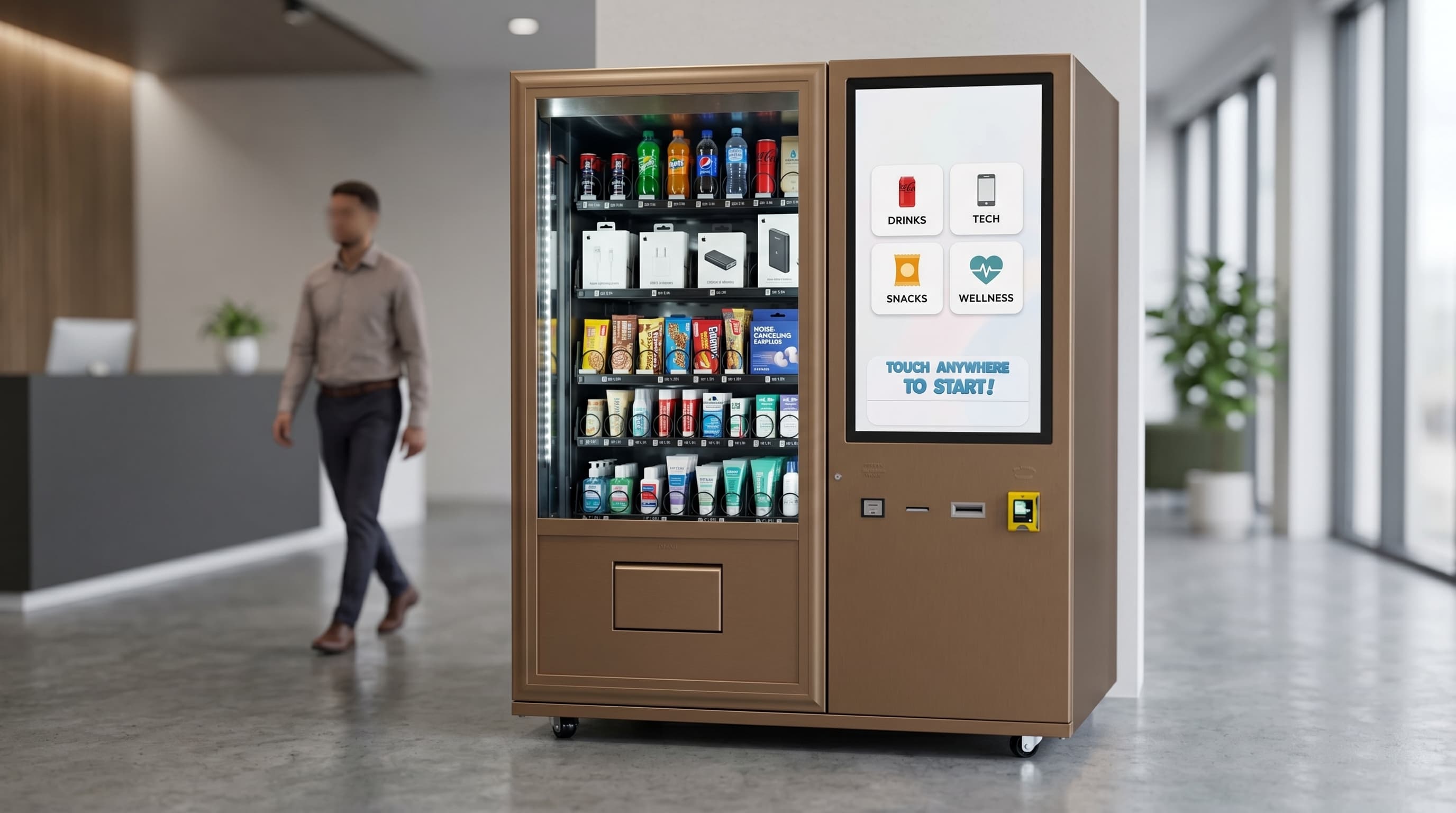
Vending Machine Placement: How to Locate Prime Spots for Your Vending Business

Vending machine placement is the discipline of choosing sites where unmet, captive demand beats the available alternatives at the moment someone wants to buy. That sounds obvious, yet plenty of operators still place cabinets where the footfall looks impressive and the sales then sulk in a corner. The most consistent difference between a machine that earns properly and one that merely decorates the wall is not the machine, the branding, or the SKU list. It is the site.
This page already has the right bones, so the useful job is not to reinvent it. The useful job is to tighten the placement logic around the queries people are actually using: vending machine placement, prime locations, how to get a location, and where to put a machine so it earns instead of merely humming.
Demand density beats raw foot traffic
High foot traffic is not the same thing as strong vending demand. A busy transit hub may look promising until you count the sandwich shop, the coffee chain, the convenience store, and the two existing machines already competing for the same buyer. A site with lower total traffic but far fewer alternatives often wins. A night-shift manufacturing site with 200 workers and nowhere to buy food after 10 p.m. can outperform a glamorous public location because the need is concentrated and the alternatives are weak or absent.
That is why sensible operators evaluate demand density, not just human volume. The question is how many likely buyers are physically present during the key sales window and whether your machine is actually the most convenient option when they want something.
Location categories that consistently outperform
Certain site types turn up again and again in strong portfolios. Manufacturing, logistics, and warehouse sites perform well because workers have fixed breaks, limited exit options, and repeat demand. Healthcare buildings work because staff and visitors need food and drinks at odd hours, often after cafés close. Larger office buildings without a proper café can perform nicely, especially when access control reduces outside alternatives. Student housing and multi-family residential sites benefit from repeat late-night demand. Smaller transit nodes can work when alternatives are genuinely weak rather than oversupplied.
None of this means every site in those categories is automatically brilliant. It means the odds improve when the buyer is captive, the sales window is clear, and the alternatives do not steal the purchase before your cabinet gets a chance.
How to qualify a site before signing it
A location should pass a simple checklist before you drag hardware anywhere near it. How many people are actually present during the machine’s main sales hours? What alternatives exist within a short walk? Can the operator get access for restocking when needed? Is there adequate power, clearance, and a realistic place to install the cabinet without creating a nuisance? Who is the actual decision-maker on site, and are they responsive enough to fix access issues when they arise?
Most poor placements fail long before launch. They fail on access, weak demand, bad competition, or venue contacts who disappear the moment the agreement is signed. Better to reject those up front than to spend three months calling the machine “a learning experience.”
Location agreements and commission splits
A location agreement should define who supplies the machine, who stocks it, who maintains it, who pays the electricity, what the term is, how either side can terminate, and whether the venue expects a commission. In some industrial placements, the machine is treated as an amenity and no commission is paid. In office, hospitality, or higher-leverage sites, commission requests are common. The important thing is to model the economics honestly. A generous-sounding location can become a terrible deal if the venue takes a commission off gross revenue while the SKU mix already carries tight margins.
Commission is not automatically bad. Bad arithmetic is bad. There is a difference.
Use telemetry to validate the site quickly
Connected vending lets the operator judge a placement with actual data rather than hunches. Within the first month, telemetry should show whether the site has enough SKU velocity, average ticket, and repeat use to clear the operating cost of the cabinet. It also reveals cashless adoption, stockouts, dead slots, and which products are carrying the location. If a site still is not approaching break-even after a reasonable launch window, the honest answer is often relocation, not more excuses.
That is one of the best habits a growing operator can build: treat placement as a hypothesis, then use real data to prove or kill it quickly.
Evaluating locations for a vending deployment?
DMVI can help you match machine format and capability to the specific demand profile of your target site, so the placement logic works before hardware ever lands on the floor.