Vending Machine Profitability: What Actually Determines Whether a Machine Makes Money
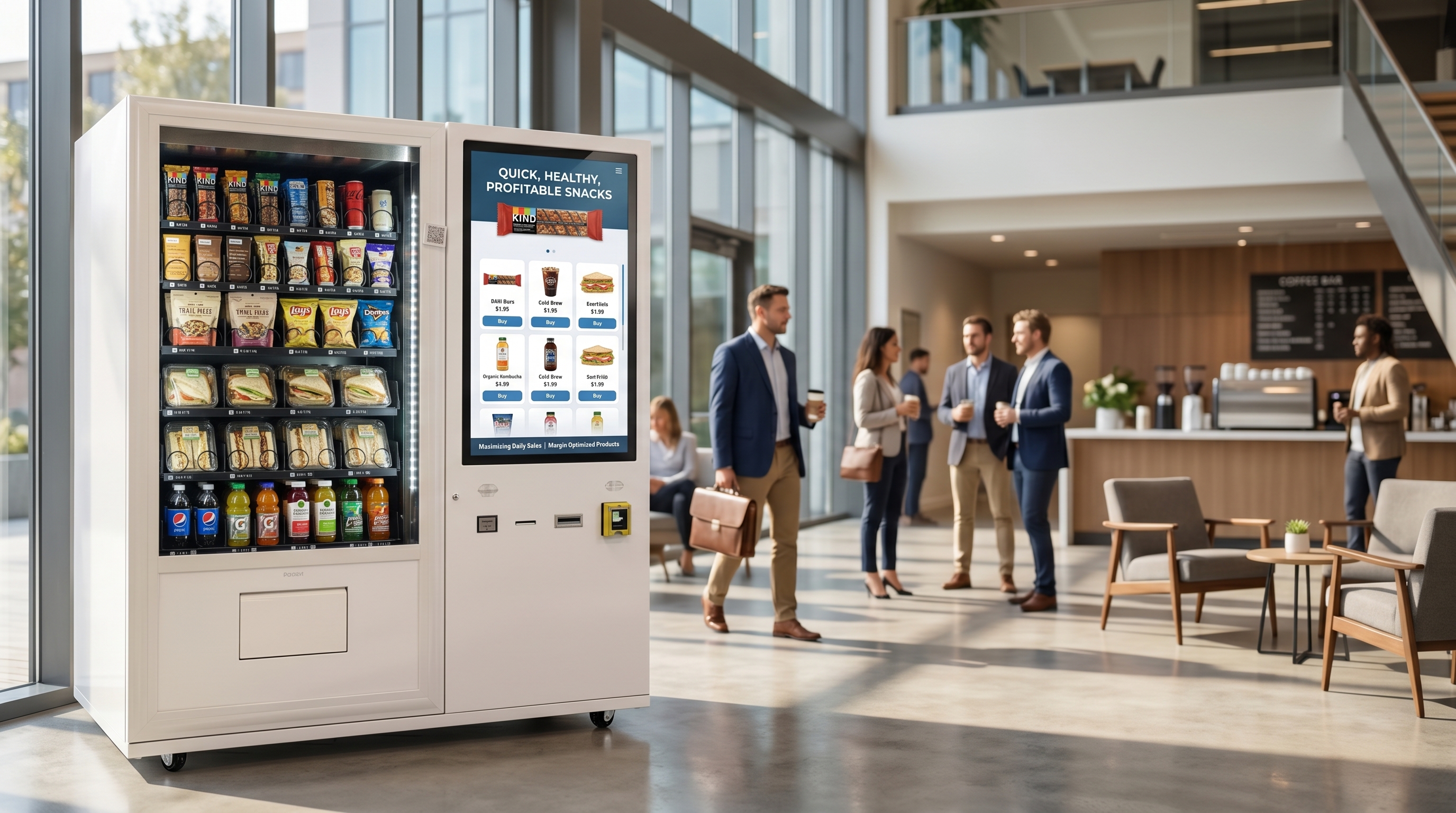
Vending machine profitability is the net margin a cabinet generates after cost of goods, site revenue share, payment processing fees, restock labor, depreciation, and connectivity costs. A profitable cabinet typically nets between $200 and $1,000+ per month in standard snack-and-beverage vending, with the variance driven mostly by daily transaction volume and SKU mix—not by the brand of the machine. Operators who treat profitability as a knowable function of location, planogram, and uptime outperform operators who treat it as a passive-income mystery.
Location is the single largest lever
The most consistent predictor of a profitable cabinet is placement in a location where real demand exists and convenient alternatives are scarce. A factory floor at night, a hospital building with no nearby food options after hours, a gym whose cafe closes at 7pm, and a residential college building without late-night delivery access are the types of sites that generate reliable volume without relying on peak-day traffic counts.
Locations that look good on paper—high foot traffic, large buildings, prominent placement—but have strong nearby food and retail competition often underperform. Volume is not the same as demand. The distinction matters more than most prospective operators realise before they sign their first site agreement.
Gross margin per transaction, not gross revenue
A cabinet that moves $3,000 in monthly gross at 18% net margin makes less than a cabinet that moves $1,800 at 35% net margin. The calculation that matters is net margin per sale after accounting for cost of goods, site fee, payment processing, and the pro-rated cost of servicing the machine.
Operators who track gross revenue without understanding their per-transaction cost structure are often surprised when the bottom line does not match the sales numbers. Running the margin calculation before selecting a product mix and location—not after six months of operation—is a better sequence.
Machine uptime directly affects revenue
A jammed coil, a refrigeration fault, or a card reader offline all create the same result: a cabinet that is not dispensing is not earning. Traditional operators often discover downtime after a service visit, by which point the machine may have been out of service for hours or days. Buyers who visit an out-of-order machine typically do not return on the assumption it will be fixed.
Cloud-connected smart vending machines send fault alerts as they happen, which allows operators to respond before a technical issue becomes a multi-day revenue gap. That responsiveness is one of the more concrete financial arguments for investing in connected hardware over a traditional machine at a similar price point.
Route efficiency determines the real cost of service
Driving to every machine on a fixed weekly schedule costs time and fuel regardless of whether the machine needs service. Operators running larger routes quickly find that traditional route management either creates excessive overhead or leads to reactive problem-solving—discovering a stockout or fault on arrival instead of resolving it before going.
Remote management telemetry from smart machines lets operators plan service trips around actual need. Which machines are running low, which slots are empty, which locations need a visit today versus next week. This changes the economics of route management as a route scales: fewer wasted trips, better prioritisation, and a lower effective cost per machine managed.
Site fees and their impact on the business model
Revenue-share arrangements are standard practice in vending. A property that earns 15–20% of gross revenue from your machine is effectively a silent partner with significant margin impact. Understanding how that cost changes the profitability calculation at different volume levels—and negotiating the terms carefully, particularly for longer-term placements—makes a real difference to the unit economics.
Flat-fee site arrangements can be preferable at high-volume locations where the revenue-share percentage would otherwise be costly. The right structure depends on projected volume, and that projection requires honest location analysis rather than optimistic guesswork.
Product mix affects both revenue and waste
Slow-moving SKUs occupy slots that better-selling products could fill. Expired or near-expiry inventory that needs to be pulled represents a direct cost. Both are easier to manage when you have sales data by slot rather than manual counts by observation.
Operators who regularly review what is selling and adjust accordingly—cutting slow movers, expanding top sellers, testing new items in underperforming slots—tend to see steady margin improvement over time. Those who set the machine up and rarely revisit the assortment tend to plateau. For projects where product economics are complex or where specialty formats are involved, the custom vending machine design costs page covers how machine format and configuration affect the full project economics.
Thinking through the economics of a vending deployment?
DMVI can help you evaluate machine format, site economics, product mix, and the operational setup that makes a route commercially sustainable. Start with a conversation.