Beauty & Fragrance Vending Machines: Hotel & Airport Guide
A beauty and fragrance vending machine is a self-service retail unit that dispenses sealed cosmetics, skincare, or fragrance SKUs from a refrigerated or ambient cabinet, typically in airport terminals, hotel lobbies, gym wellness areas, or premium retail concourses where staffed beauty counters are uneconomical for the hours and footfall the venue actually generates. The format trades the consultative experience of a department-store counter for 24/7 availability and a much smaller footprint.
Hotel retail managers, airport concessionaires, beauty brand operators, hospitality groups, and venue owners evaluating whether a beauty or fragrance programme makes commercial sense for their location and audience should treat this as a venue-fit and assortment question first, not a machine novelty exercise.
Why beauty and fragrance is one of the strongest categories for premium vending
The beauty and fragrance category has several structural advantages that make it well suited to automated retail at a premium price point.
Beauty SKUs already self-merchandise. Customers in beauty retail browse, compare, and buy without sales staff every day, so the cognitive jump from a counter to a touchscreen is small. The category also carries a higher average transaction value than snack or beverage vending, which gives operators more room to absorb premium hardware and venue economics.
Second, the category has proven impulse dynamics, particularly in travel and hospitality environments. A customer who has forgotten a product, wants to try a new one, or is looking for a gift does not need a lengthy decision process. Impulse and occasion-driven purchases in beauty can convert quickly when the product, the price, and the setting are right.
Third, most beauty and fragrance retail items already come in sealed, compact, machine-friendly formats. Travel sizes, gift sets, blister-packed accessories, and boxed fragrances all have the physical profile that works in a properly configured vending platform.
Fourth, the margin structure in premium beauty is considerably stronger than in food and beverage vending. Higher average transaction values support the economics of a premium machine deployment more comfortably than categories where margins are tight on low-priced items.
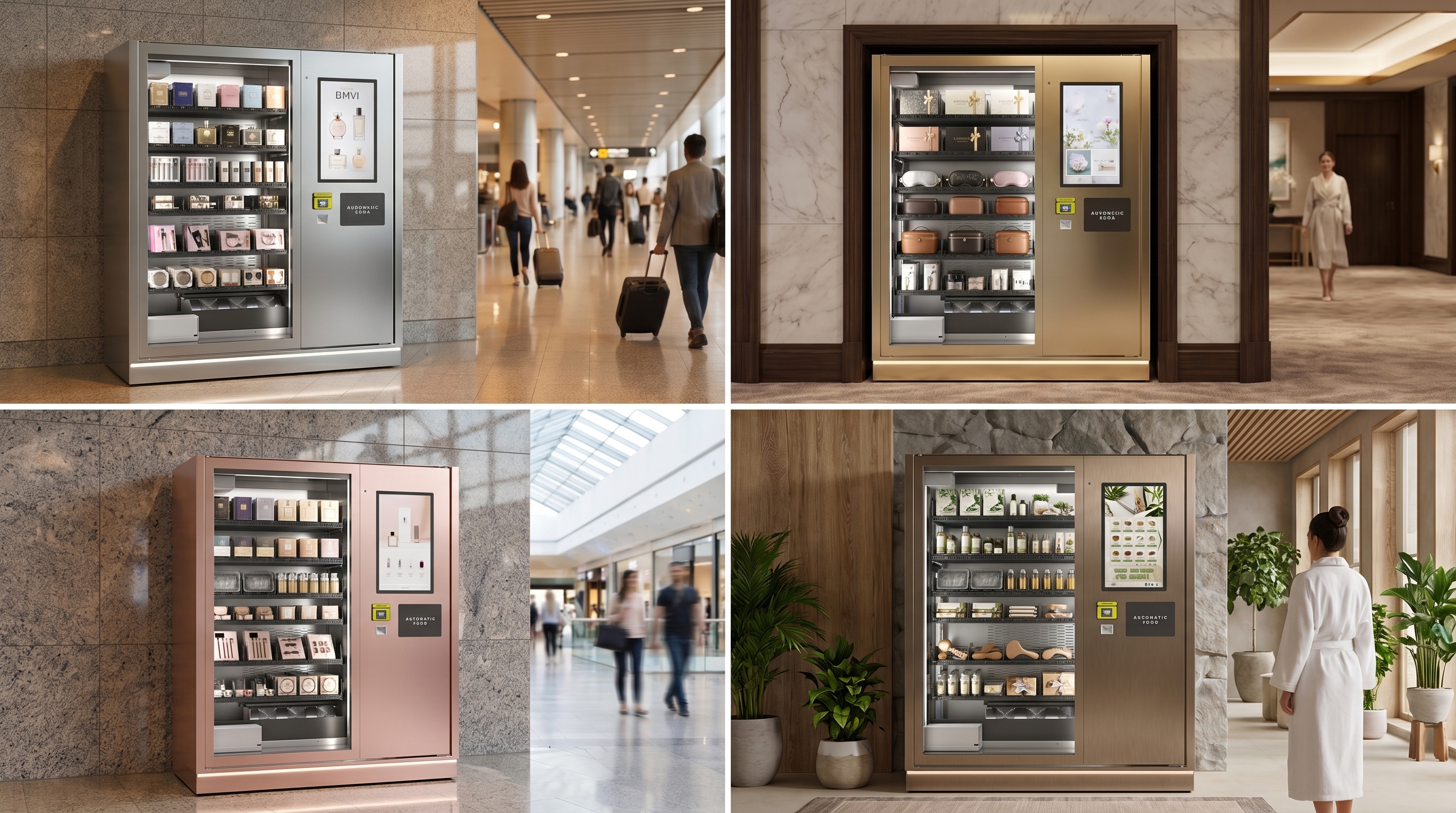
Where beauty and fragrance vending works best—and where it usually does not
Hotels and resorts
This is the most frequently cited venue type for beauty vending and one of the strongest commercial fits. The logic is straightforward: hotel guests frequently forget or run out of personal care and grooming products, want to try premium items without buying a full-size version they cannot take home easily, or are looking for last-minute gifts for family or colleagues.
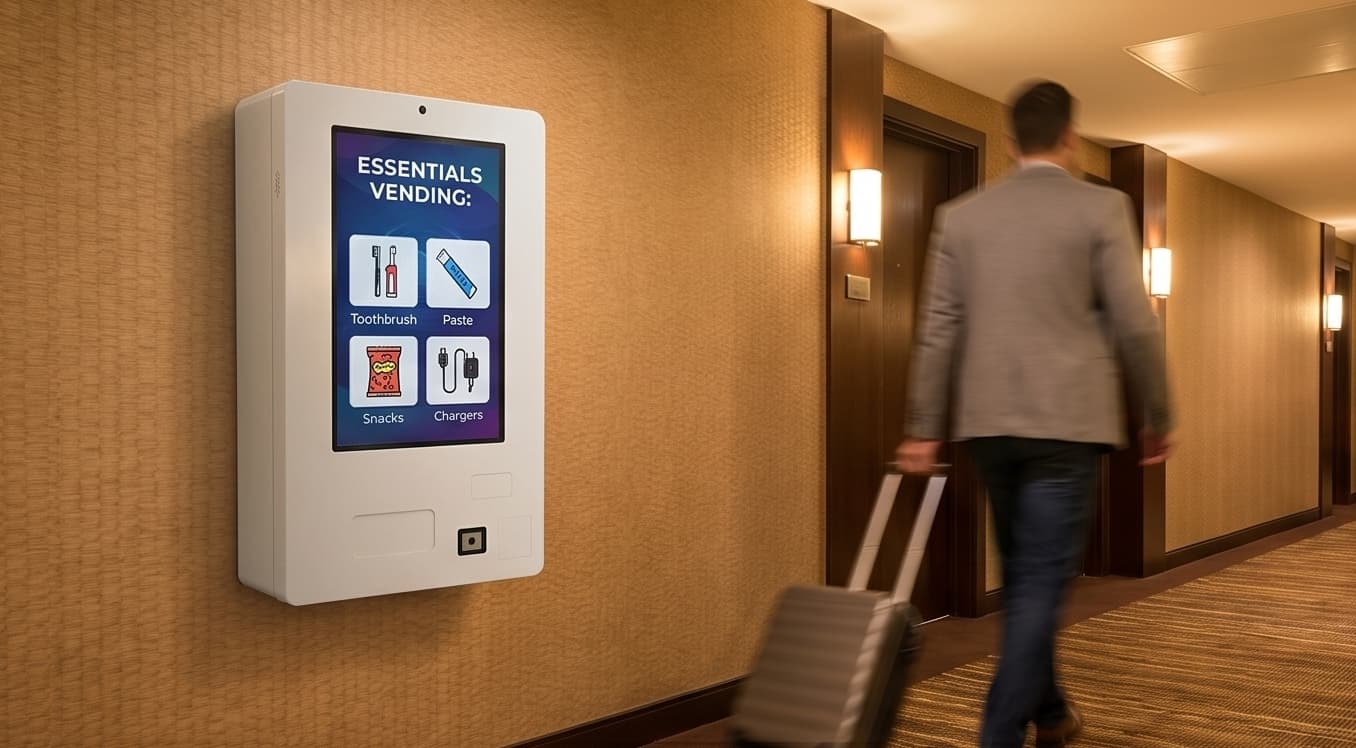
A machine in a hotel lobby, corridor, spa reception, or accessible amenity area can serve this demand around the clock without requiring staffed retail to be open. The format is also consistent with a premium hospitality brand's service proposition: convenience, quality, and brand-consistent presentation.
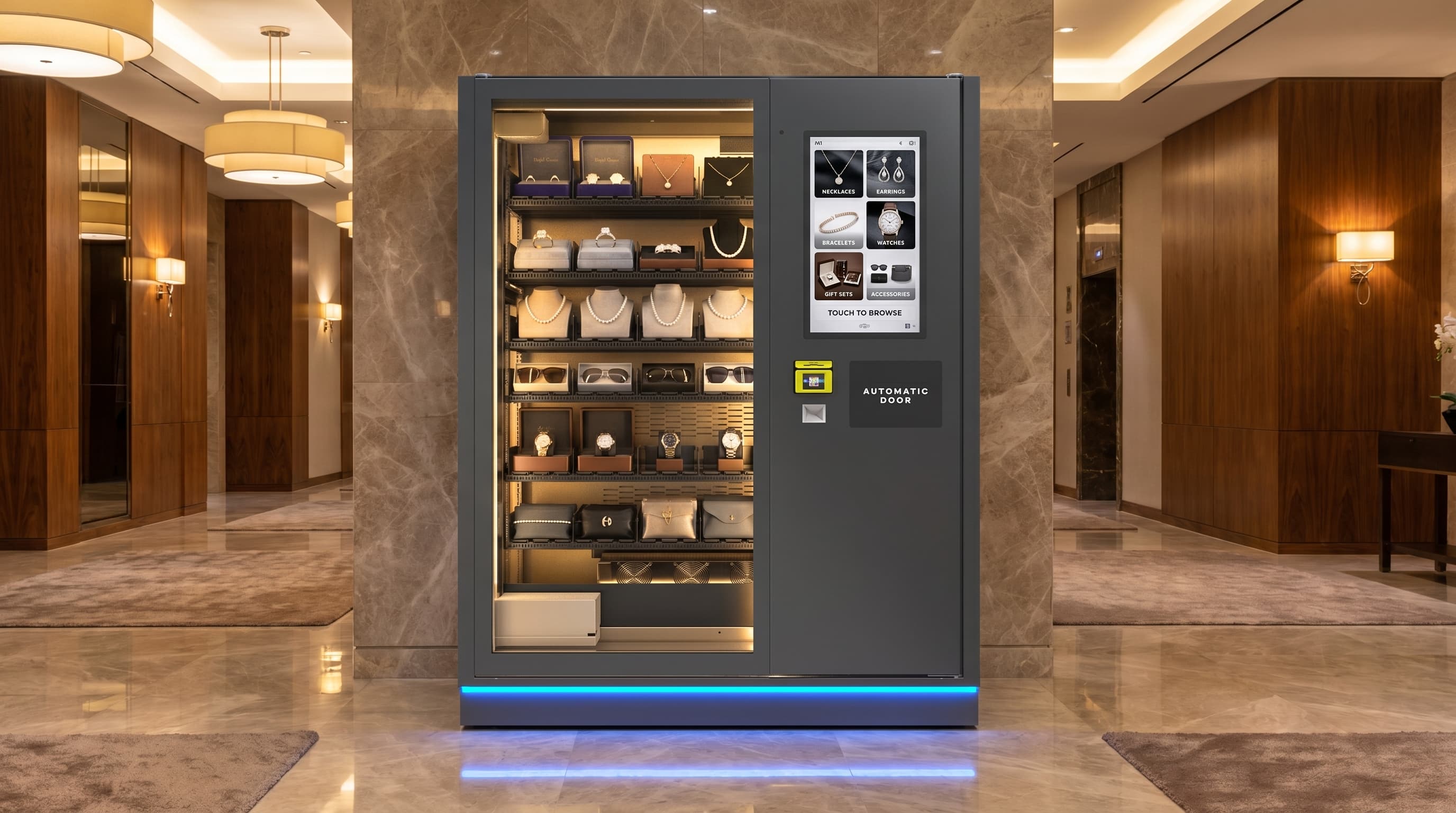
The machine format matters in a hotel setting. A poorly specified cabinet in a premium lobby undermines the property aesthetic. The M-Series platform, which supports larger physical presence, touchscreen merchandising, and premium finish, is typically the more credible option for five-star and upper-upscale properties.
Airports and travel retail
Airport beauty retail is already a well-established commercial category, and vending format has been a growing part of that story. Dwell time, forced waiting, and the gifting mindset associated with travel all create buying conditions that are more concentrated than most other retail environments.
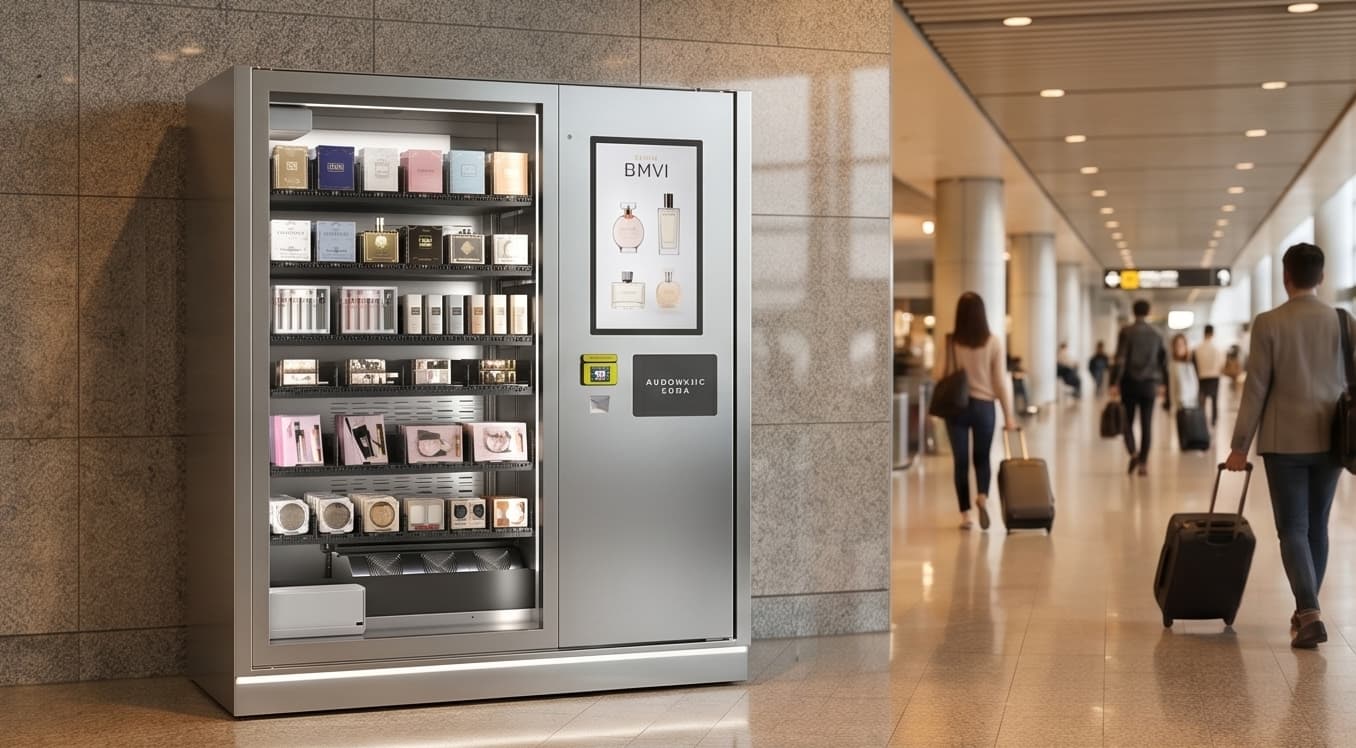
Travel-size products, sealed gift sets, fragrance miniatures, and compact beauty essentials are a natural match for an airport vending deployment. The sealed format removes the need for sampling interaction, which is a genuine concession the category has to make in a self-service context, but the offset is that a machine can operate in locations where a staffed beauty counter would be impractical: satellite terminals, airside corridors, gates, and smaller regional airports.
Replenishment logistics are the primary operational challenge in airport environments. Machines need to be stocked to handle demand peaks — early morning departures, mid-afternoon transit waves — without requiring multiple daily restocking visits that push the operational cost above the revenue. Higher-capacity formats like the M1 reduce this problem by allowing more inventory depth per SKU.
Casinos and gaming resorts
Casino environments have strong discretionary spending cultures and audiences with higher-than-average willingness to purchase premium products on impulse. Fragrance, grooming, and beauty accessories in a casino hotel setting can perform well when the machine is placed in the right position relative to the casino floor, hotel lobby, or venue amenities area.
Spas and wellness centres
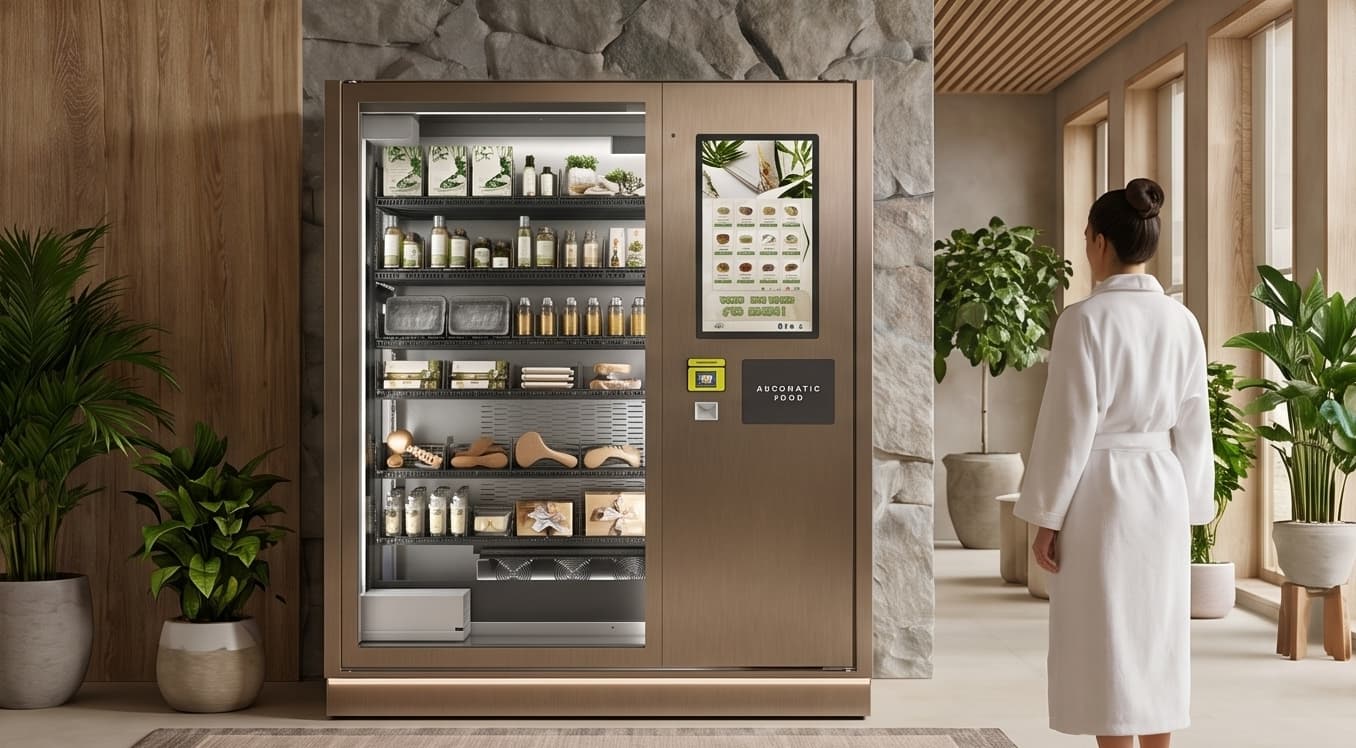
Spa environments already sell beauty and wellness products as part of their core offering, and a machine that curates an accessible selection of skincare, aromatherapy, or grooming products that complement the spa treatment experience can feel natural rather than out of place. This works particularly well when the assortment is thoughtfully curated to match the venue concept rather than stocking a generic selection of mass-market items.
Premium fitness and lifestyle venues
High-end gyms, yoga studios, and lifestyle clubs serve audiences with strong interest in personal care and wellness products. A machine that stocks relevant products — skincare for pre or post-workout, grooming essentials, wellness accessories, and supplement formats that count as beauty-adjacent — can generate useful additional revenue for venues that already invest significantly in the member experience.
Product selection: what to stock and what to avoid
The strongest performers in beauty vending programmes tend to be products that have a clear use-case occasion that matches the venue, are already packaged in a machine-compatible format, have enough brand recognition or visual clarity to convert without a personal recommendation, and carry a retail price point that works for the impulse context.
Travel-size and miniature formats of recognised products tend to convert better than full-size versions in vending, particularly in airport and hotel settings, because the lower price point suits the impulse or emergency purchase occasion more naturally. Full-size products can work in the right setting but typically need more assortment support and stronger on-screen product context to convert reliably.
Fragrance is a nuanced inclusion. The absence of sampling is a real limitation. On-screen brand content, descriptions of the scent profile, and recognisable brand names or celebrity-endorsed products reduce but do not eliminate that gap. The format works best for repurchases of known fragrances and for gifting occasions where the customer already knows the recipient's preferences.
Skincare, grooming, haircare, and cosmetics in sealed formats tend to be less dependent on sampling and can convert at higher rates in well-placed machines with good touchscreen merchandising.
Machine format decisions
The machine choice for a beauty and fragrance programme should reflect the scale of the assortment and the quality expectations of the venue.
Two cabinet patterns dominate. A traditional smart vending cabinet with controlled-drop spirals or an elevator dispense path handles 60–120 SKUs in a compact footprint, runs on standard mains power, integrates cashless payment over MDB/ICP, and reports SKU velocity over DEX-style audit. An AI smart-fridge or open-shelf cabinet handles fewer SKUs but supports glass and irregular shapes, and is the better fit when the assortment skews to full-size fragrance or boutique skincare. Operators evaluating airport or hotel deployments should specify the assortment first and let it dictate the cabinet, not the other way around.
Custom branding of the machine cabinet and touchscreen UI is a serious consideration for beauty brands that want the machine to feel like part of their brand rather than a generic retail fixture. DMVI supports custom design as part of programme scoping.
What most operators miss
- Assortment planning: Stocking a machine with the wrong price tier or the wrong product mix for the venue audience is the most common early-stage mistake. A hotel spa that stocks mass-market haircare in a machine next to a premium treatment menu creates a jarring disconnect. Assortment should be curated for the specific audience and setting.
- Replenishment cadence: Beauty products in premium environments sell in lower absolute unit volumes than snack vending. That means replenishment visits can be less frequent, but the margin per transaction needs to support the programme economics even at moderate volume. Model this before launch rather than assuming high turnover from day one.
- On-screen content investment: A touchscreen that only shows a product name and price misses the commercial value of the format entirely. Investing in quality product imagery, short content, and clear category navigation improves conversion meaningfully in a category where the product story matters.
- Testing packaging before launch: Not all beauty product packaging is machine-compatible without modification. Fragile glass containers, oversized gift boxes, and items with unusual dimensions need to be tested through the specific dispense mechanism before the machine goes live.
Where to explore next
- Luxury vending machines: M-Series platform for premium unattended retail
- Large-format M-Series: capacity and configuration detail
- Custom vending machine design for branded programmes
- Jewelry vending machine: premium accessories and gifting programmes
Next step: If you are evaluating a beauty or fragrance vending programme for a hotel, airport, or premium retail environment and want to scope the right machine format and assortment approach, contact DMVI to discuss the specifics.
Scoping a beauty or fragrance vending rollout?
DMVI can help you match the right machine format to your venue, assortment, presentation standard, and replenishment model.