Jewelry Vending Machines: A Practical Buyer's Guide for Boutique, Hotel, and Venue Operators
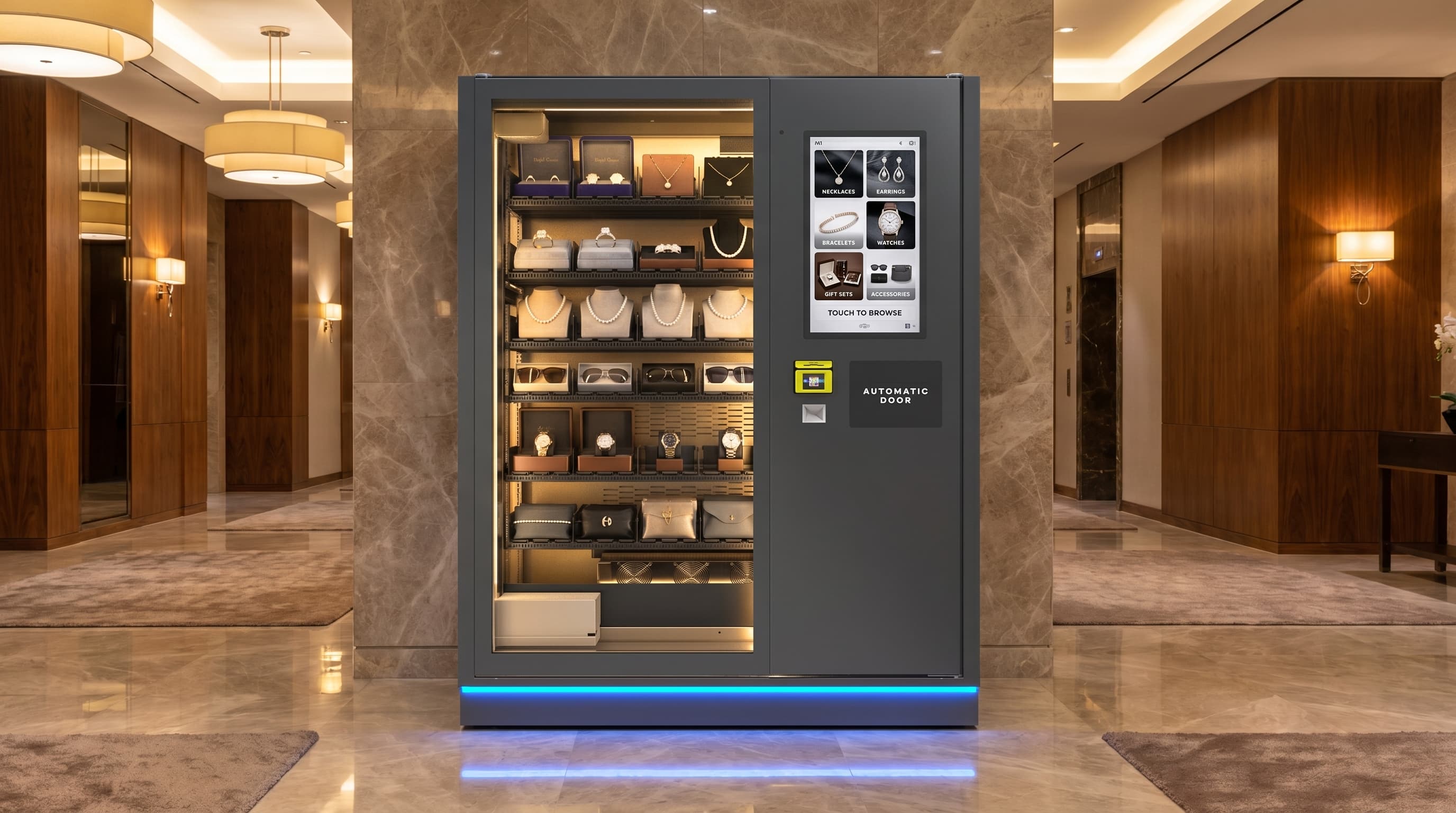
A jewelry vending machine is a premium automated retail cabinet built to merchandise, secure, and dispense packaged jewelry and accessories through a controlled self-service flow. Done properly, it is not a snack machine with nicer wallpaper. It is a different retail format with different economics, different security expectations, and different packaging rules.
The category can work commercially because jewelry and premium accessories are compact, giftable, visually led, and often high margin. The catch is that the programme only works when product selection, packaging, venue, and cabinet format are scoped properly from the outset. Get those wrong and the machine becomes a very expensive ornament, which is a grim use of capital.
Why jewelry is suited to automated retail
Jewelry and accessories fit automated retail better than many first assume. Earrings, bracelets, necklaces, charms, pendants, sunglasses, watches, and gift-packaged accessories all share traits that unattended retail likes: compact dimensions, defined SKUs, strong visual merchandising potential, and purchase occasions driven by gifting, travel, hospitality, or impulse discovery rather than deep comparison shopping.
The strongest deployments usually sit in places where the product already makes emotional sense: hotel lobbies, resort retail, airport concessions, premium event venues, beauty environments, and select lifestyle retail settings. A captive audience with time to browse is far more valuable than raw footfall from people who are hurrying past and never had jewelry on the shopping list.
Product selection: what works and what does not
The strongest assortment fits are products already packaged in compact, machine-friendly formats that protect the item and support the price point. Earrings in sealed presentation packs, bracelets and necklaces in rigid gift boxes, charms and pendants in slim branded packs, sunglasses in protective cases, and giftable accessories in the roughly $25 to $200 range are all credible candidates.
The weak fits are equally important. Loose chain jewelry without rigid packaging, oversized statement pieces, items that depend on try-on, and very high-ticket pieces where fit, feel, or in-person reassurance drive the sale are harder to support. A vending machine can tell a product story, but it cannot replicate a sales associate reassuring someone about a $1,500 impulse necklace at 11 p.m. in a hotel corridor.
Packaging is where weak programmes usually fail
Packaging is the single most underestimated part of jewelry vending. The package has to survive the dispense cycle, protect the item inside, arrive looking premium, and reassure the customer that the product has not been tampered with. If the box crushes, the insert shifts, or the closure looks cheap after dispense, the perceived value falls immediately.
That is why serious operators test physical packaging through repeated dispense cycles before scale rollout. Rigid outer packaging, internal cushioning, tamper-evident sealing, and brand-aligned print or finish are not fussy extras here; they are basic commercial hygiene.
Security and stock control
Jewelry vending needs explicit security thinking. The machine should use reinforced construction, controlled internal compartments or protected dispense paths, cashless payment, and cloud-based telemetry so the operator can reconcile stock movement and spot anomalies quickly. Audit trails matter because shrink on higher-value SKUs is not something you want to discover through vibes and wishful thinking.
Operational discipline matters too. Service access, stock-loading procedures, returns handling, and who can open the cabinet all need to be defined before the first live deployment. The cabinet is only one part of the control system.
Choosing the right machine format
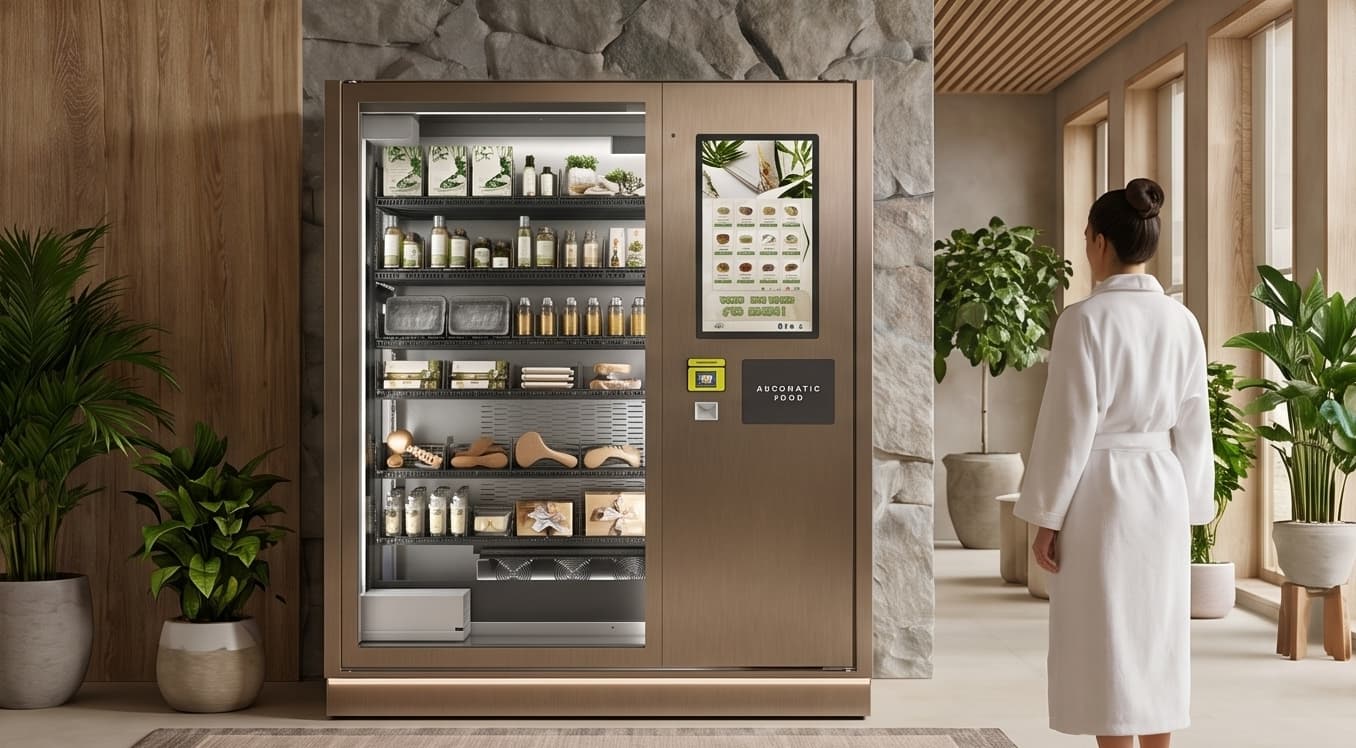
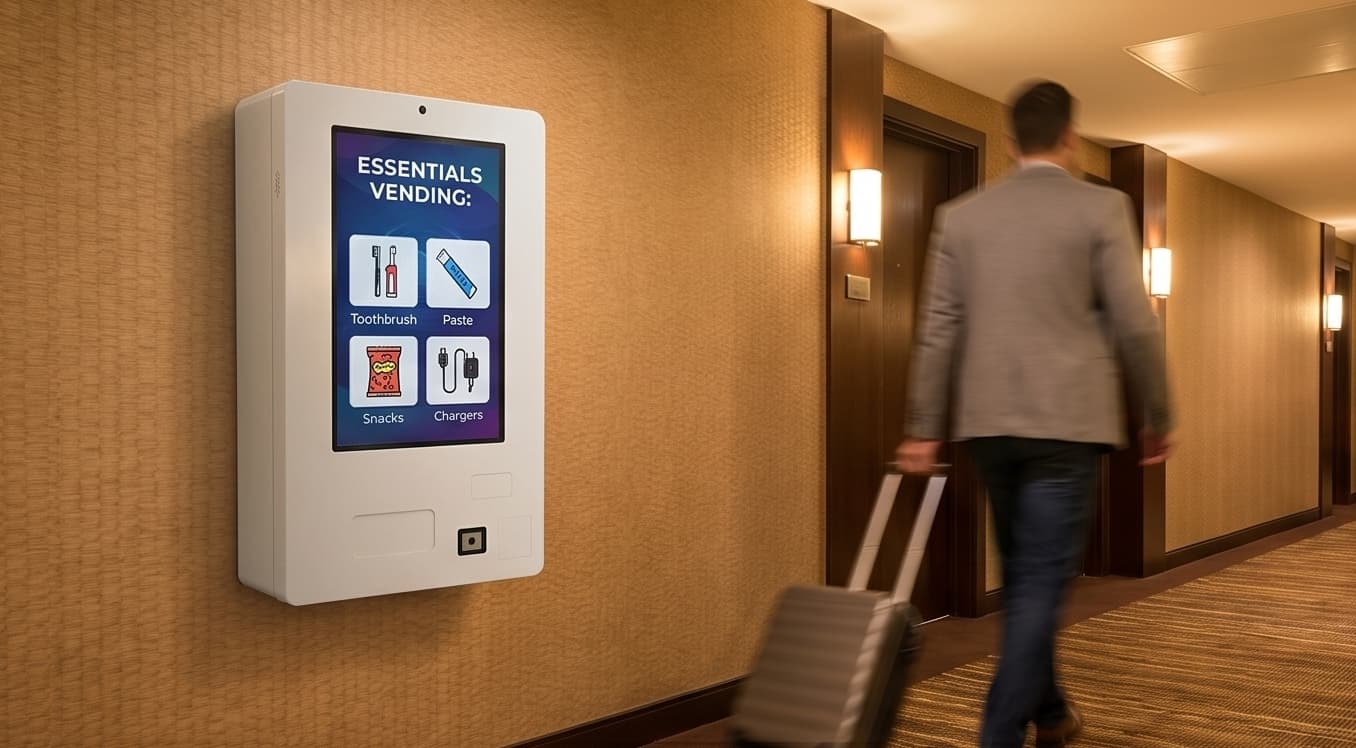
Format should be driven by the venue and assortment, not by whichever cabinet happened to be nearest the sales brochure. Small wall-mounted or counter-top formats suit tight accessory edits in boutique hotels, salons, and smaller hospitality settings. Mid-format touchscreen cabinets make sense when the programme needs broader assortment and stronger on-screen merchandising. Larger M-Series-style platforms are better for flagship luxury retail environments where the cabinet itself needs to feel like part of the branded experience rather than a discreet utility box.
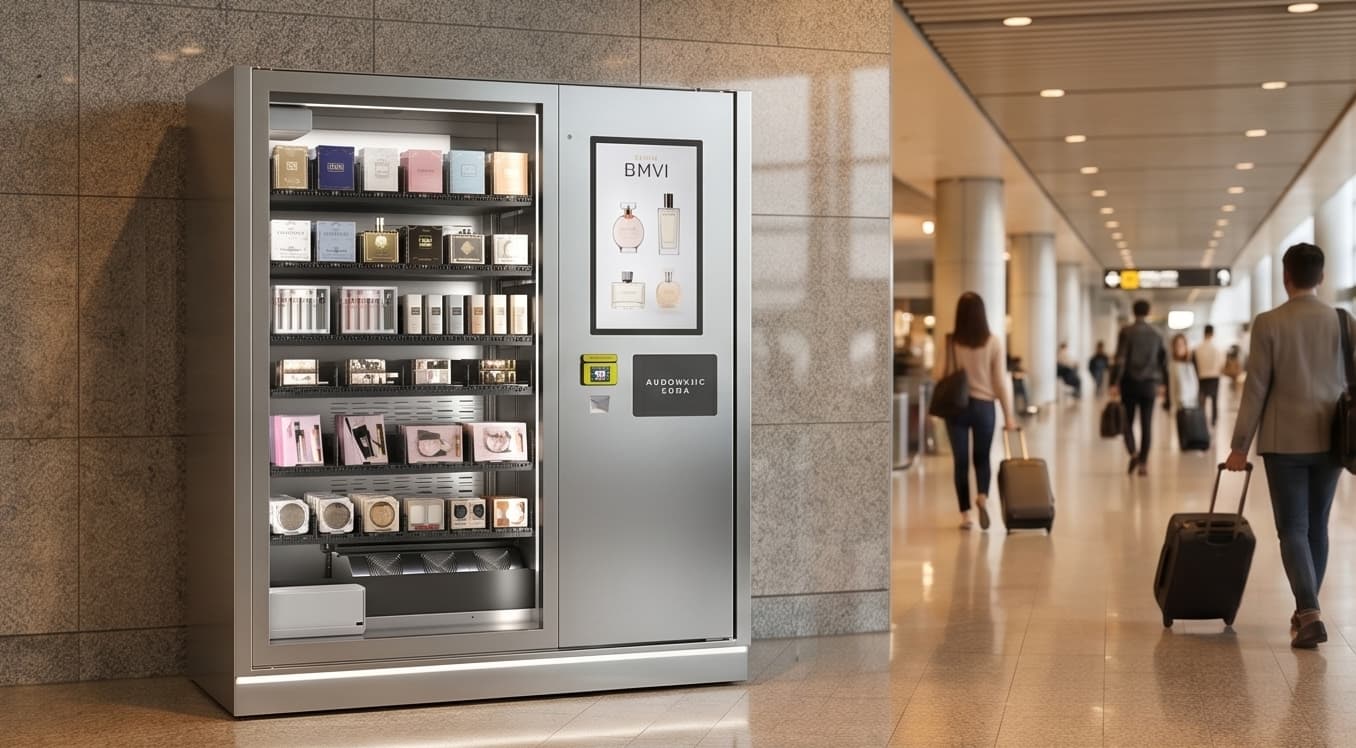
If fragrance, skincare, or other adjacent premium products join the assortment, the format decision becomes even more important because the programme starts to behave more like a curated unattended boutique than a single-category jewelry play.
Venue selection and route economics
Jewelry vending stands or falls on venue quality. The right site has supportive demographics, captive dwell time, high visibility, and a setting where a premium accessory purchase feels natural. Hotel lobbies, resorts, airline lounges, airports, ticketed entertainment venues, and premium fitness or spa environments are typical candidates. Generic discount retail zones and high-shrink public corridors usually are not.
The economics differ sharply from snack vending. Ticket size is higher, velocity is lower, and service cadence is often slower. That can still work beautifully when margin is strong and the cabinet is in the right place. It goes sideways when an operator expects snack-machine turns from jewelry SKUs or places the cabinet somewhere that flatters a PowerPoint deck more than it serves an actual buying moment.
Planning a jewelry vending programme?
DMVI can help scope the right cabinet format, packaging approach, security layer, and venue fit for a premium jewelry or accessories deployment.