SIM Card Vending Machines: How Self-Service Cell Activation Kiosks Actually Work
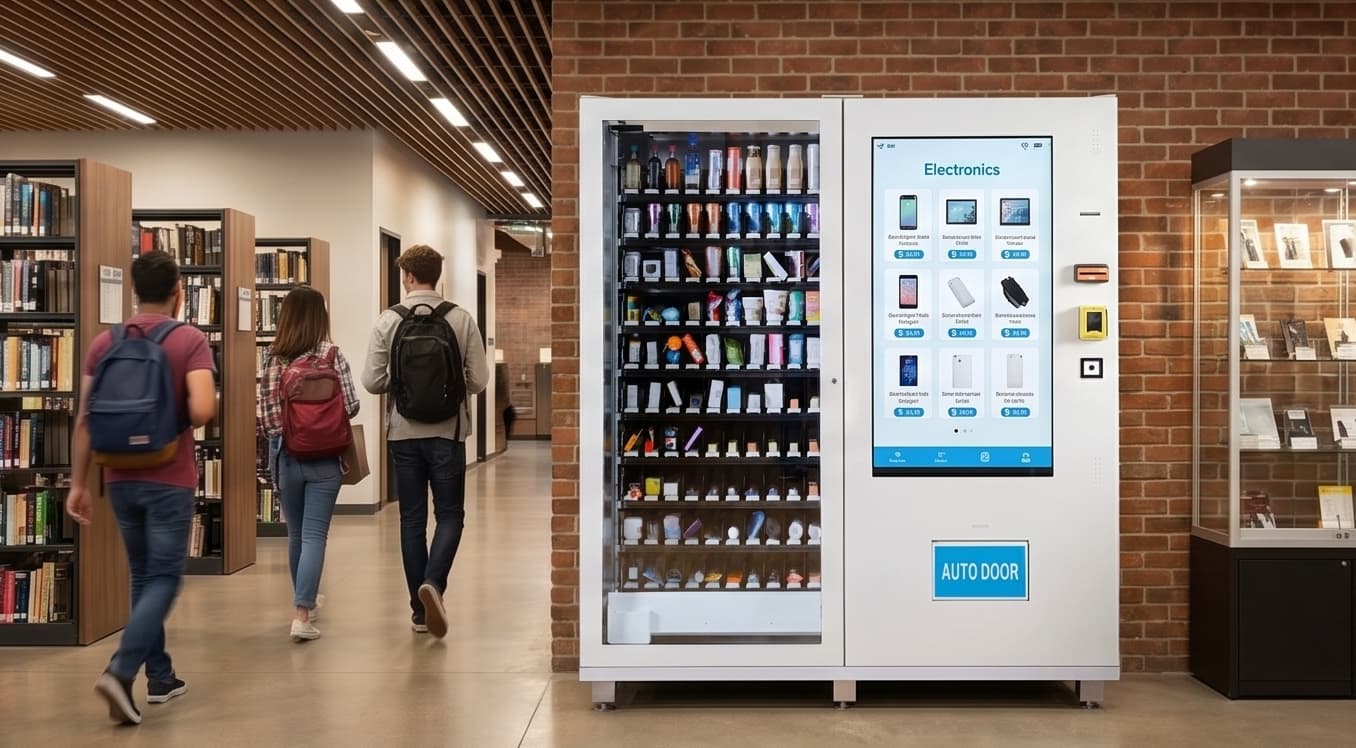
A SIM card vending machine is a self-service touchscreen kiosk that dispenses prepaid or activation-ready SIM cards, eSIM activation codes, or unlocked handsets after the buyer clears an identity-verification step. Carrier compliance, KYC requirements, and roaming activation are handled by the kiosk software stack rather than by a staffed counter. The cabinet replaces low-volume telecom retail where labor is uneconomical for the transaction volume the location actually generates.
The strongest deployments are not generic "phone vending" concepts. They are tightly scoped self-service cell activation points in airports, transit hubs, hotels, university residences, and convenience-store concessions where immediate connectivity matters more than a full carrier-store experience.
How a SIM vending kiosk actually works
The hardware is usually a touchscreen cabinet with a cashless reader, a SIM dispense bay, an ID scanner, and sometimes a live camera. The customer journey is straightforward:
- The kiosk presents carrier choice, plan, and price through the touchscreen UI.
- The customer enters or scans the personal data required by the carrier's KYC workflow.
- The ID scanner reads the passport MRZ or driver's license barcode to confirm identity and jurisdiction eligibility.
- Payment is captured over a Nayax-class cashless payment platform or equivalent.
- The activation backend provisions the SIM against the carrier network.
- The machine dispenses the physical SIM, or for eSIM it prints or emails an activation QR code.
Audit data can be emitted through DEX-format reporting, and device peripherals commonly sit on MDB/ICP or adjacent kiosk-control layers. The cabinet is only half the product; the activation workflow is the commercial core.
Where SIM card vending machines earn floor space
Airport arrival terminals are a perfect fit. International passengers land without local connectivity, no carrier store is open at 3 a.m., and the buyer is willing to pay for a working data plan immediately. Rail terminals and transit hubs fit the same pattern. University residence halls work for international student arrivals outside business hours. Hotel lobbies work when the property serves a meaningful international guest mix. Convenience-store concessions can work where carrier policy allows third-party prepaid distribution and the staffed counter is already overloaded.
The kiosk is not a substitute for a flagship carrier store. It is a capacity-extension format for places where staffed retail is commercially thin but the need for instant connectivity is real.
Compliance and identity verification
Prepaid mobile registration is a compliance problem before it is a hardware problem. Many jurisdictions require carriers to verify the identity of prepaid SIM purchasers. A SIM vending kiosk satisfies that requirement only when the kiosk configuration actually matches the carrier's KYC obligations and the telecom rules in that market.
That usually means document scanning, identity capture, carrier-backend handoff, and a defined policy for failure cases. The kiosk vendor can explain what the system does. The carrier and the operator are still responsible for confirming that the live workflow is compliant.
Physical SIM, eSIM, and handset scope
Not every deployment dispenses the same thing. Some kiosks sell physical prepaid SIM packs. Some provision eSIM and output a QR code only. Some combine plan activation with unlocked handset or accessory sales. The right format depends on the carrier agreement, the market, and whether the site needs a fast connectivity transaction or a broader telecom-retail offer.
This is why serious projects are specified around workflow first: what the user needs, what the carrier permits, what ID evidence must be captured, and whether the location needs physical inventory at all.
Questions to answer before asking for pricing
- Which carriers or MVNOs will the kiosk activate?
- Will the unit dispense physical SIM cards, eSIM activation codes, unlocked handsets, or some mix of the three?
- What KYC or identity-verification steps are required in the deployment country?
- Does the site justify instant-connectivity retail strongly enough to support the hardware and replenishment model?
- Will the kiosk be fully unattended, remotely supervised, or paired with nearby staff?
- What languages, payment methods, and passport or ID types must the interface support?
Operators who can answer those questions get a useful project specification. Operators who start with "we want a cell phone vending machine" usually just create a vague conversation and a bad scope.
Planning a SIM activation or prepaid-cell kiosk rollout?
DMVI helps scope self-service telecom kiosks around carrier workflow, identity verification, payment, and dispense design so the project fits the real site rather than a generic vending concept.