Robotic Biometric Vending Machines: How Age-Verified, Controlled-Access Automated Retail Actually Works
A robotic biometric vending machine is an automated retail cabinet that combines an MDB-bus payment stack with a biometric verification layer — typically a one-to-one face match against a scanned government-issued ID — before the robotic dispensing mechanism releases the product. The Evolve Vending platform sits in that controlled-access lane: ID scan, optional face match, cashless payment, robotic vend, and an auditable telemetry trail rather than a hopeful honour system. It is not a generic snack machine with a camera bolted onto the bezel. It is purpose-built automated retail for products that cannot be sold or released responsibly without verifying the buyer.
That distinction matters because biometric vending only makes sense when the SKU, the venue, and the compliance burden justify it. If the project is ordinary snacks in a public hallway, this is gloriously overbuilt. If the project is age-gated, controlled-access, or high-value stock, the workflow starts to look far more sensible.
Where biometric verification belongs — and where it doesn't
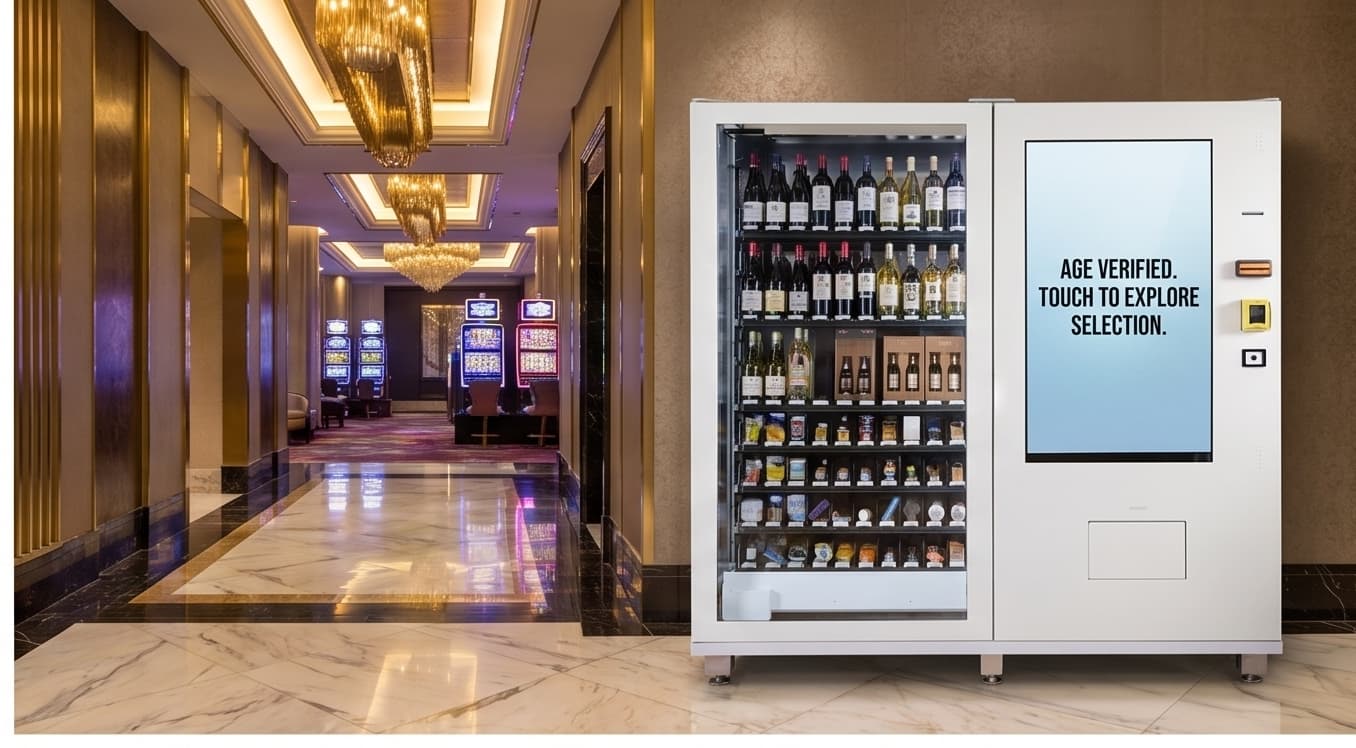
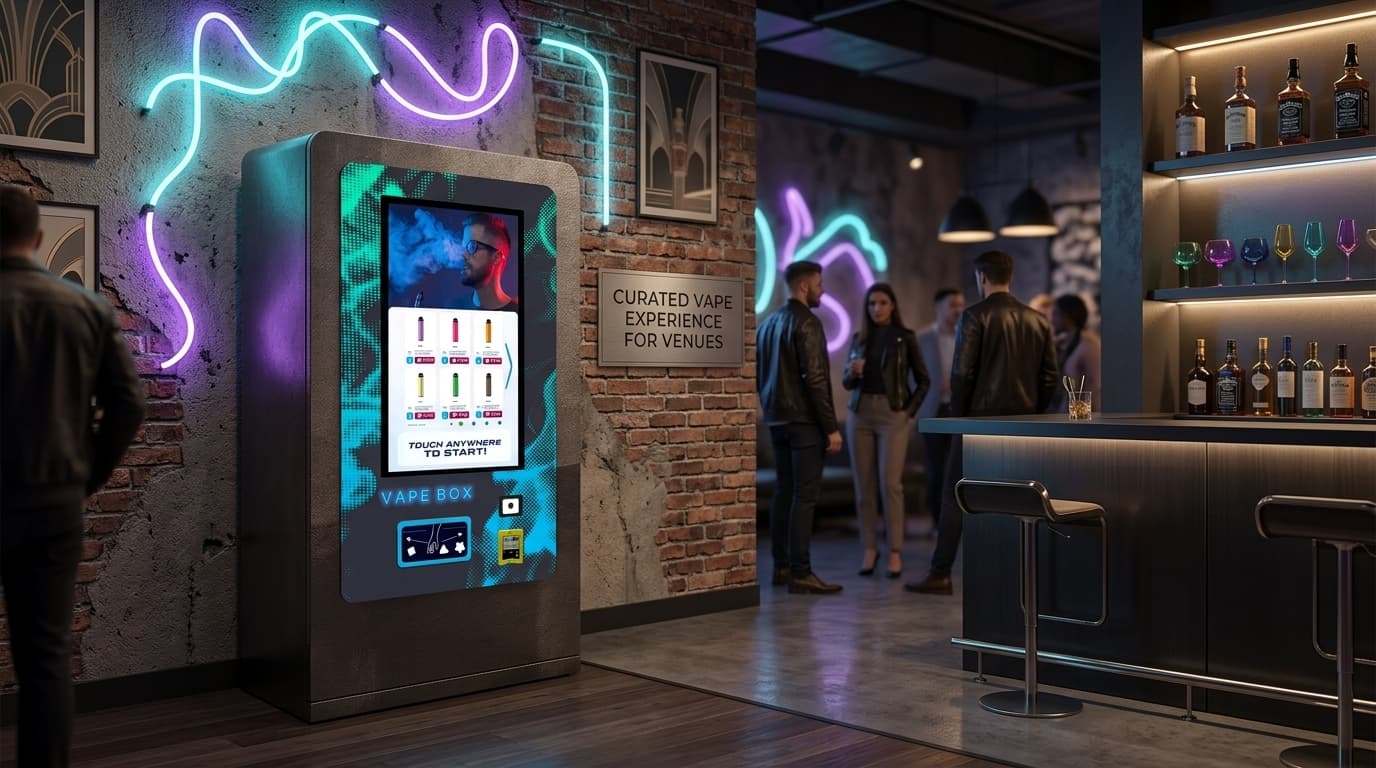
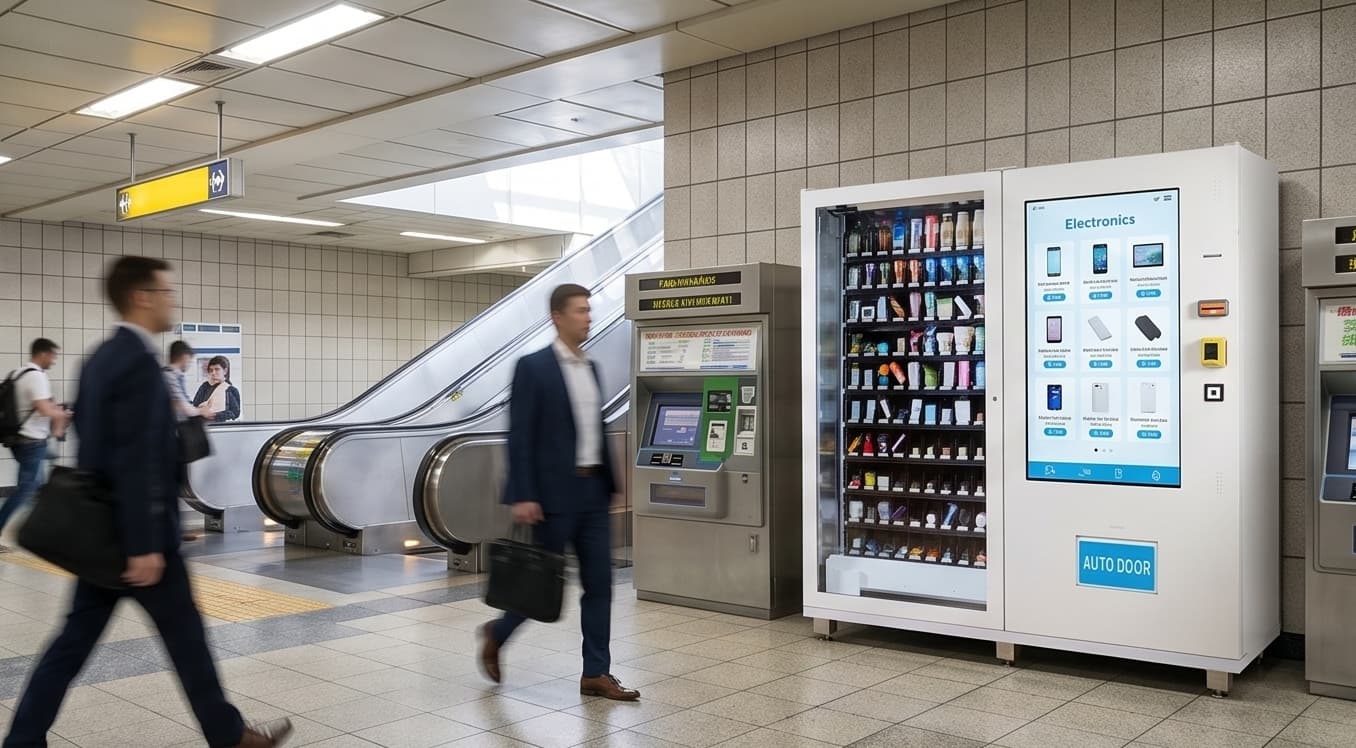
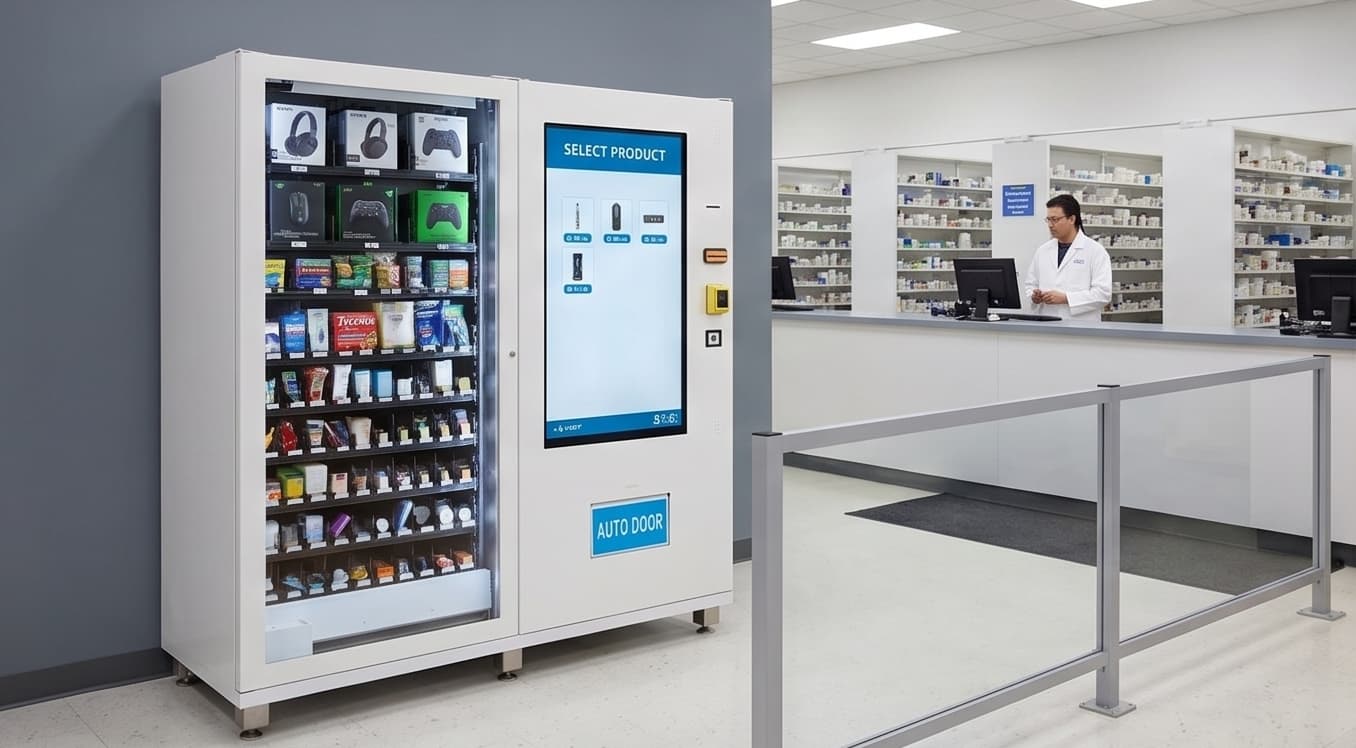
Biometric verification belongs in age-gated retail, controlled workplace access, and high-value merchandise lanes where the operator needs more than a card tap to authorise release. That can include vape products in adult-only venues, alcohol in licensed environments, controlled-access supplies in workplaces or healthcare settings, and high-value electronics or accessories that need a tighter handoff. It usually does not belong on an everyday snack-and-soda machine, because the extra privacy, failure-handling, and compliance burden would be absurdly disproportionate to the transaction.
Operators should start with the product and the risk profile, not with the technology demo. If there is no strong reason to verify the buyer, biometric is the wrong answer wearing a clever suit.
How verification-mode biometric matching works on a vending cabinet
In a proper vending deployment, facial recognition should run in verification mode, not identification mode. That means the system compares a live capture against one reference source — usually the photo attached to the scanned government-issued ID — and returns a pass/fail result above a similarity threshold. It is not searching a large identity database. A typical workflow looks like this: the buyer scans an ID, the barcode is read for date-of-birth data, the system captures a live face image, the live image is compared against the ID photo, and only then does the cabinet authorise the vend.
That is a much more defensible framing than the old sci-fi-sales version of “the machine recognises you”. It also creates a cleaner privacy posture, because the strongest implementations discard the live biometric template after the comparison and retain only the audit record: timestamp, transaction ID, pass/fail result, and any staff override.
Age verification, licensing, and why the machine is not the law
For tobacco and vapor products, federal law sets the minimum sale age at 21 under FDA Tobacco 21. Alcohol, vape, and other regulated categories still depend on state and local rules, venue licensing, and the operator's right to run a self-service workflow in the first place. A biometric vending stack can support compliance by documenting every age check, every failure, every override, and every completed sale, but it does not replace the legal obligations wrapped around the transaction.
This is descriptive operational guidance, not legal advice. Any operator considering age-verified vending should confirm the permitted workflow with counsel and the relevant authority before treating the cabinet as a licence to print money.
Robotic dispensing, MDB payments, and DEX audit trails
Controlled-access cabinets usually need more than a standard coil-drop mechanism. Robotic pick-and-deliver systems, soft-drop carousels, or protected tray handling are better suited to fragile, irregular, or high-value SKUs because they reduce impact damage and support more precise product release. Payment still runs over a connected stack, commonly using MDB/ICP with a cashless reader supporting EMV, NFC, Apple Pay, Google Pay, and other mobile-wallet transactions. Telemetry can then be surfaced through DEX reporting so the operator has a meaningful audit trail instead of a mysterious box that occasionally dispenses expensive inventory.
That combination — verification, robotic release, payment, and telemetry — is what turns Evolve Vending into a controlled-retail platform rather than mere gadget theatre.
Privacy disclosures, false rejects, and fallback handling
The practical problem with biometric vending is not whether the match works on a clean demo. It is what happens when lighting is poor, the customer is wearing glasses, the ID photo is old, or the venue network is having a sulk. A real deployment needs a fallback path for legitimate buyers who fail the biometric step, whether that is staff intervention, remote approval, or a documented manual release workflow. Without that path, the machine stops being secure and starts being infuriating.
Privacy disclosures should also be explicit. Buyers need to know what is captured, whether any biometric data is retained, who can access the records, and how long transaction evidence is stored. The sensible standard is minimal retention: keep the audit evidence you need, discard the live biometric artefacts you do not.
What operators should test before rollout
Before scaling a biometric vending programme, test recognition speed, false-reject rates, behaviour under different lighting conditions, accessibility for users who cannot complete the biometric flow, payment failover, offline behaviour, audit-log completeness, and the speed of human intervention when something goes wrong. Those are not edge cases; they are the actual job. If the deployment cannot survive them, the clever hardware will only create a more sophisticated mess.
Evaluating biometric or controlled-access vending?
DMVI helps operators scope Evolve Vending and other biometric retail workflows around ID verification, payment, robotic dispensing, privacy handling, and licensed deployment realities before the compliance problems arrive.