Alcohol Vending Machines With ID Scanners: How Age-Verified Liquor Vending Actually Works
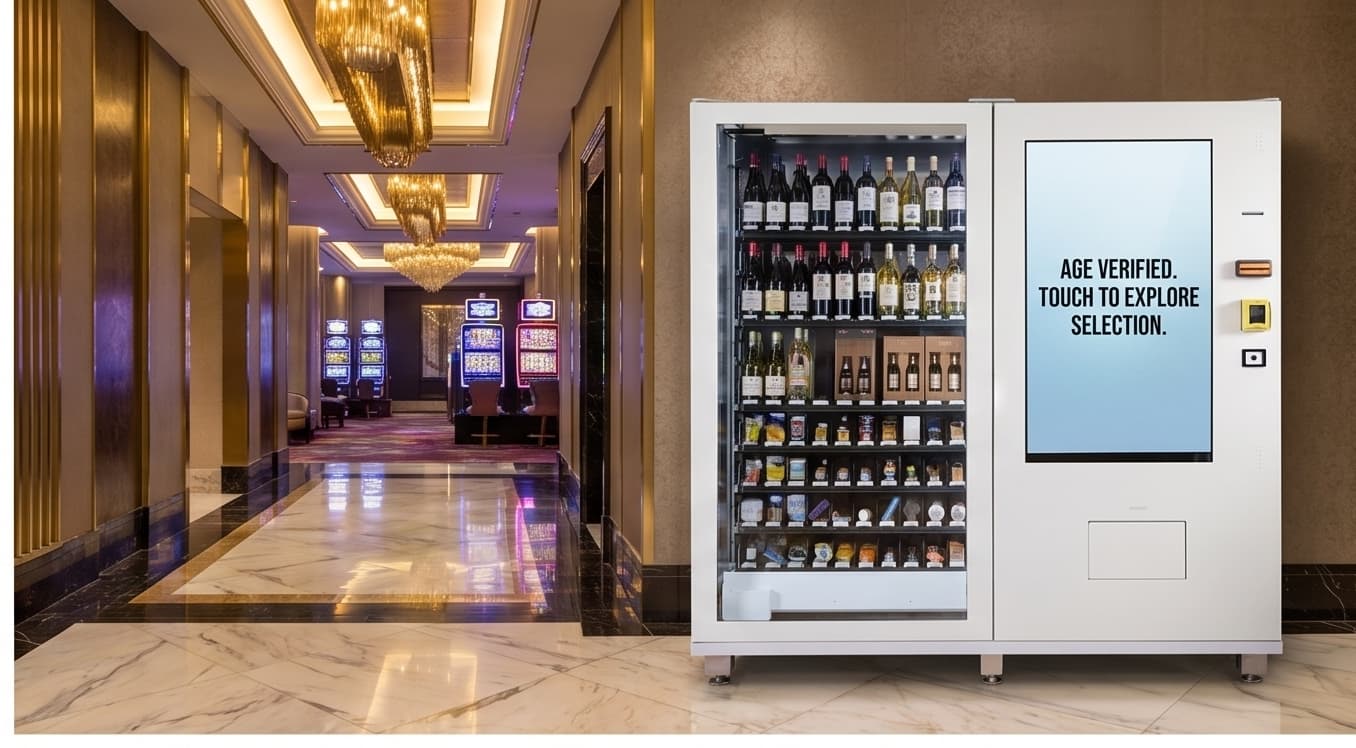
An alcohol vending machine is a self-service retail unit that dispenses beer, wine, or spirits only after the buyer's age is verified—typically by scanning a government-issued ID, comparing the ID photo against a live camera capture, or routing the transaction to a remote attendant for approval. The hardware sits inside a licensed retail or hospitality environment, runs on a refrigerated or ambient cabinet depending on the SKU mix, and reports transactions over a connected telemetry stack so the licensed operator keeps an auditable record of every sale.
What matters in practice is not whether the hardware exists. It is whether the jurisdiction allows the workflow, whether the verification stack is defensible, and whether the cabinet fits the venue's licensing, service, and breakage realities.
If you're evaluating age-verified liquor vending, the useful questions are how the age check works, what data the system handles, where a machine can realistically be deployed, and what responsibilities still stay with the operator after the machine is installed.
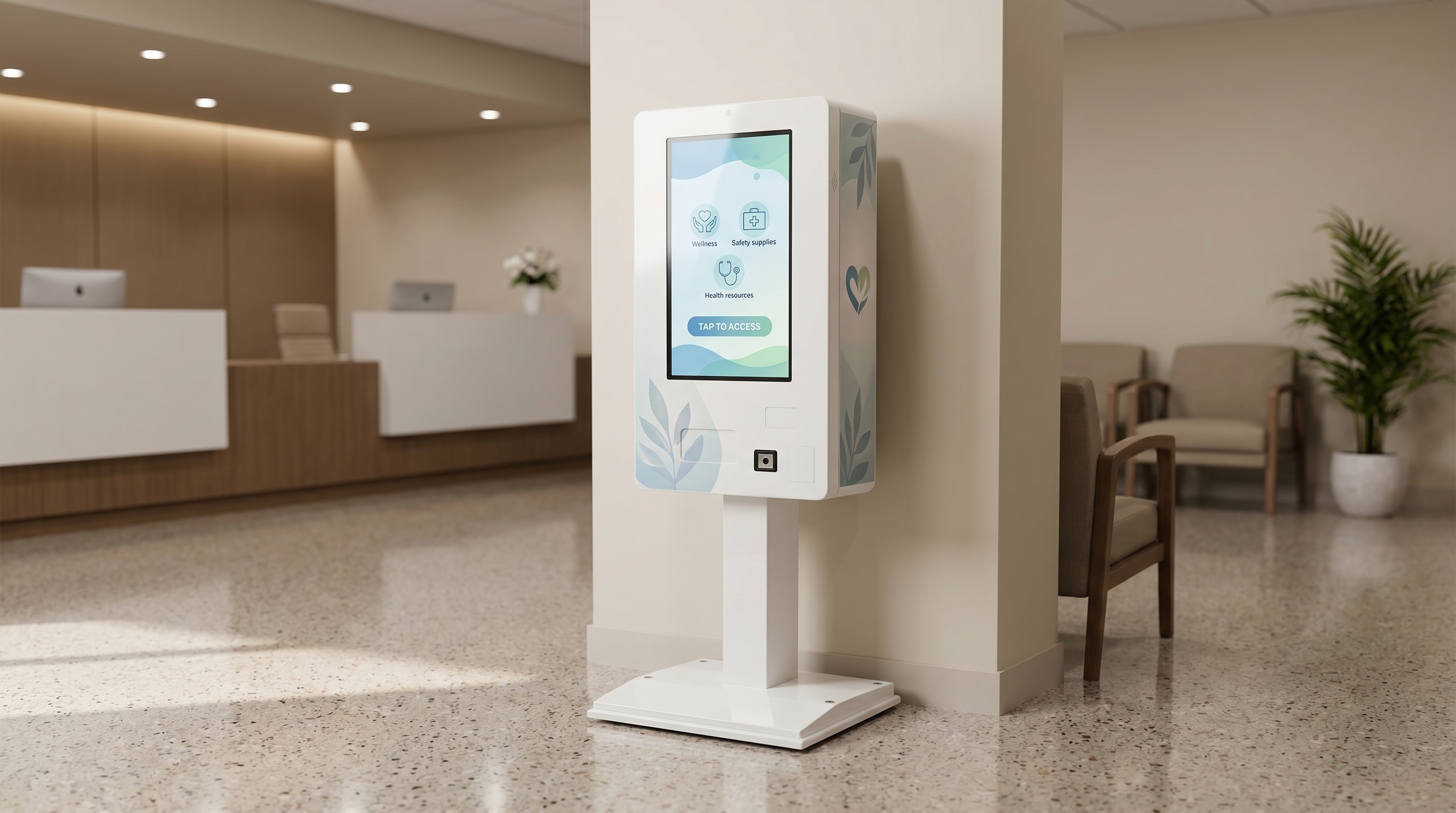
How an Alcohol Vending Machine With an ID Scanner Verifies Age
Age verification is a software workflow that fires before the dispense motor turns. Commercial deployments usually rely on one or more of four methods: ID scanning, document-plus-face comparison, remote attendant approval, and visual age estimation as a supplementary control rather than a primary one.
ID scanning. The machine reads a government-issued ID, such as a driver's license, passport, or national ID card, using a barcode scanner or optical reader. It checks the encoded date of birth against the legal drinking age configured for the deployment jurisdiction. This is the most common approach in current systems.
Document-plus-face comparison. Some systems pair the ID scan with a live camera capture and compare the buyer's face to the ID photo. This adds an anti-fraud layer, but it also creates additional data-handling and privacy obligations that need to be understood before deployment.
Remote attendant verification. In a hybrid model, the machine starts the transaction, then a remote attendant reviews the buyer's ID through a live camera feed and approves or rejects the sale. This keeps a human decision point in the loop and may be useful when data minimization is a priority.
Age estimation via visual AI. Some systems attempt to estimate age directly from a camera image without requiring an ID scan. This is not currently the dominant model in regulated alcohol retail, and operators should treat it cautiously.
No verification method eliminates all failure modes. Systems can reject legitimate buyers, approve buyers they should not approve, or create transaction exceptions that still need human handling. The machine performs the transaction-level check, but operator licensing, site controls, and compliance protocols remain the operator's responsibility.
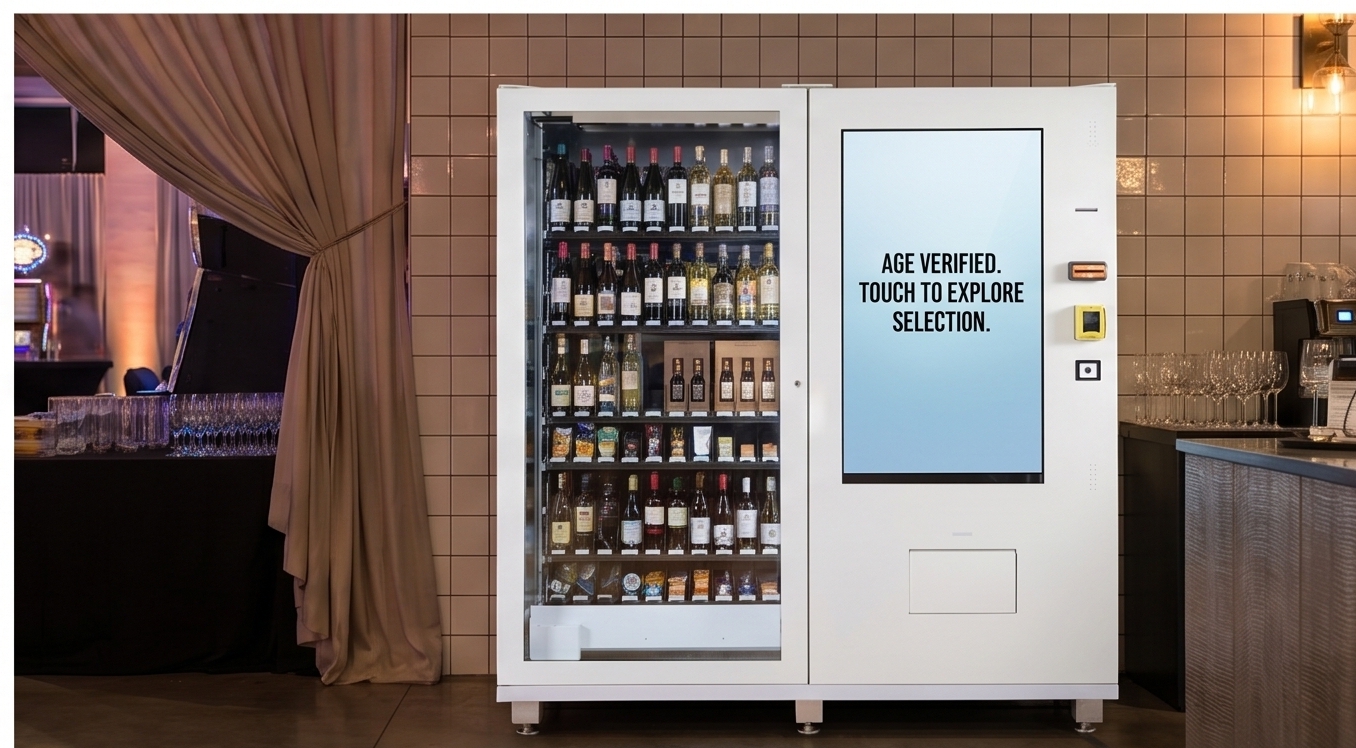
Where an Alcohol Vending Machine Is a Realistic Deployment
A licensed off-premise or on-premise environment is the only place this hardware belongs. Bottle shops, grocery stores with alcohol licenses, hotel lobbies operating under a venue license, controlled-access stadium concourses, and 21+ entertainment venues are the live use cases. The machine itself does not create a license—the operator already holds one, and the cabinet has to operate inside that license's hours-of-sale, premises, and supervision conditions.
Licensed liquor retail. Grocery stores, bottle shops, and off-license retailers may evaluate a machine as an additional point of sale when it fits their licensing conditions and store workflow.
Hotels and hospitality venues. Guest-facing alcohol access in lobbies, lounges, or other controlled areas can be worth evaluating when the venue already operates inside a licensed premises structure.
Entertainment and event venues. Stadiums, arenas, theaters, and convention facilities may look at automated retail when fully staffed service points are impractical across the site.
Private or restricted-access venues. Where access to the physical space is already limited to verified adults, a machine may complement staffed service rather than attempt to replace it.
Placement is a licensing and permitting question, not just a technology question. A machine that can perform an age check at the point of transaction does not automatically make a location legally permissible for automated alcohol sales. That still depends on local law, premises rules, and license conditions.
What Operators Need to Evaluate Before Deploying
1. Jurisdiction and licensing requirements. Automated alcohol dispensing is permitted in some places, restricted or ambiguous in others, and prohibited in some. Even where it is allowed, the operator typically needs an active alcohol retail license or permit that covers unattended or automated sales. The hardware vendor can explain what the system does; they cannot determine whether your specific deployment is legally compliant.
2. Verification method and data handling. ID scans, live camera captures, facial comparisons, and biometric templates can trigger different privacy and retention obligations. Before selecting a system, operators should establish exactly what data is collected, how long it is retained, whether the vendor processes it on the operator's behalf, and what disclosures or consents are required under applicable law.
- What data is collected at each transaction
- How long that data is retained
- Whether the vendor stores or processes verification data
- What buyer disclosures or consent steps are required
3. Machine configuration and deployment workflow. Age-verified liquor vending is often a configured deployment rather than a generic off-the-shelf install. Access control, camera placement, locking mechanisms, reporting, and exception handling all need to match the actual site. If the workflow is more specialized, a custom vending machine design may be the better fit. DMVI's liquor vending machines page is now the best current commercial reference point for reviewing age-verified alcohol-retail deployments on the site.
4. Inventory management and record-keeping. Alcohol retail usually requires auditable records. Operators should confirm that the machine's reporting supports the transaction logs, product movement records, and operational reporting they actually need before the machine goes live.
5. Failure mode protocols. What happens if the machine rejects a legitimate buyer, loses network connectivity, or cannot complete the verification step? Those answers need to be defined before deployment. Staff override rules, refund handling, dispute handling, and default machine behavior should not be left vague until the first real incident.
The Buyer Experience
For the buyer, the flow is usually straightforward: browse the product selection on the touchscreen, initiate the purchase, complete the age verification step, pay, and receive the product. On current commercial hardware, the interface can display product images, descriptions, pricing, and alcohol details in a format similar to other self-service retail systems.
Payment options often include card, contactless, and mobile wallet. Some deployments may also support cash, depending on the hardware configuration. Transaction speed will vary depending on the verification method and whether the customer is already familiar with the interface.
Product range depends on what the operator chooses to stock and what the cabinet is configured to dispense. Wine, beer, spirits, and other packaged alcohol formats may all be possible, but glass handling, cabinet size, dispense path, and SKU footprint all need to be scoped correctly.
What These Machines Don't Do
They do not detect buyer intoxication. Standard vending machines do not assess whether a buyer is visibly intoxicated. If an operator needs that check in the workflow, it requires human involvement.
They do not guarantee compliance on their own. The machine can enforce an age check at the point of transaction, but it does not hold a license, determine whether a specific placement is allowed, or ensure the operator is complying with all site conditions.
Facial recognition performance is not uniform. Accuracy varies by vendor, hardware quality, lighting conditions, angle, and testing method. Operators should ask for vendor-specific performance information rather than assume a generic standard.
Alcohol sales hours still apply. Automated hardware does not override licensing restrictions on hours of sale, premises rules, or operating conditions. A machine does not create permission where the operator does not already have it.
Evaluating a liquor vending deployment? Talk to DMVI first.
Age-verified smart vending is a configured deployment, not an off-the-shelf purchase. DMVI can help you scope the hardware, workflow, access control, and compliance questions before a project moves forward.