Custom Vending Machine Solutions for Brands, Operators, and Educational Programs
A custom vending machine solution is a business-to-business program where the cabinet, dispensing mechanism, payment stack, touchscreen flow, and planogram are engineered around the buyer's product, venue, and brand brief instead of being pulled straight from a stock catalogue. It is more than a wrap on a generic snack machine. A serious build can cover cabinet format, internal product handling, MDB/ICP payment integration, DEX telemetry, and a user interface designed for the actual buying journey. Brands use that flexibility for retail activations and specialty merchandising. Operators use it when standard coil-drop hardware simply is not honest about what the SKU or venue needs.
This page is the B2B custom-solutions hub, so the focus is enterprise programme design rather than consumer-facing novelty. The right question is not “can we customise a machine?” but “what combination of hardware, software, workflow, and brand presentation solves the commercial problem without forcing the product into the wrong cabinet?”
When a custom vending solution is the right answer
Custom work earns its premium when at least one of four conditions is true. First, the product is fragile, oversized, irregular, temperature-sensitive, or otherwise badly served by a standard spiral. Second, the venue has architectural, compliance, or access constraints that rule out an off-the-shelf format. Third, the workflow needs more than a simple vend — for example controlled pickup, age verification, guided selling, or branded campaign logic. Fourth, the machine itself has to function as a designed retail asset rather than a commodity cabinet with vinyl on the outside.
If none of those conditions apply, a configured smart vending platform is usually the more sensible answer. Good custom engineering starts with that honesty instead of trying to sell every project as a moon landing.
What a real custom vending programme covers
A credible programme covers cabinet engineering, internal product-handling logic, control electronics, payment, telemetry, and interface design as one system. Cabinet decisions include footprint, depth, refrigeration zoning, wall-mounted versus floor-standing format, service access, and screen size. Internal handling can range from modified shelves and elevators to carousels, robotic pick systems, locker-style retrieval, and gentle-drop conveyors for crush-sensitive products. Cashless payment typically sits on an MDB-connected terminal such as a Nayax-class reader with EMV, NFC, Apple Pay, Google Pay, and mobile-wallet support.
For operators, DEX reporting matters because a custom machine still needs to be audit-friendly in the field. Stock counts, vend events, faults, refunds, and payment exceptions are far less charming when they disappear into a bespoke black box.
Branded retail, education, and institutional use cases
One major use case is branded retail. Beauty brands, FMCG companies, and travel-retail teams use custom vending to create launch activations, premium product drops, and high-visibility sampling programmes where the machine doubles as a retail display and media surface. The screen can deliver product storytelling, ingredient or usage guidance, promotional bundles, and seasonal campaign creative at the point of decision.
Another strong use case is institutional deployment. Schools and libraries use book vending as a reward and literacy mechanism. Hospitals and workplaces use controlled-dispense cabinets for supplies, PPE, and staff convenience. In those settings, the value is not just retail margin. It is access control, programme visibility, and more disciplined fulfilment in a self-service format.
Specialty SKUs that usually require custom engineering
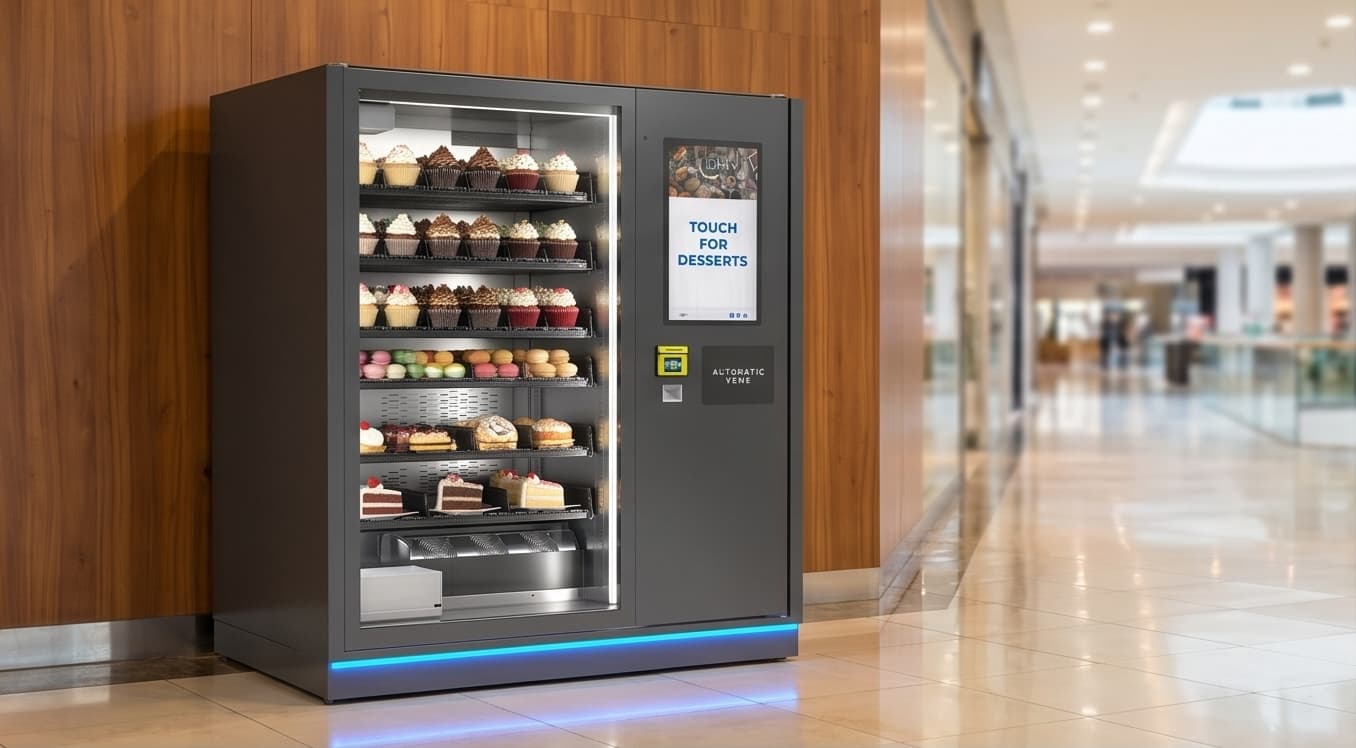
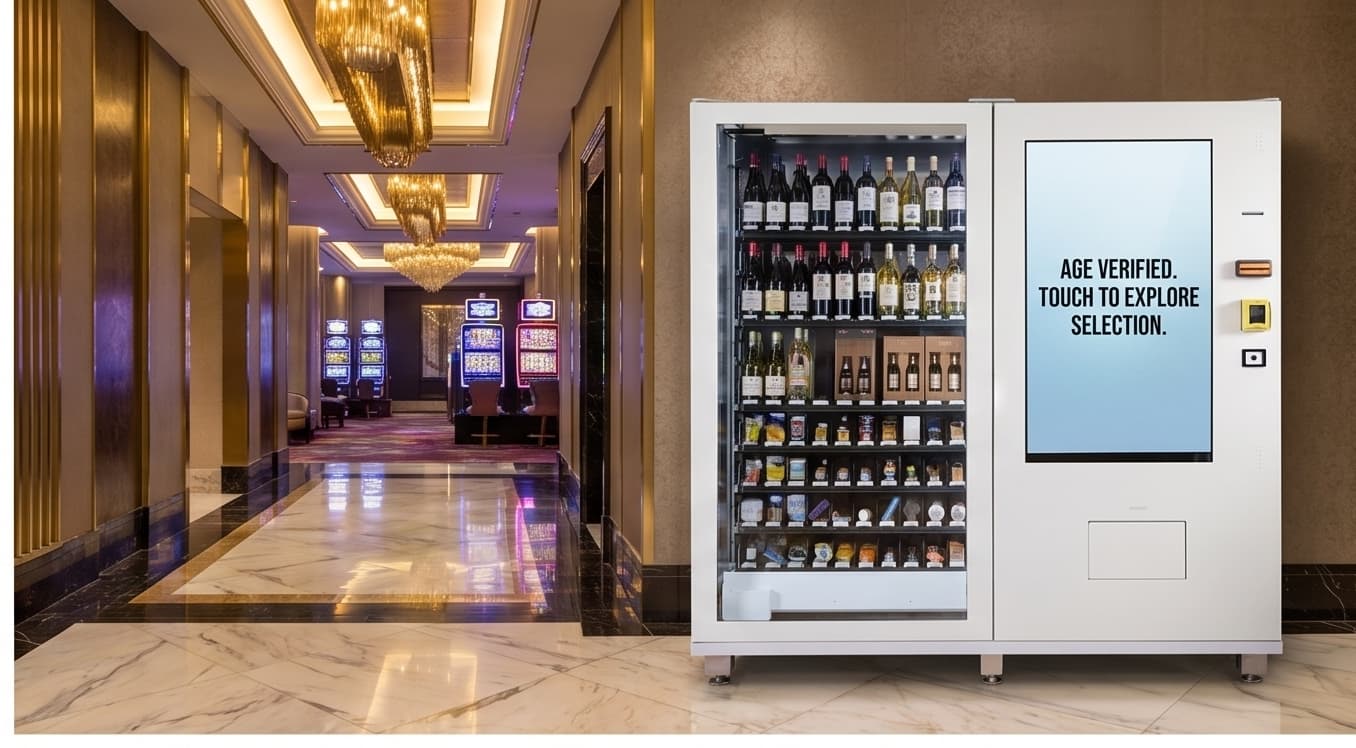
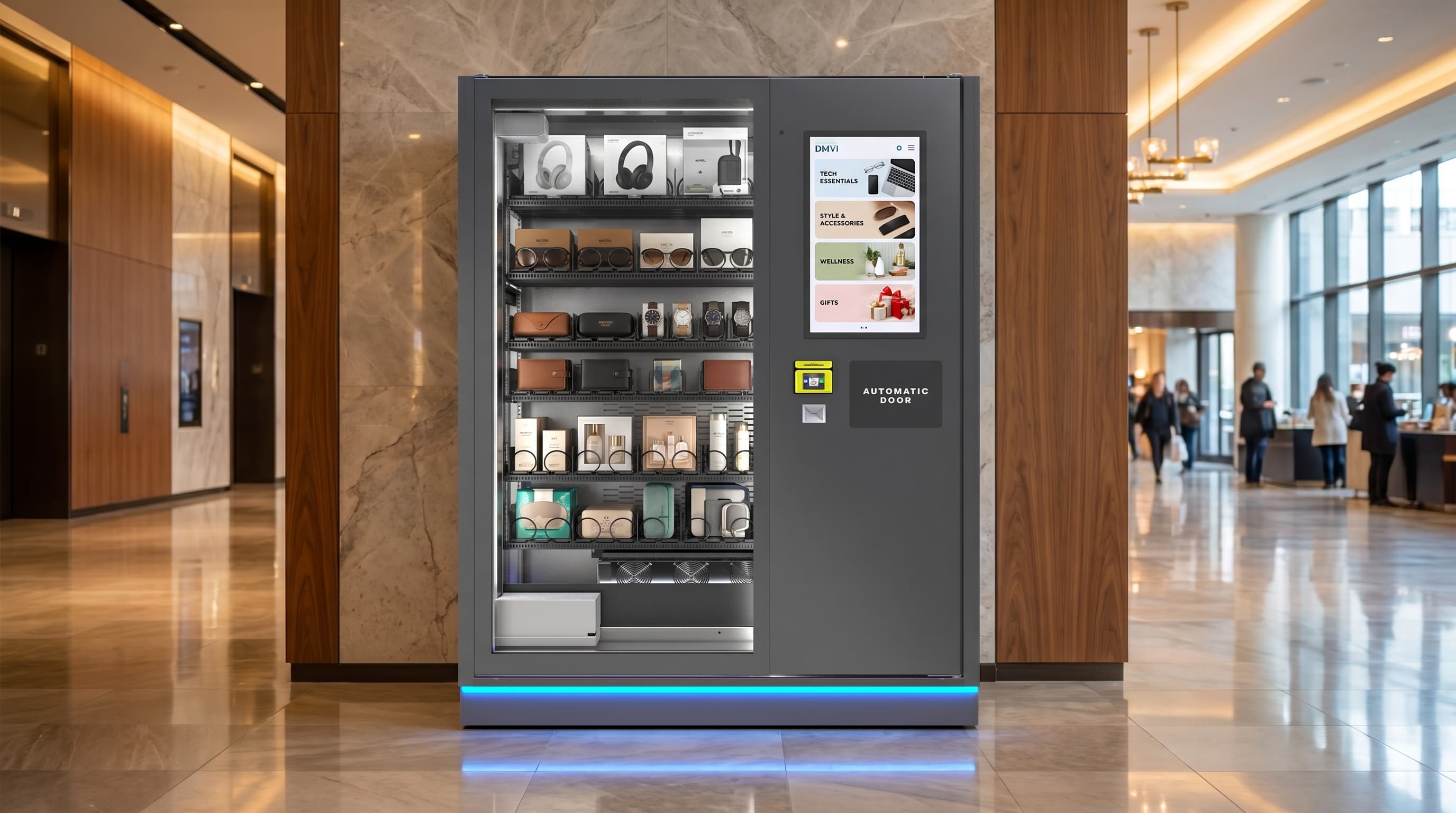
Custom mechanisms make sense when standard snack-machine geometry becomes a liability. Cupcakes and bakery items often need gentle-drop conveyor-and-elevator delivery. Beauty and luxury items may need secure presentation and low-impact retrieval. Electronics and accessories may work better with locker-style handoff than an open chute. Age-gated products such as premium bottles or vape hardware can require locked columns, ID validation, and tighter audit logic. The point is not to make everything bespoke for sport. It is to stop pretending a standard spiral is the right answer for products it was never built to handle.
That distinction matters commercially because product damage, awkward retrieval, and refund friction will erase the glamour of a custom idea remarkably quickly.
How to scope a custom vending project before a build contract
Scope should start with the SKU and the venue, not with a rendering. The manufacturer needs dimensions, weight, packaging tolerance, temperature requirements, expected daily volume, restock cadence, payment requirements, venue footprint, and any compliance obligations such as controlled access or age gating. The buyer should also define what the screen is expected to do — simple selection, assisted merchandising, staff workflow, loyalty, or campaign media — because touchscreen requirements alter both hardware and software scope.
A strong partner should also be willing to say when a configured platform is sufficient. Some projects need true custom cabinet engineering. Others mainly need better merchandising, better screen UX, and better route discipline. Mixing those up is how people buy unnecessary complexity with a straight face.
Planning a custom vending programme?
DMVI helps brands, operators, schools, and institutions scope custom vending around product fit, venue constraints, payment, telemetry, and the right cabinet architecture before money gets wasted on the wrong build.