History of Vending Machines: From 1st-Century Coin Slots to Cloud Telemetry
The history of vending machines is the documented, two-thousand-year evolution of coin-operated dispensing, from a first-century temple device to the cloud-connected, cashless, touchscreen machines operators run today. The hardware has changed dramatically, but the underlying commercial challenge has stayed oddly consistent: accept payment reliably, dispense the right product, and prove the transaction happened.
That is why vending history matters to modern operators. It is not just a parade of curiosities. It explains how unattended retail developed from simple mechanical release systems into the standards-based payment, telemetry, and route-management stack that now supports automated retail at scale.
The earliest documented vending machine
The earliest known vending machine is usually attributed to Hero of Alexandria, a first-century engineer working in Roman Egypt. He described a coin-operated holy-water dispenser used in temples: a coin dropped onto a pan, tipped a lever, opened a valve, and released a measured amount of water before the mechanism reset. It was simple, but the basic vending logic was already present — payment, controlled dispense, and no clerk required.
That temple device matters because it shows the concept of unattended dispensing is far older than the modern retail industry. Vending did not begin with fizzy drinks and office snacks. It began with a mechanism solving access and rationing in a repeatable way.
Early modern and nineteenth-century commercial steps
Centuries later, similar ideas appeared in more recognisably commercial settings. Small brass tobacco dispensers were used in English taverns by the early seventeenth century, and in 1822 the publisher Richard Carlile reportedly used a newspaper-dispensing machine to circulate banned political works without face-to-face sales. These were still narrow use cases, but they reinforced a durable pattern: low-friction, unattended transactions work especially well for standardised products in busy locations.
The first fully automatic vending machine is often credited to Simon Denham’s 1867 British patent for a stamp-dispensing machine. Not long after, the format moved into genuine scale.
The commercial birth of modern vending in the 1880s
Modern vending began in earnest in London in the 1880s. Percival Everitt patented a postcard and stationery dispenser in 1883, and the Sweetmeat Automatic Delivery Company, formed in 1887, became the first business dedicated to installing and operating vending machines. These machines spread across railway stations and post offices, where people already wanted low-cost convenience purchases and foot traffic did the rest.
The United States followed quickly. In 1888, the Thomas Adams Gum Company installed gum vending machines on New York City railway platforms. That helped establish the commercial formula still visible today: standardised products, high-footfall locations, and a transaction simple enough to automate repeatedly.
Twentieth-century expansion: from novelty to infrastructure
Across the twentieth century, vending expanded from small novelty units into a routine part of public and workplace retail. Beverage dispensers, cigarette machines, refrigerated bottle vendors, and spiral snack machines became common in factories, schools, transport hubs, offices, hotels, and hospitals. By the postwar era, vending was no longer an eccentric retail experiment. It had become part of the everyday built environment.
Japan later demonstrated just how dense and diverse vending could become when the right conditions aligned: limited space, strong consumer comfort with automation, and a broad willingness to buy more than snacks and drinks through unattended channels. That helped prove vending is not inherently tied to one category. It is a controlled-dispensing retail platform whose product mix changes with economics and culture.
From coin mechanisms to MDB and cashless retail
For much of vending history, payment constraints shaped what machines could sell and how convenient they felt. Coins dominated because they were easier to validate mechanically. Bill validators expanded transaction range, but modern vending changed more decisively once machines could support a more flexible payment stack. Standards such as MDB allowed one machine to integrate coins, bills, cashless readers, and mobile-wallet acceptance through a common interface instead of a mess of isolated hardware choices.
That standardisation matters because it is one of the bridges between vending history and the machines DMVI and other modern operators actually deploy. Once payment became more interoperable, the machine could sell higher-value goods more comfortably and operate in more demanding retail environments.
DEX, telemetry, and the modern cloud-managed machine
The next major leap was not just payment but visibility. Reporting layers such as DEX and broader telemetry systems allowed operators to move from blind route servicing to data-led management. Sales, stock levels, machine health, and certain fault conditions could now feed into dashboards, route planning, and maintenance decisions.
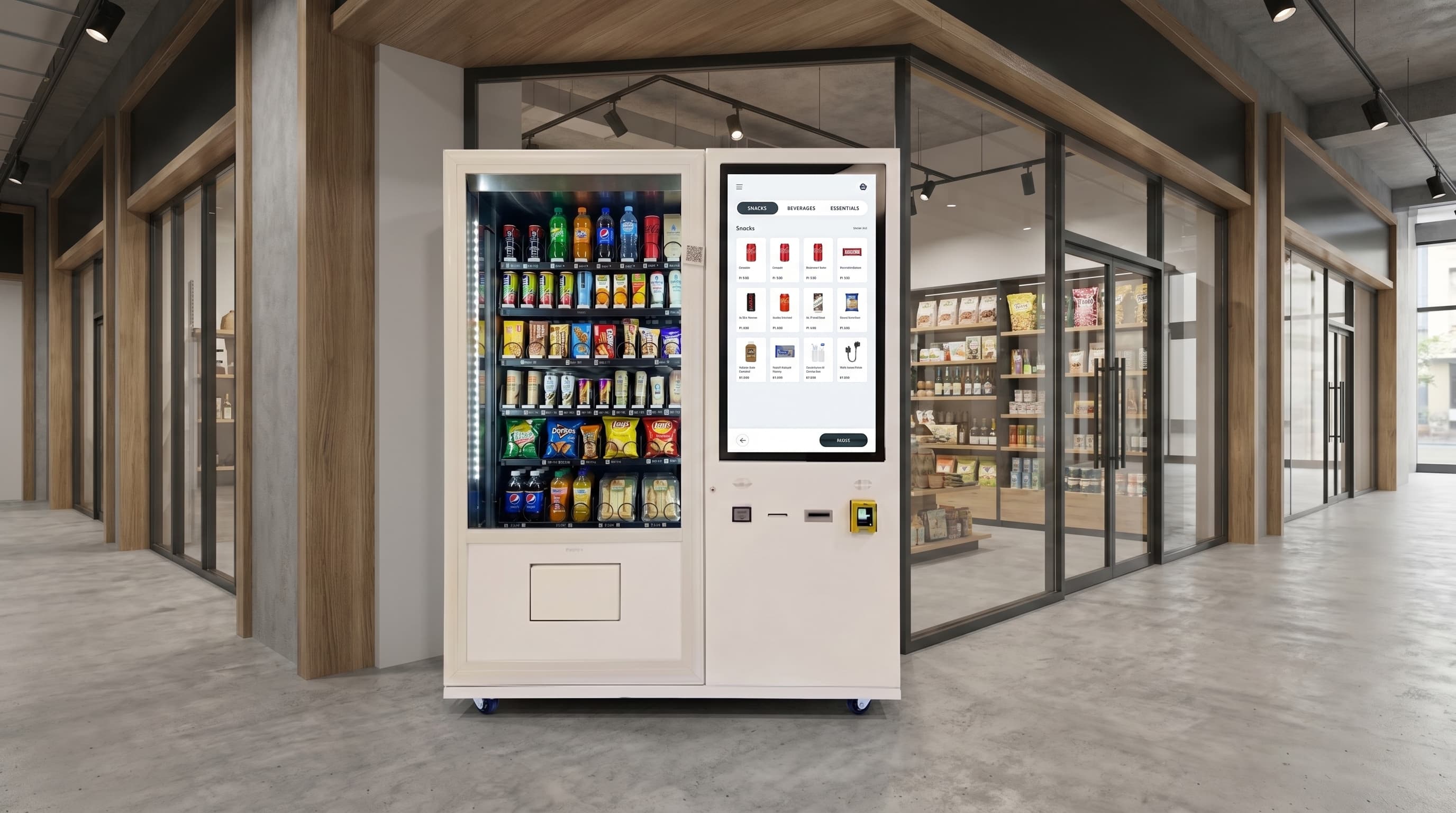
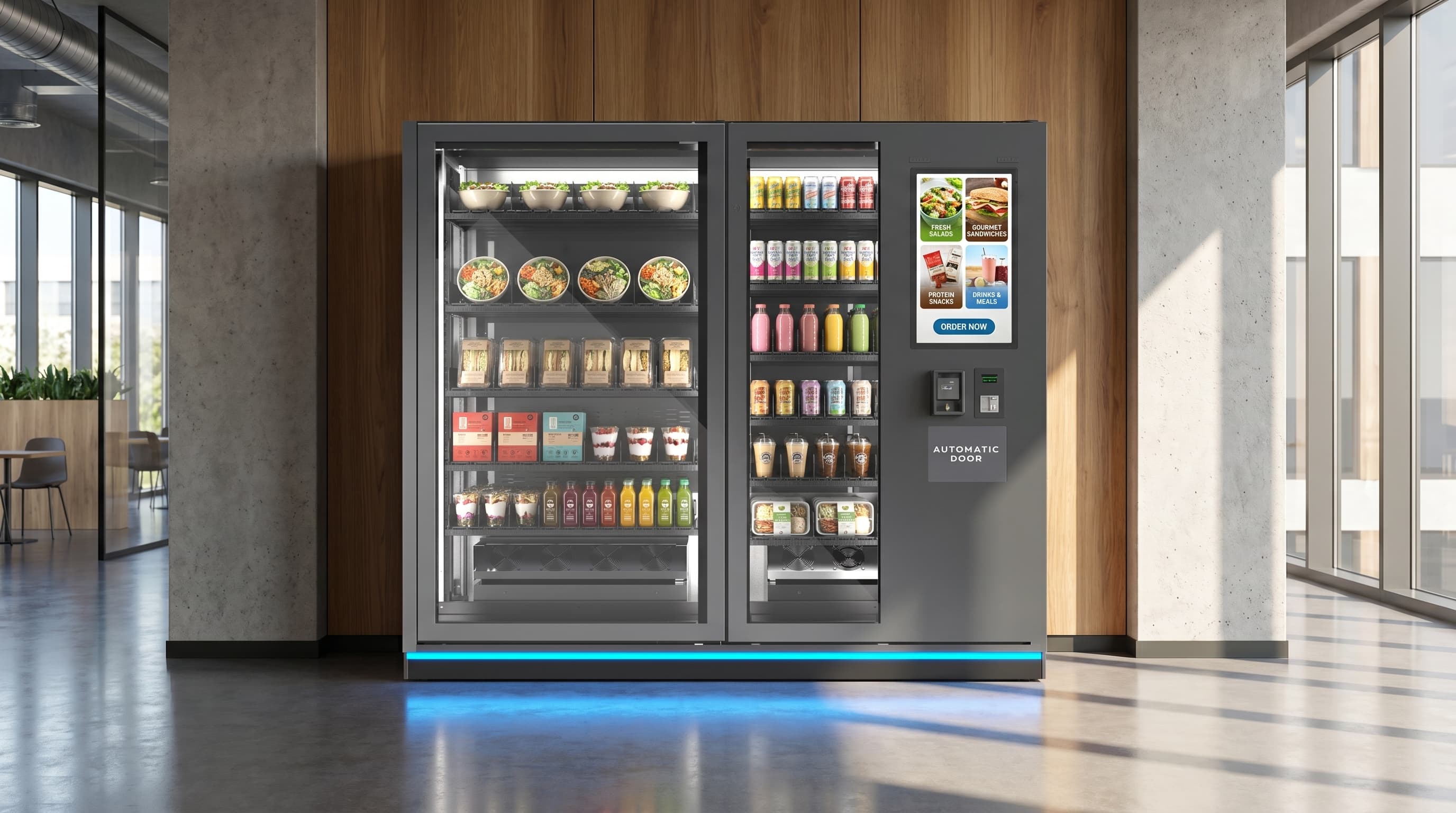
That is the modern endpoint of the long history: a vending machine is still taking payment and dispensing a product, but it now does so inside a connected operating system that can support cashless checkout, cloud reporting, assortment decisions, and much wider product categories. The machine is no longer just a metal box with a coin slot. It is part of a managed retail network.
Why the history still matters
The best reason to study vending history is that it clarifies the continuity beneath the innovation. Every generation of machine tries to solve the same old problems more cleanly: payment friction, dispensing reliability, product fit, and operating efficiency. Today’s touchscreens and cloud dashboards look very different from Hero’s temple valve, but the commercial logic is recognisably the same.
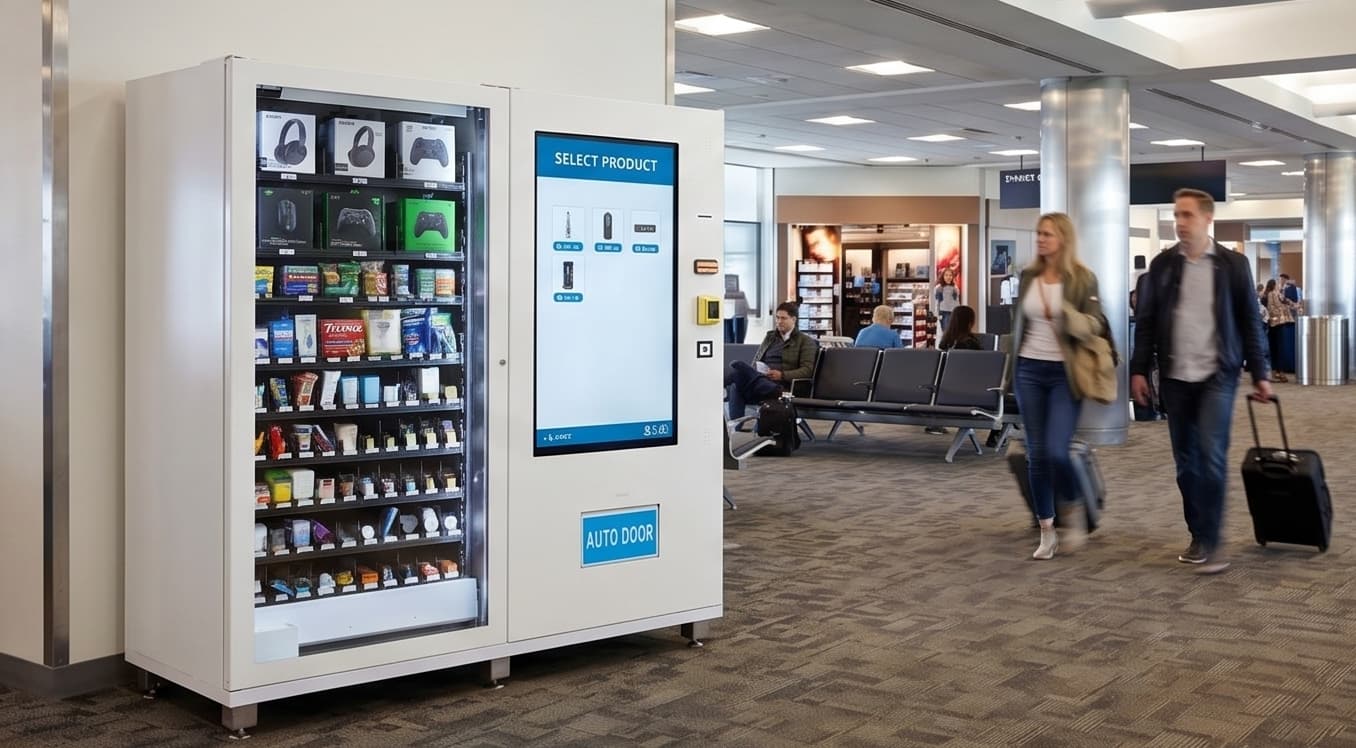
The history of vending machines is therefore not just a timeline. It is the story of unattended retail becoming more scalable, more flexible, and more measurable over time — which is precisely why modern vending can now support everything from snacks to electronics to custom automated retail programs.
Evaluating how modern vending evolved into today’s automated retail stack?
DMVI helps operators connect the history of vending to today’s payment standards, telemetry, cabinet choices, and category expansion so machine strategy is grounded in how the industry actually developed.