Vending Machine Ideas: 10 Evaluated Opportunities for Operators
A vending machine idea is only useful when it survives real operator filters: venue fit, margin per facing, temperature or compliance burden, replenishment intensity, and whether the route can service it without going broke. Most “100 vending ideas” articles skip that part and wander off into novelty for novelty's sake.
The more useful approach is to evaluate categories as business models rather than as curiosities. The right idea is not the one that sounds most futuristic. It is the one the venue will actually buy often enough, at a margin high enough, with service demands low enough, to justify the cabinet and the route behind it.
The five filters that matter first
Venue fit asks whether the audience in that location has the right need and buying context. Margin per facing asks whether the product can support fees and labour. Temperature and compliance ask whether the cabinet and the operator can support the category safely. Replenishment intensity asks how often the machine needs service. And operational simplicity asks whether the route can realistically keep the concept working.
Those filters are less glamorous than the phrase “untapped opportunity,” but they are much better at preventing expensive mistakes.
Ten vending machine ideas worth evaluating properly
- Healthy snack cabinets for offices, schools, and gyms. Usually a strong default because the product is familiar, ambient or lightly chilled, and operationally manageable.
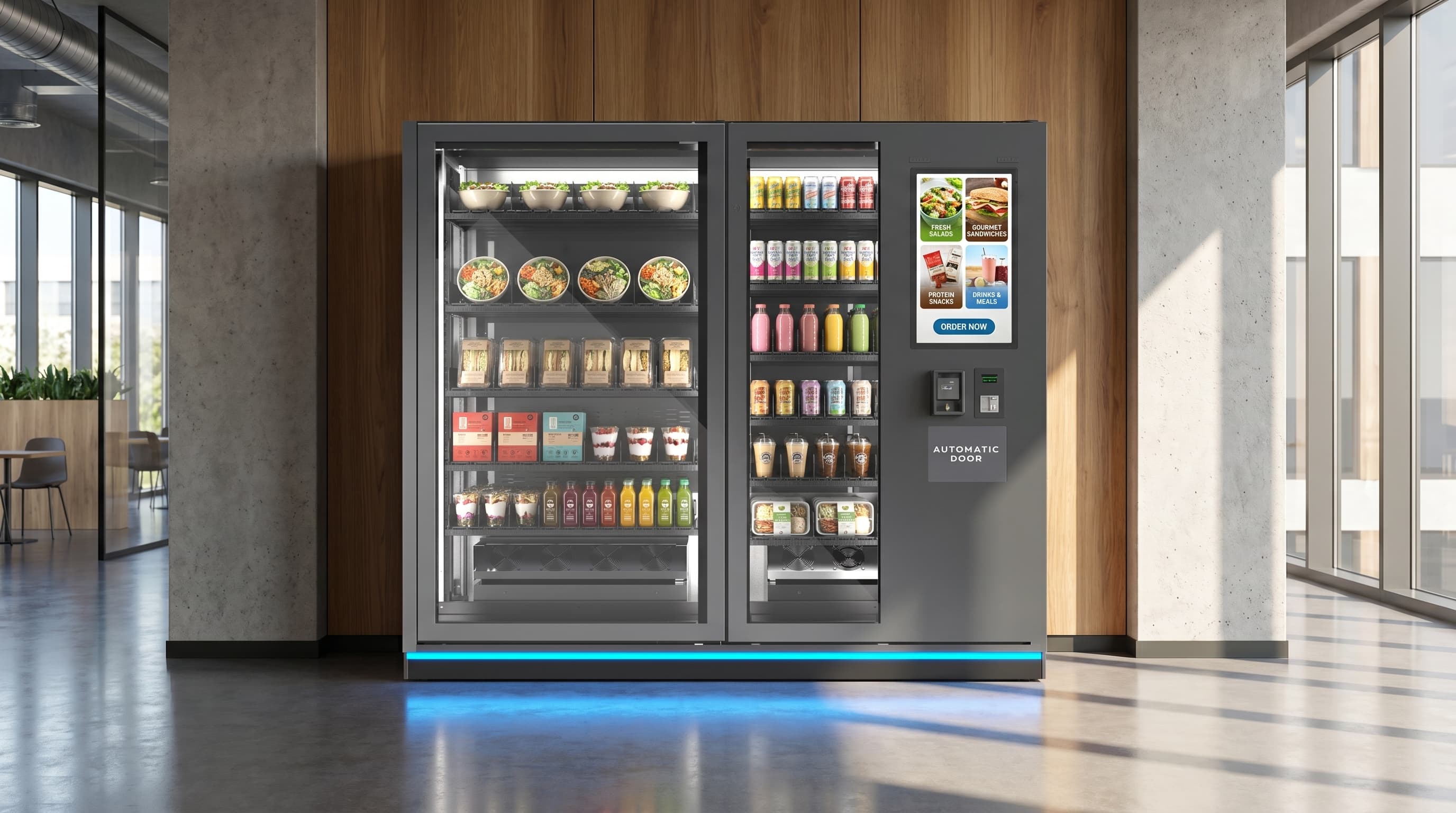
- Fresh food and ready-to-eat meals for hospitals, offices, and transport settings. Attractive margin potential, but only when the operator can sustain cold-chain discipline and faster service cadence.
- Cupcake or dessert vending for hotels, malls, and entertainment venues. Works as a niche format if packaging, refrigeration, and gentle vend hardware are specified properly.
- Bean-to-cup coffee vending for offices, lobbies, and campuses. Strong when daily demand is real and the cleaning burden is genuinely owned, not merely admired from afar.
- Electronics-accessory vending for airports, stations, and campuses. High urgency, solid margin, and a good fit for digital catalogue-style browsing.
- Personal care and hygiene products for hotels, gyms, airports, and healthcare settings. Usually low-drama, practical, and easier to run than more theatrical concepts.
- Beauty and cosmetics vending for malls, airports, and premium venues. High margin potential, slower turns, and a strong dependence on the right audience.
- Fitness-gear vending for gyms, leisure sites, and sports environments. Sensible when the site naturally produces forgotten-item demand.
- Eco-friendly reusable goods for campuses and sustainability-led workplaces. Commercially viable in the right culture, but often more mission-aligned than revenue-maximised.
- PPE and safety supplies for industrial, healthcare, and regulated environments. Less glamorous, but often one of the more stable and defensible vending applications.
What new operators usually get wrong
The most common mistake is choosing a concept before choosing the venue logic. Operators get excited about a category, then go looking for somewhere to install it. The better sequence is the reverse: study the venue, identify what people actually need there, and then choose the product category and machine format that fit that demand pattern.
The second mistake is underestimating replenishment. A concept can have healthy gross margin on paper and still fail because it needs too many visits, too much freshness control, or too much troubleshooting to survive on a small route.
Smart tooling helps, but it does not rescue a bad concept
Cashless payments, remote telemetry, and route data absolutely improve a vending business. They help with stock visibility, service timing, and sales insight. But they do not magically transform a weak venue-category match into a strong business. A connected mistake is still a mistake, just with better reporting attached to it.
That is why the most reliable vending ideas usually look slightly boring in theory and slightly brilliant in practice. They are fitted tightly to the audience, the location, and the route model that serves them.
The honest shortlist for operators
If an operator is just starting, the safest shortlist is usually healthy snacks, coffee, electronics accessories, personal care, and selected fresh food or dessert concepts only where the venue clearly justifies the added service burden. The right answer depends less on what is “untapped” and more on what is supportable.
That may be less exciting than pretending every vending machine idea is a hidden goldmine, but it tends to produce much healthier businesses.
Working out which vending concept is actually worth building?
DMVI helps operators compare category fit, cabinet format, service burden, and route economics before a clever idea becomes an expensive lesson.