7 Things That Actually Drive Vending Machine Sales
Vending machine sales are the gross revenue earned by an automated retail unit, and they are determined by a small number of operator-controlled variables—not by luck. A vending machine that underperforms is rarely in the wrong building; it is usually in the right building but missing one or more of these seven factors. Operators who understand what actually drives vending machine sales can fix underperforming locations systematically rather than guessing.
1. Location quality, not just location count
The most durable predictor of vending machine sales is whether the people at that location have a genuine reason to use the machine and limited nearby alternatives. A factory floor during a night shift, a hospital corridor at midnight, a gym immediately after the workout floor closes, or an office building without a convenient coffee or snack option nearby—all of these create captive demand that drives consistent use.
High foot traffic in a space packed with food outlets nearby rarely produces the same results. Operators who prioritise location quality over location count consistently outperform those who spread machines thinly across mediocre sites.
2. Product-to-audience fit
The right product at the wrong location earns less than a mediocre product at the right location. A machine stocked for office workers will not perform the same way in a gym. A cupcake or dessert assortment in a hospital staff corridor will behave differently from one in a tourist site. Getting the product mix right means understanding who actually uses the machine, when, and why—and updating the assortment when the evidence suggests a change.
Operators who look at sales data by slot and location and adjust accordingly tend to see compounding improvement over time. Those who stock once and never revisit tend to plateau or slide.
3. Cashless payment acceptance
A vending machine that only accepts cash turns away a meaningful share of would-be buyers, and the share grows every year. Contactless cards, Apple Pay, and Google Pay are now table stakes, supported through MDB-compatible cashless modules and the reporting stack that comes with them.
Beyond capturing more buyers, cashless acceptance lifts average transaction values because purchase decisions are no longer constrained by the coins in someone's pocket. The revenue impact of upgrading a cash-only machine to accept modern payment methods is consistently meaningful.
4. Machine reliability
A machine that has jammed once and swallowed a buyer’s money without dispensing the product gets avoided. Customers do not always complain—they simply stop using the machine. That quiet reputation for unreliability is difficult to diagnose from restocking visits alone and even harder to repair once it forms.
Touchscreen clarity, payment hardware reliability, and dispense consistency all contribute to whether buyers trust the machine enough to use it regularly. A machine that feels broken or unreliable—even if the mechanical issue is minor and infrequent—loses repeat customers faster than almost any other factor.
5. Consistent stock levels
Stock-out rate is the percentage of slot visits where the buyer's preferred product is unavailable, and it kills compounding revenue. An empty slot is a sale that never happens. If a buyer visits the machine twice and finds their preferred product missing both times, they stop checking.
Cloud-connected smart vending machines report slot-level inventory continuously, which allows operators to service machines before they run out rather than after. That shift from reactive to planned restocking is one of the strongest levers for protecting long-term sales.
6. On-screen merchandising and product presentation
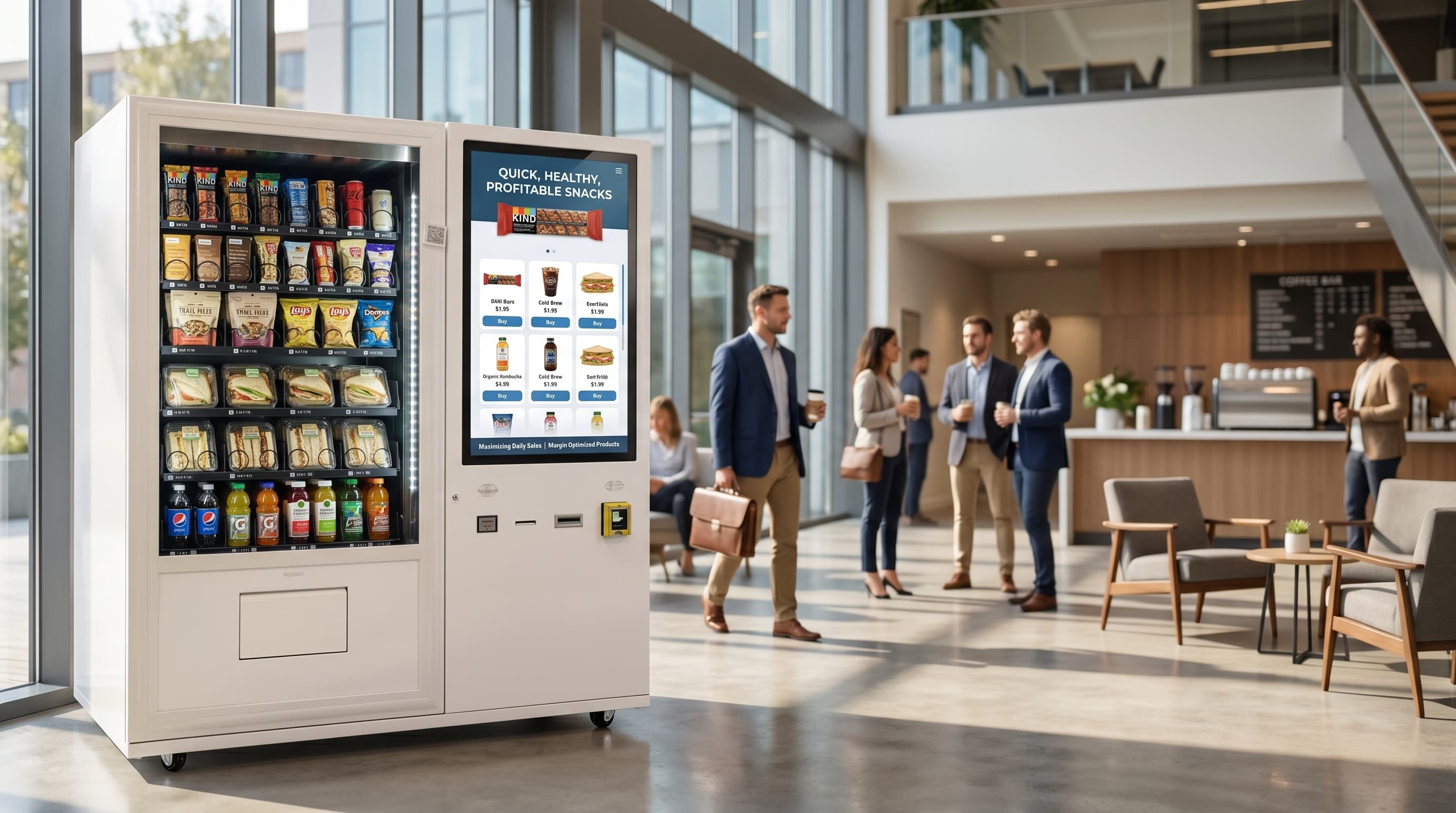
A touchscreen-led vending machine can do something a traditional button-grid machine cannot: present products clearly, tell buyers what they are getting, and organise the assortment in a way that guides rather than confuses. Products with images, descriptions, and clear pricing convert better than numbered slots buyers have to guess at.
Operators who use the digital merchandising capability intentionally—keeping images current, organising the product flow logically, and running occasional promotions—see measurably better results than those who set up the machine and leave the screen configuration untouched.
7. Pricing and planogram discipline
Pricing and planogram discipline is the routine of adjusting per-slot prices and product mix based on actual slot-level velocity data. Operators who set prices once at install and never revisit them are leaving margin on the table at high-velocity slots and underselling at low-velocity ones.
The reverse also applies. A machine priced well above what the audience considers fair for the convenience offered will see buyers skip the machine for alternatives even when those alternatives are less convenient. Connected machines surface the data; disciplined operators use it.
Looking for a machine built around real operator requirements?
DMVI designs smart vending machines with the telemetry, cashless payments, and remote management features that help operators run a tighter, more profitable route. Start with a conversation about your locations and product mix.