Cannabis Vending Machines for Dispensaries
Compliance note: Cannabis vending machines are restricted to state-licensed cannabis retail locations and operators. Cannabis remains federally controlled in the United States, and legality varies substantially by state and locality. This page addresses operator workflow inside licensed dispensaries only and is not legal advice.
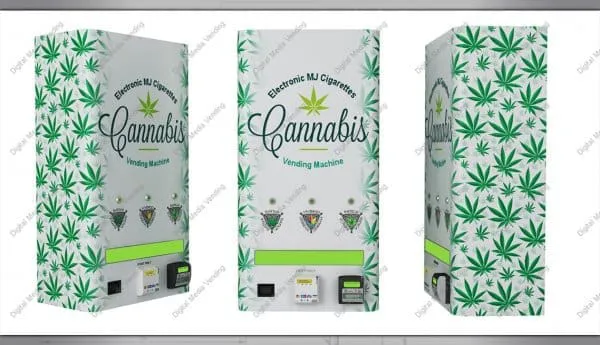
A cannabis vending machine, in the context of a licensed dispensary, is a controlled-access automated dispensing unit that supports compliant cannabis retail transactions inside a state-licensed retail outlet—typically integrated with the dispensary's Metrc track-and-trace workflow, paired with an age-and-identity verification path, and configured for the specific product formats the store actually sells.
That's why cannabis vending machines either fit a dispensary's existing workflow or they don't. The machines that work plug into the track-and-trace process the store already runs, handle the right product formats, and give operators real control over access, reporting, and exception handling. The ones that don't work treat compliance as an afterthought.
If you're a licensed dispensary operator evaluating whether cannabis vending belongs in your store, here are nine reasons the conversation is worth having—and what you need to have settled before it moves forward.
1. A well-integrated machine fits the Metrc workflow your store already uses
Every licensed dispensary is already required to work inside Metrc. That's the baseline. The question isn't whether to add a compliance system—it's whether the machine can slot into the reporting, inventory, and transaction flow you're already running.
A cannabis vending machine that integrates cleanly with Metrc can support compliant sales without asking staff to manage a parallel manual process. The machine should handle inventory decrement, UID retirement, and reporting handoffs in a way that fits the existing POS or ERP environment—not work around it.
That integration is what separates a deployable cannabis vending project from one that generates compliance drag after go-live. DMVI's cannabis vending machines page covers how Metrc fit is approached in practice and what questions need answers before hardware is locked.
2. Controlled access gives operators a defensible verification path
Cannabis vending in a licensed retail environment requires a clear, defensible approach to age and identity verification—one that fits the store layout, the jurisdiction, and the customer experience the operator can actually stand behind.
There are several models worth evaluating: phone-led identity verification, machine-side ID review, a staffed handoff before the machine releases product, or a combination depending on the deployment context. None of these is universally right. The correct path depends on local licensing rules, store configuration, and how the dispensary wants its repeat-purchase flow to work in practice.
What matters operationally is that the verification path is clearly defined before rollout—not improvised once the machine is on the floor and real transactions are in progress.
3. A faster repeat-purchase lane reduces front-counter pressure
The strongest use case for cannabis vending isn't first-time customers. It's repeat customers who already know exactly what they want—the same pre-roll they've bought a dozen times, a familiar cartridge, an edible they order every week—and don't need a consultation to complete the transaction.
For those customers, a machine creates a faster path through the store. They bypass the queue that first-time visitors are waiting in for a full budtender walkthrough. They move through a controlled, self-service process and are done in less time.
That separation has real operational value. It reduces front-counter congestion during peak periods and allows staff to give their full attention to the customers who actually need it.
4. The machine has to match the product formats you actually sell
Pre-rolls, jars, bags, tubes, cartridges, edibles, tinctures, and cartons don't all behave the same way inside a dispensing machine. Package dimensions, weight, fragility, and dispensing path all affect whether a given product format is compatible with a given machine configuration.
Operators need to scope the machine against their real product mix before committing to hardware. A configuration built around individual pre-rolls and slim-profile cartridges may not be the right fit for a dispensary whose high-velocity SKUs are 3.5g flower jars or multi-item edible packs. Getting that misalignment wrong at the planning stage creates mechanical problems, inventory waste, and restocking friction after launch.
Product-format fit is an engineering decision that needs to happen at the scoping stage—not discovered during the first week of live operation.
5. Freed budtender time converts to higher-value floor activity
When a cannabis vending machine handles low-complexity repeat purchases, it doesn't just shorten the queue—it changes what your staff can do with the time they get back.
Budtenders who aren't processing routine transactions can spend that time on consultative conversations, first-time customer education, product category guidance, and upsell pathways. Those interactions tend to carry higher revenue per engagement than a quick standard-order checkout.
The machine doesn't replace the budtender role. It absorbs the portion of the workload that doesn't require one, which is a better allocation of the floor in a properly staffed dispensary. The result is staff deployed where they add the most value, instead of split between high-touch work and routine processing.
6. Inventory visibility has to cover both the counter and the machine
In a regulated cannabis retail environment, inventory accuracy isn't optional. Every unit that moves—whether through the front counter or a vending machine—needs to be tracked, reported, and reconciled inside the same compliance workflow.
A properly scoped cannabis vending deployment gives operators clear visibility into what sold, what dispensed successfully, what failed to dispense, and what needs physical attention. That visibility needs to extend into Metrc reporting, not just sit inside the machine's internal logs.
For operators, this means scoping the integration carefully: when inventory is decremented in the system, how failed dispense events are flagged and resolved, and what the reconciliation process looks like when the machine's counts and the Metrc ledger need to agree after a shift.
7. Exception handling has to be defined before the machine goes live
What happens when a product jams mid-transaction? When a payment processes but the machine doesn't dispense? When a Metrc reporting handoff fails partway through? When a customer's verification check doesn't clear?
These aren't unlikely edge cases in a regulated retail environment—they're foreseeable events that need defined, documented responses before the machine starts processing real transactions. Dispensary operators carry compliance obligations that don't pause because a machine encountered a failure state.
Strong cannabis vending projects define the exception paths before rollout: what gets logged, what gets flagged to staff, what constitutes a failed transaction for Metrc reporting purposes, and exactly how inventory is corrected when something goes wrong. Projects that skip this step tend to discover the gaps at the worst possible moment.
8. Usable reporting makes the machine a defensible business asset after launch
A cannabis vending machine that can't produce useful, audit-ready transaction records isn't just inconvenient—it's a liability in a compliance-sensitive retail environment.
Operators should expect the machine to produce records that support their existing reporting obligations: transaction timestamps, product identifiers, payment processing logs, dispense confirmations, and failure events. Those records need to be accessible to staff, legible to auditors, and compatible with the store's existing compliance documentation process—not stored in a proprietary log that requires a vendor call to retrieve.
A live deployment that produces solid, usable reporting turns the machine into a defensible business asset with a clear paper trail. A deployment that produces incomplete or inconsistent records creates compliance exposure that grows every week the machine stays on the floor.
9. Jurisdiction and licensing review is not optional
Cannabis vending is not a blanket, plug-and-play category. What's permitted in one state, county, or municipality may be prohibited in the next. Whether a licensed dispensary can operate a cannabis vending machine depends on state law, local ordinance, and the specific terms of the operator's license—and those conditions vary materially by location.
Any serious cannabis vending evaluation has to include a jurisdiction-by-jurisdiction review before hardware is scoped, purchased, or promised to a specific location. The machine is only one layer of the project. The legal and licensing environment is the layer underneath it, and that layer has to be confirmed before anything else moves forward.
Operators who treat the legal review as a formality to handle after the machine is ordered tend to end up with hardware that can't be deployed, or deployments that need to be unwound after launch. Getting this right is the first step, not the last one.
The Short Version
None of these nine reasons work in isolation. The case for cannabis vending in a licensed dispensary depends on how they fit together: whether the machine integrates cleanly with the Metrc workflow, whether the product formats are right, whether verification and exception handling are properly defined, and whether the jurisdiction actually permits the deployment.
If you're working through this evaluation for a real dispensary, our cannabis vending machines page covers how DMVI approaches Metrc integration, machine fit, and the operational questions worth settling before you commit to a setup.
Evaluating Cannabis Vending for Your Dispensary?
If cannabis vending is on your radar, DMVI can help you review machine fit, Metrc integration, product-format compatibility, verification paths, and exception handling—before you commit to a setup that doesn't fit the workflow your store already uses.