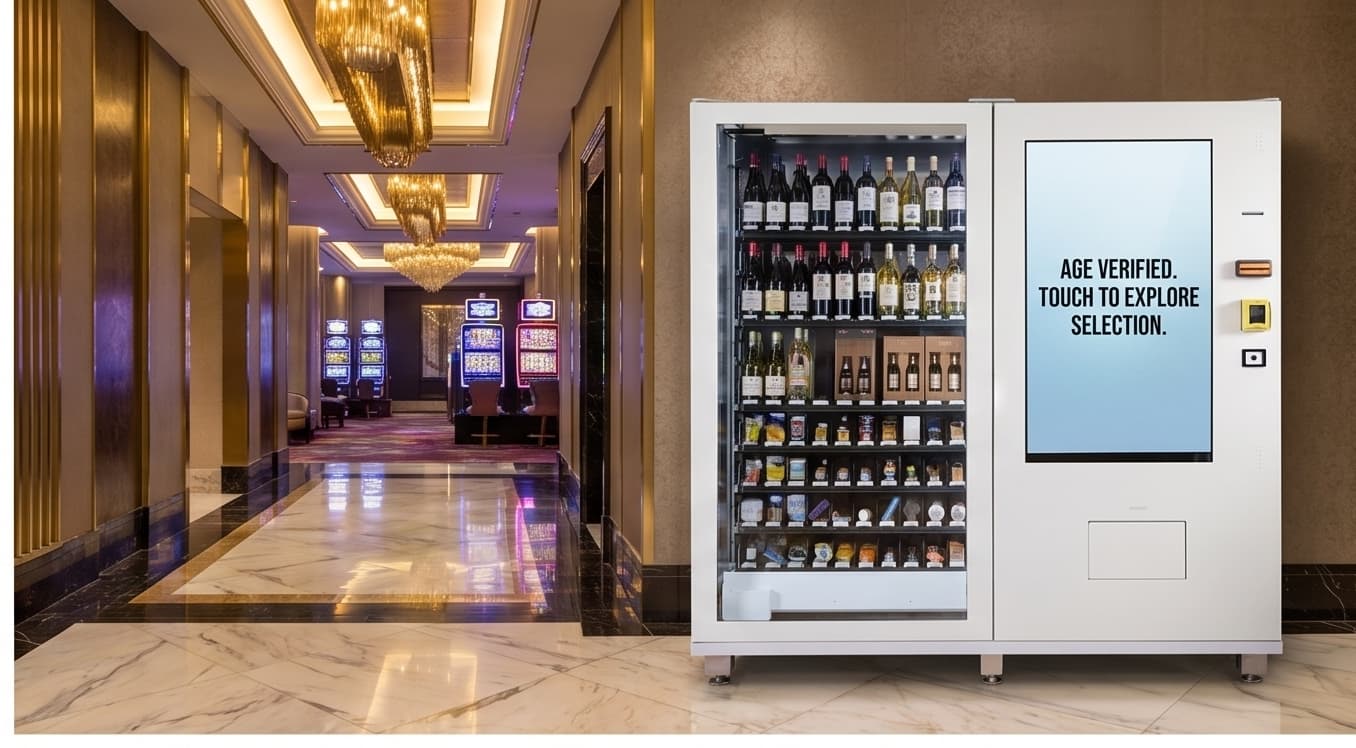
Wine and Liquor Bottle Vending Machines: What Licensed Venue Operators Actually Need to Know
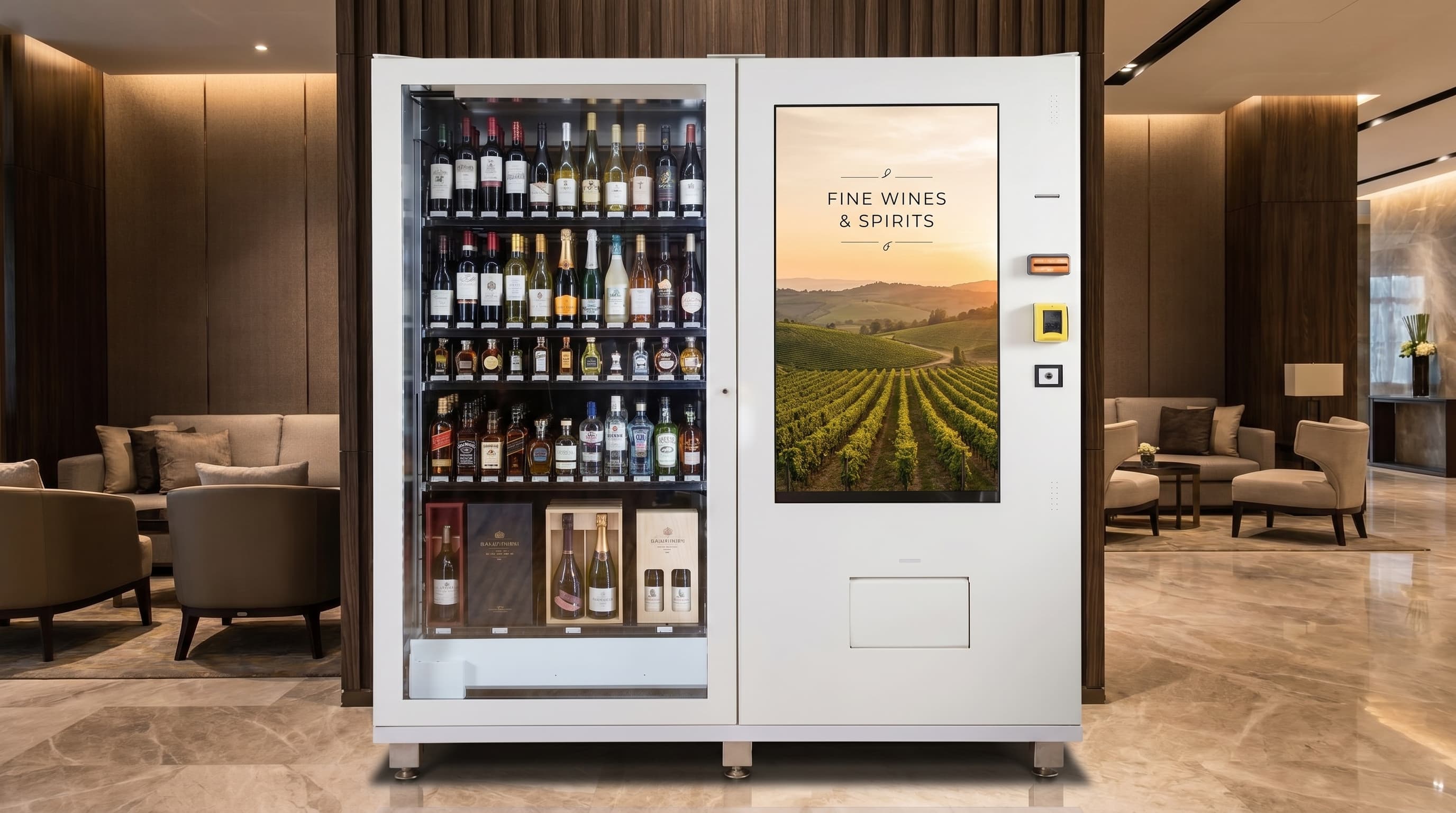
A wine and liquor bottle vending machine is a self-service cabinet that dispenses sealed alcohol — wine, spirits, beer, or ready-to-drink products — from a refrigerated or ambient enclosure after the buyer clears an age-verification step. The hardware sits inside a premises that already holds an alcohol retail licence. The cabinet does not create permission to sell alcohol; the operator’s licence and premises conditions decide whether the deployment is legal.
This page is the legal-and-venue-fit companion to DMVI’s age-verified smart liquor vending machines guide. That page explains the technology stack. This page focuses on the harder question: whether a licensed operator can deploy bottle vending compliantly in a real venue.
Are alcohol vending machines legal?
Sometimes, but never by default. Legality depends on the country, state or province, municipality, licence class, and the premises conditions attached to that licence. Some jurisdictions allow self-service alcohol vending under explicit conditions; others prohibit it outright or require a human approval step at the point of sale.
Texas, for example, requires age verification on alcohol transactions under the TABC age-verification rule. The broader operator-side precedent for hard age gating in retail can be seen in the FDA Tobacco 21 framework. Useful signal, but still not a substitute for venue-specific legal review. This page is not legal advice. If the deployment matters commercially, get licensing counsel to confirm that your existing alcohol licence actually permits the workflow you want to run.
Which venues actually make sense?
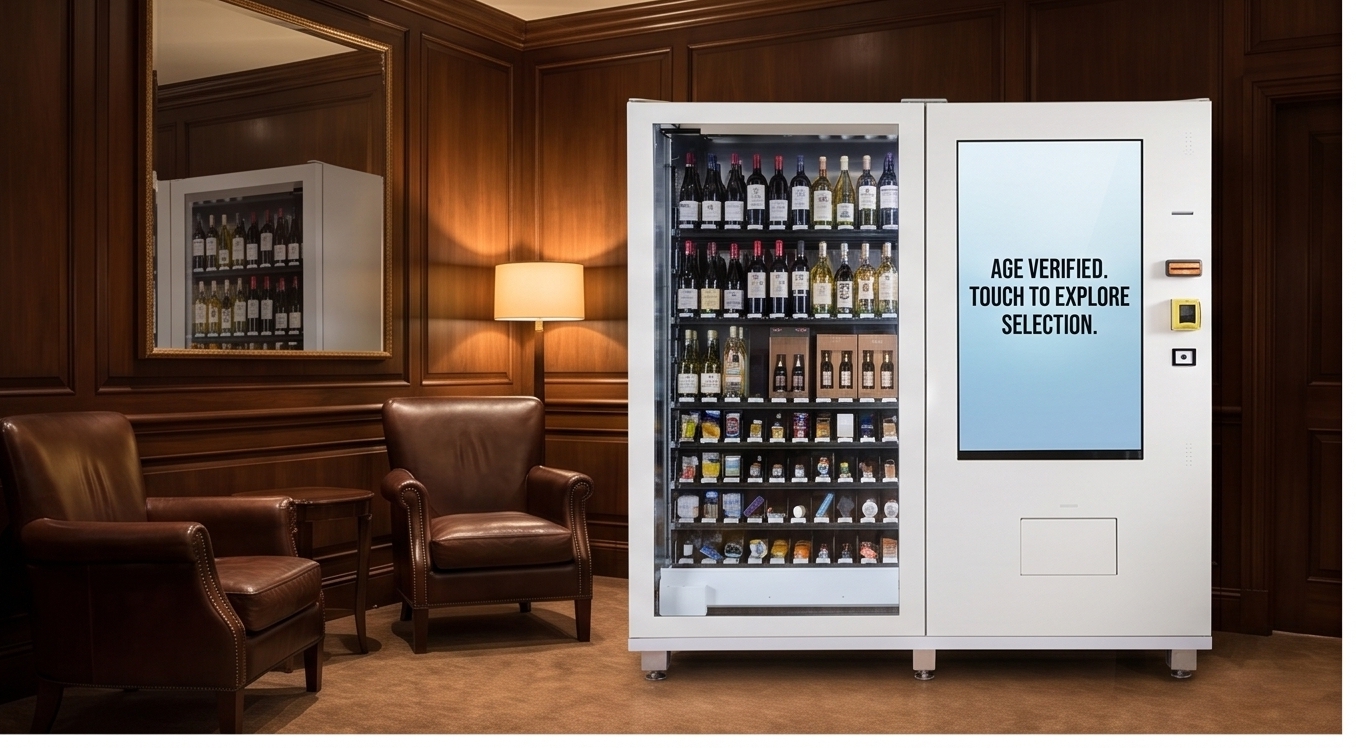
The strongest deployments sit in venues that already sell alcohol through staffed retail or bar service and already hold the appropriate alcohol licence. The machine should extend an existing compliant commercial model, not invent one from scratch.
- Licensed bottle shops. 24/7 or extended-hours self-service where the venue already understands alcohol retail controls.
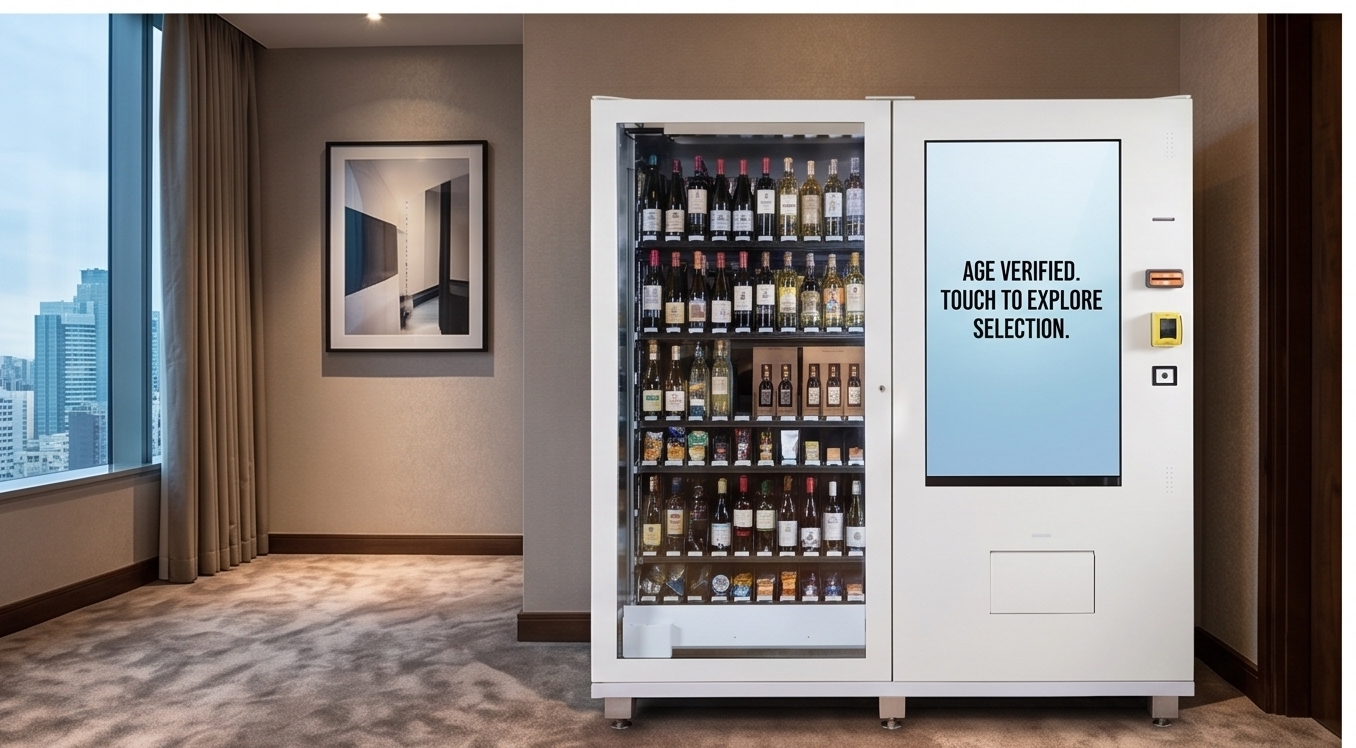
- Hotels. In-corridor minibar replacement, lobby bottle retail, or premium guest convenience under an existing venue licence.
- Wine bars and hospitality lounges. Controlled-access environments where staff oversight and buyer qualification are already part of the venue model.
- Stadium and event venues. Premium hospitality zones and concourses that already run alcohol sales operationally and can justify a self-service layer.
An unlicensed venue cannot deploy a bottle-vending cabinet to get around licensing. If the site does not already have a lawful reason to sell alcohol, the machine is the wrong place to start.
How does age verification actually work?
Age verification on bottle-vending hardware usually combines an ID scan, optional document-plus-face matching, and sometimes a remote or local attendant approval step. The exact workflow is covered in the DMVI age-verified smart liquor vending machines guide, including ID-scan pathways such as PDF417 or MRZ parsing.
The important commercial point is that age verification is only one layer of compliance. A cabinet can support the workflow, but it does not absorb the operator’s regulatory responsibility. Data handling, override policy, refusal logic, and edge cases all still belong to the venue.
What an operator actually has to get right
Five decisions usually determine whether a wine-and-liquor vending project survives beyond the concept stage:
- Licence coverage. Confirm the existing alcohol licence permits self-service or unattended dispense in that exact venue context.
- Verification workflow. Decide whether ID scan alone is enough or whether the jurisdiction and risk profile require a human approval path.
- Telemetry and audit. Use MDB/ICP and DEX-format reporting where relevant so dispense events and exceptions do not disappear into guesswork.
- Cashless and approvals. Pair the cabinet with a reliable payment and control layer such as a Nayax-class platform or equivalent that fits the deployment.
- Bottle handling engineering. Glass changes everything. Controlled-drop, elevator, or open-shelf logic has to fit the SKU mix rather than being guessed from a standard snack machine architecture.
For many projects, bottle handling is the part that pushes the specification toward a custom vending machine design. A cabinet that handles one 750ml bottle format reliably may be a poor fit for a mixed assortment of spirits, sparkling wine, and ready-to-drink products.
Questions to answer before asking for pricing
- What bottle sizes, weights, and categories will the machine need to handle?
- What exact alcohol licence does the venue hold, and what premises conditions apply?
- Has venue counsel confirmed that self-service or unattended dispense is permitted?
- What age-verification and human-override workflow will the site run in practice?
- Will the cabinet be supervised, remotely approved, or genuinely unattended?
- How many units and locations are being scoped?
- Does the SKU mix fit a configured cabinet, or is a custom build more realistic?
Operators who can answer those questions get far more useful supplier conversations than operators who begin with a vague idea that “wine vending sounds interesting.”
Evaluating a wine or liquor bottle vending project?
DMVI builds liquor vending machines for licensed hospitality, retail, and event environments. The conversation starts with the venue, the licensing position, and the bottle assortment. Talk to the team.