Champagne Bottle Vending Machines: Smart, Age-Verified Liquor Vending for Hotels, Lounges, and Premium Retail

A champagne bottle vending machine is a refrigerated, age-verified liquor vending cabinet that dispenses sealed sparkling-wine bottles after the buyer completes ID scanning, cashless payment, and, in some deployments, staff or biometric approval. In a licensed venue it sits alongside the bar, not in place of it, and absorbs after-hours, in-room, or VIP-suite demand without pulling staff off the floor. The machine is regulated retail equipment, not a novelty prop, so every vend has to satisfy the same venue licensing conditions the bar itself operates under.
This page also inherits intent from the older “smart robotic champagne vending machine” path that redirected here. So the real subject is not just bottle display; it is premium champagne dispensing with age-aware workflow, bottle-safe delivery, and licensed-operator compliance.
When champagne vending is operationally honest
Champagne vending earns its footprint when three conditions hold. First, the venue already holds the right liquor licence for the sale model it wants to run. Second, the cabinet sits in a controlled adult-oriented environment such as a hotel club floor, VIP corridor, members-only lounge, private suite, or ticketed event zone. Third, the operator has a documented age-verification and staff-intervention path rather than vague optimism that “everyone here is obviously old enough.”
Hotels, resorts, private lounges, and premium events are the strongest fit because they already understand adult-access control, brand presentation, and higher average ticket retail. The cabinet inherits that discipline instead of trying to invent it from scratch in an unsuitable public setting.
How an age-verified champagne cabinet actually works
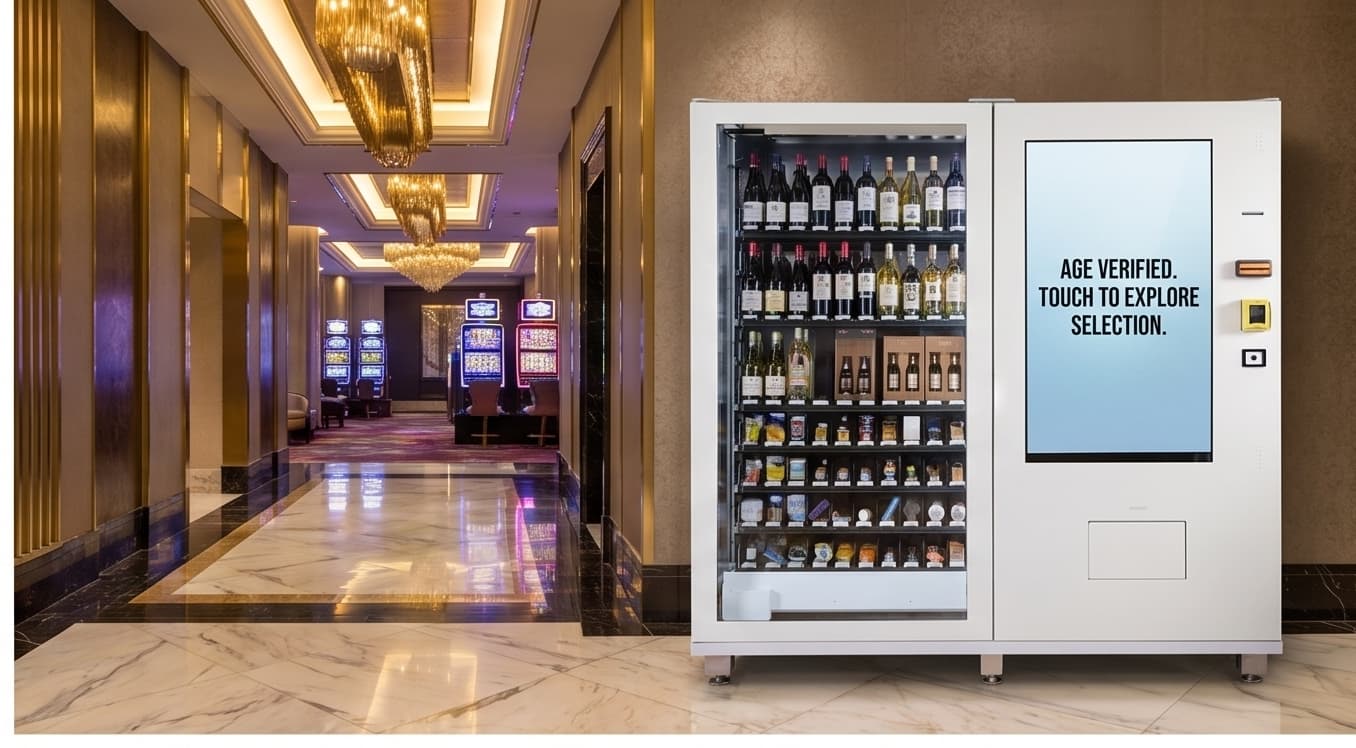
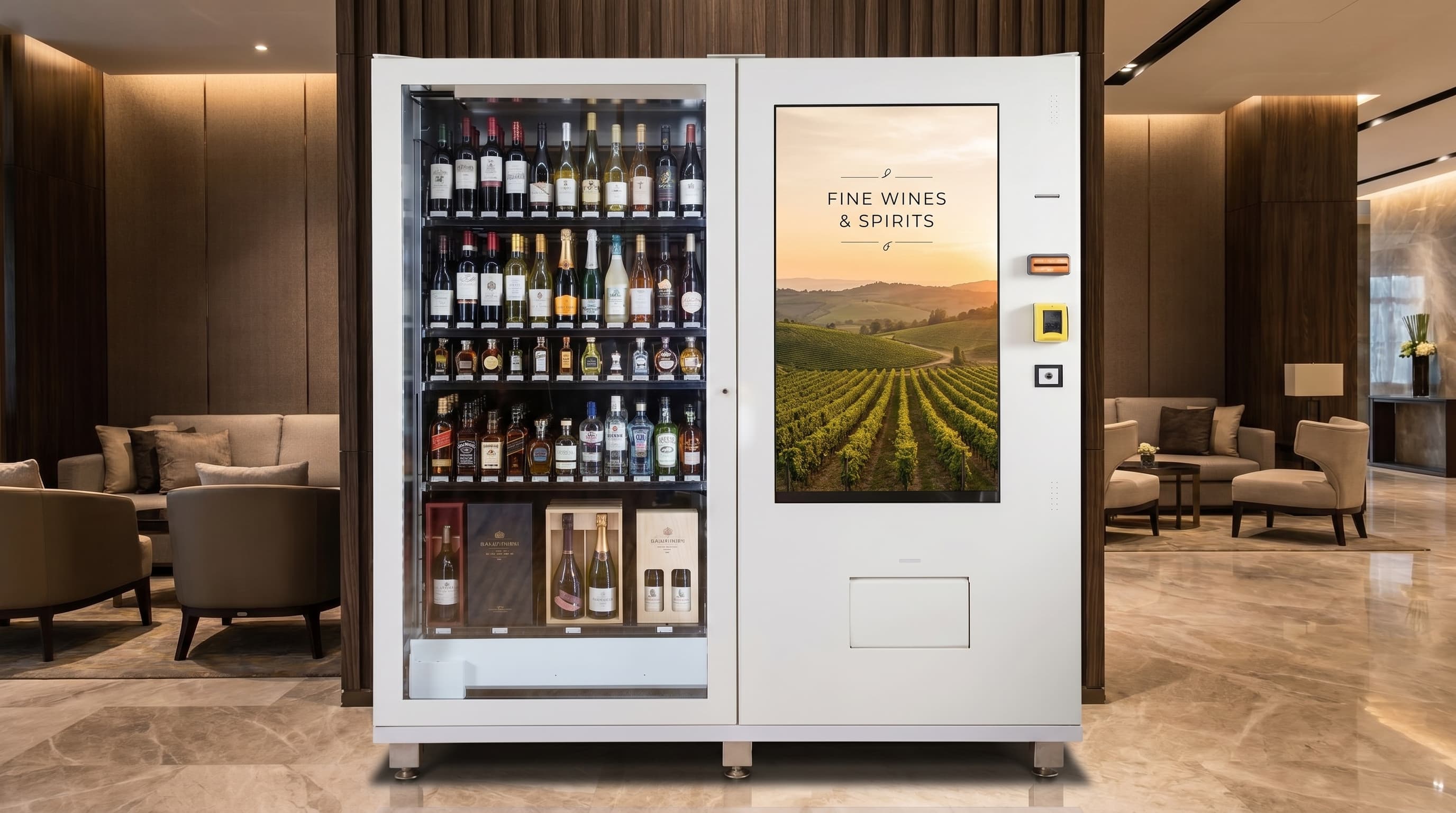
A credible champagne machine combines refrigeration, verification, payment, and bottle-handling logic in one workflow. The cabinet keeps sealed bottles cold, usually in a sparkling-wine-friendly range around 5–8 °C. A payment stack built on a Nayax-class cashless platform or equivalent handles EMV, contactless, and mobile-wallet payment. An ID scanner reads the buyer's document barcode or machine-readable data to confirm date of birth, and some deployments add one-to-one photo matching for higher-assurance verification. Telemetry and dispense events can then be tracked through MDB/ICP and DEX audit reporting so the operator can retrieve every sale, every fail, every override, and every fault.
The final delivery step matters more than operators first assume. Champagne is glass, pressure, and premium inventory. Soft-drop presentation, guided bottle retrieval, or robotic pick-and-present logic is what separates a real deployment from a broken-bottle liability.
Where it works — and where it doesn't
Champagne vending works best in hotel club floors, VIP suites, members-only lounges, premium retail activations, and after-hours bottle retail inside licensed stores. Those are settings where a guest already expects premium self-service and where the venue can demonstrate adult-only or controlled-access conditions before the transaction even starts.
It is a poor fit for unsupervised public concourses, generic open lobbies, or any placement where the operator cannot show how adult access is controlled in practice. The cabinet does not turn an unlicensed location into a licensed one. It only makes a licensed location more efficient. This is operational framing, not legal advice, and venue counsel should confirm scope with the relevant liquor authority.
Brand experience and touchscreen merchandising
A premium bottle cabinet often uses a touchscreen as much for merchandising as for selection. The interface can surface tasting notes, pairing prompts, house recommendations, and campaign creative for luxury brands at the exact point of decision. That matters because many of the actual search queries on this URL are luxury-led — Moët, Veuve Clicquot, luxury vending, premium bottle retail — rather than generic snack-vending intent.
For hospitality operators, that means the machine can function as a controlled digital retail surface rather than just a cold box with a payment reader. Remote planogram and media control also let the venue rotate programmes seasonally without rewrapping the machine every time the brand story changes.
Cold-chain restocking and route economics
Champagne is more demanding to service than soda. Bottles need gentle loading, stable orientation, and temperature checks at every visit. Inventory velocity is often lower in unit count than conventional vending, but the average ticket is dramatically higher, which is what makes the route economics work in the right venue. Operators should judge the machine on premium-ticket yield and guest-convenience value, not on snack-style volume expectations.
Restock teams also need a plan for vintage rotation, bottle-format changes, and what happens when a featured SKU sells out but a guest still expects a premium experience. In luxury retail, that exception path is part of the product.
Compliance and exception handling
Every age-gated vend should create an audit record. The operator should be able to review age-check passes, age-check failures, payment exceptions, refunds, and any staff override on demand. If the machine uses a biometric comparison step, it should be configured as a verification-mode match against the ID photo rather than an open-ended identity database. Buyers do not care about that terminology, but operators absolutely should.
Regulated-retail rigor matters here. A useful analogue is the strict age-verification posture codified in FDA Tobacco 21 guidance, even though alcohol is governed through separate state and local authority. The point is simple: premium placement does not reduce compliance burden.
Exploring a premium champagne vending deployment?
DMVI helps licensed operators scope champagne vending around age verification, bottle handling, refrigeration, and venue fit so the project works commercially instead of becoming a gimmick with compliance baggage.