Anti-Theft Vending Machines for High-Value Retail: How Controlled Dispensing Stops Shrink
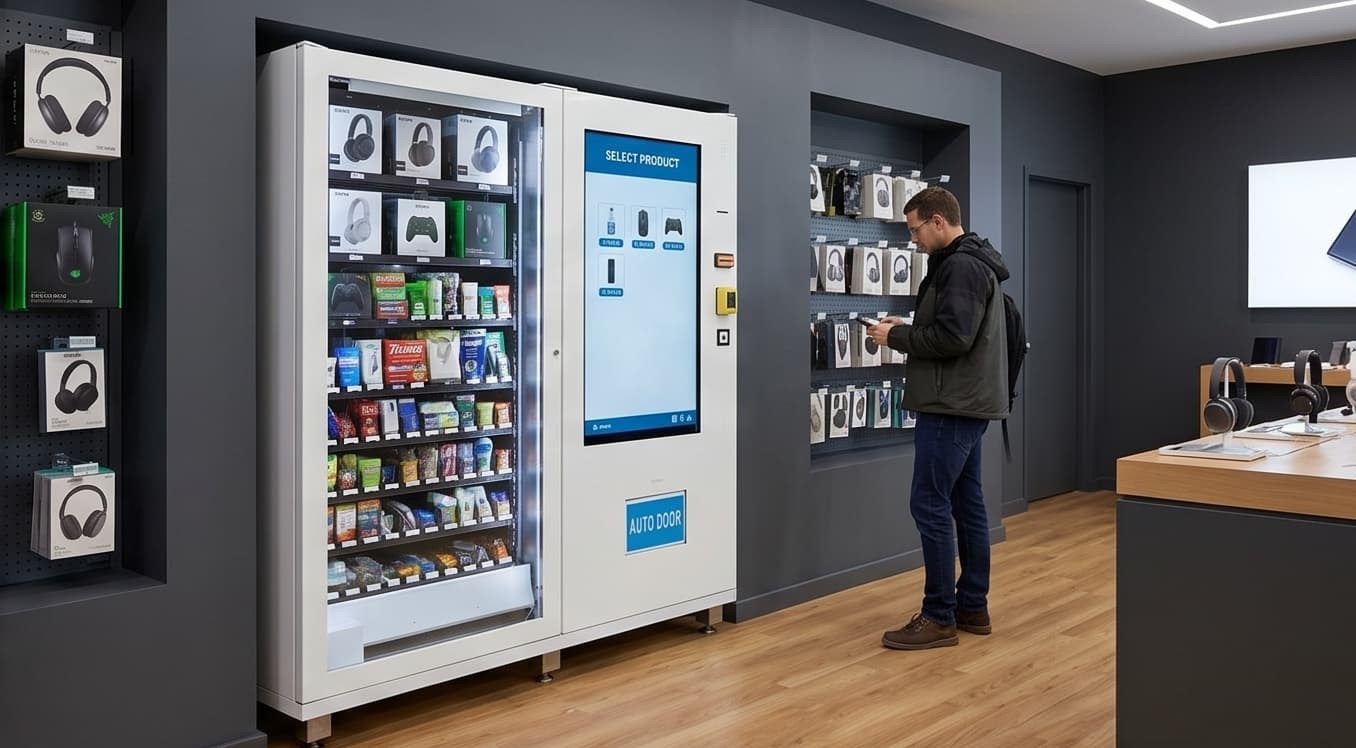
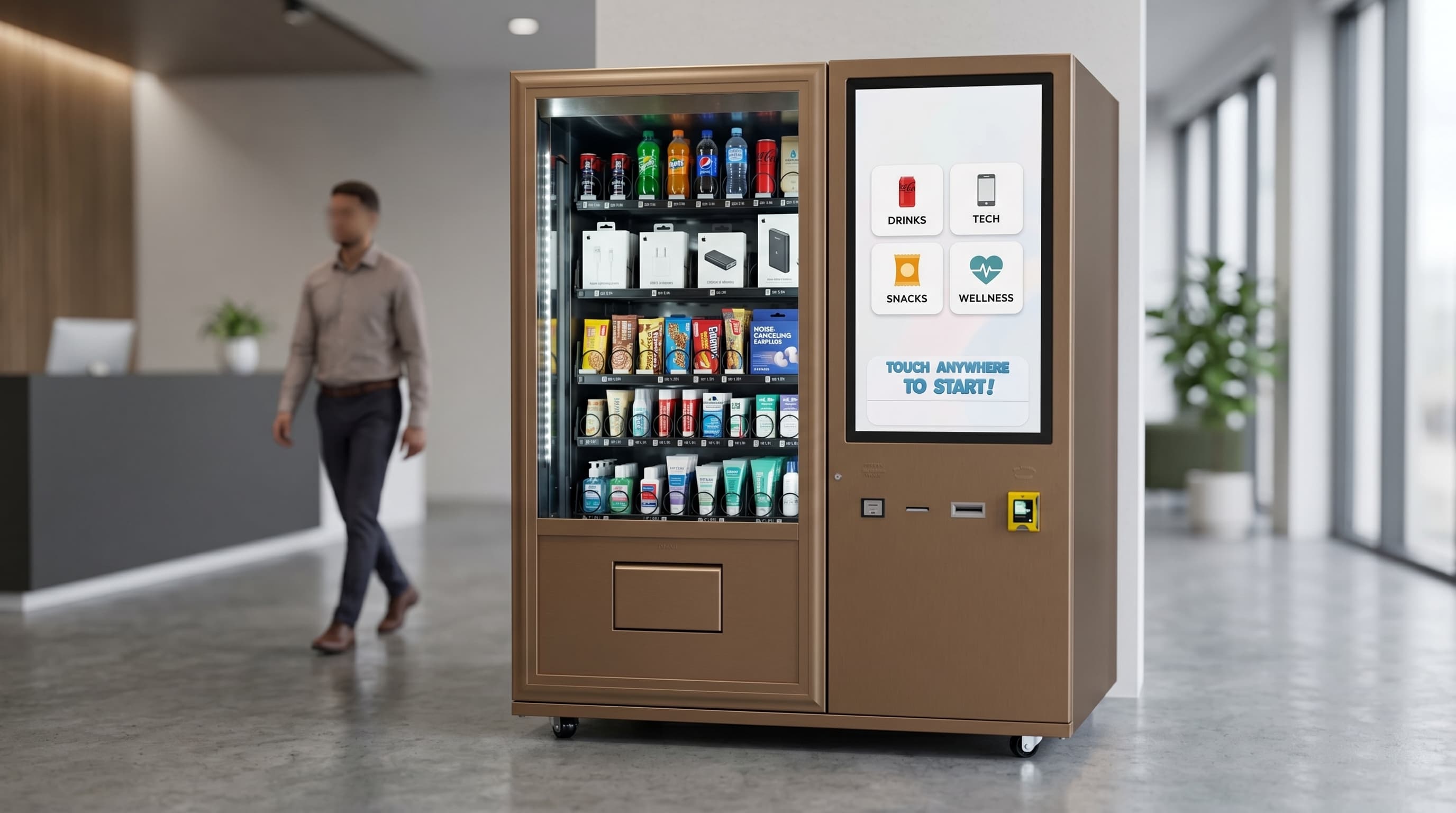
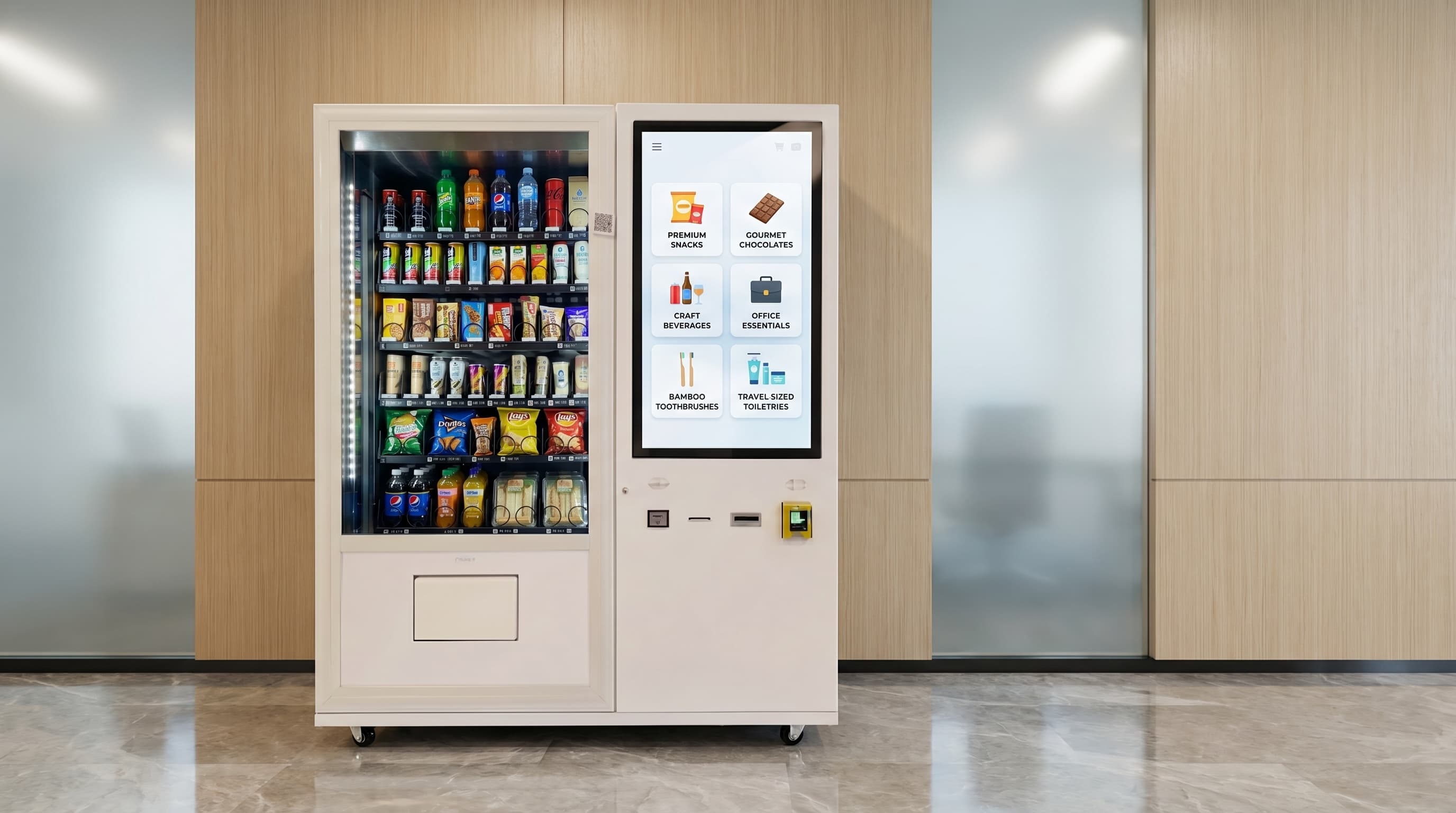
An anti-theft vending machine is a controlled-dispensing automated retail cabinet that keeps high-value merchandise behind locked, sensor-monitored access until payment authorises, then dispenses a single SKU through a robotic or elevator-driven path that never gives the customer physical access to the rest of the inventory. The format exists to put expensive, high-shrink categories back on the sales floor without turning them into a colleague-with-a-key problem.
That matters because retail shrink is not a rounding error. The National Retail Federation reported shrink at 1.6% of total retail sales and $112.1 billion in losses for FY 2022, which is precisely why retailers keep looking for alternatives to locked cases, open shelving, and awkward service-counter handoffs (NRF National Retail Security Survey 2023). Controlled dispensing changes the equation: the merchandise stays protected, the customer still self-serves, and the audit trail is automatic.
What anti-theft actually means inside the cabinet
Operator-grade anti-theft is layered rather than magical. First, a cashless machine has no cash box to steal, which removes one of the strongest motives for cabinet vandalism in the first place (Nayax vending systems). Second, the customer does not gain open access to the planogram. The machine retrieves the selected SKU and presents it through a one-time delivery path instead of exposing the entire shelf.
Third, the cabinet should monitor the events that matter: door-open states, vibration or tilt events, product-dispense confirmation, and machine-movement alarms. Fourth, payment and controller events should be logged in the same telemetry environment so the operator can reconcile what was selected, what was paid for, and what was actually dispensed (MDB/ICP, DEX protocol). The machine is securing merchandise, not pretending to be a science-fiction robot policeman.
Where controlled-dispensing vending earns its keep
The right categories are high-value, theft-prone, consistently packaged SKUs that are awkward to leave on open shelves. Electronics accessories such as chargers, earbuds, cables, power banks, and trackers are a natural fit. Fragrance and prestige beauty are strong candidates because a single unit can carry meaningful retail value and normally lives behind a locked case. OTC health products, specialty hardware, prepaid products, and certain regulated categories can also fit if the access and compliance model is designed properly.
The wrong categories are just as important. Anything with cold-chain requirements the cabinet cannot support, anything oversized for the dispense path, or anything dependent on size-and-fit decision-making is a poor controlled-dispense candidate. Anti-theft vending is not a universal answer; it is a very good answer for a particular SKU profile.
Cameras, AI, and the privacy guardrail
Legacy copy on this topic often veers into nonsense about facial recognition catching shoplifters. That is not the honest operator description and it is not a privacy posture DMVI should imply. Cameras inside a controlled-dispensing cabinet may be used for dispense verification, tamper detection, and inventory presence. That is a bounded and defensible use. They are not there to identify shoppers biometrically or to turn the cabinet into a covert surveillance system.
If a machine uses cameras, the retailer should treat disclosure and retention policy as part of deployment, not as an afterthought. Buyers should ask what the camera does, what data is retained, for how long, and who can access it. Securing merchandise is not the same thing as surveilling customers.
Telemetry, alarms, and what the dashboard should show
A controlled-dispensing cabinet without telemetry is just an expensive cupboard. Operators need a usable event trail that captures transactions, failed dispenses, door opens, movement or vibration alarms, payment authorisations, and stock-state visibility. DEX-style reporting and MDB-connected payment hardware matter here because the security argument falls apart if the operator cannot reconcile machine events with real sales and replenish against actual SKU movement.
The most useful operator KPIs are not glamorous: dispense success rate, failed-dispense rate, alarm count by type, stockout frequency, and per-SKU theoretical-versus-actual movement. Those measures tell you whether the cabinet is reducing shrink or merely moving the problem into a more expensive box.
What makes an anti-theft vending deployment fail
Most failures are operational, not technical. Stocking the wrong product mix produces slow sales and wasted floor space. Choosing a poor location kills visibility and throughput. Running cash acceptance undermines the no-cash-box advantage. Skipping privacy disclosure on camera-enabled cabinets creates an avoidable complaints problem. And treating the machine like a novelty rather than a managed retail asset guarantees disappointing economics.
The format works when the planogram, placement, payment setup, telemetry, replenishment cadence, and security design all support the same commercial goal: selling high-value items with less shrink and less labour friction than a locked case.
Need a controlled-dispensing retail cabinet for high-value products?
DMVI helps retailers scope anti-theft vending around product fit, payment flow, telemetry, and cabinet design so shrink reduction does not come at the cost of awful customer experience.