Farm Vending Machines and Automated Retail for Small-Scale Agriculture: A Practical Guide
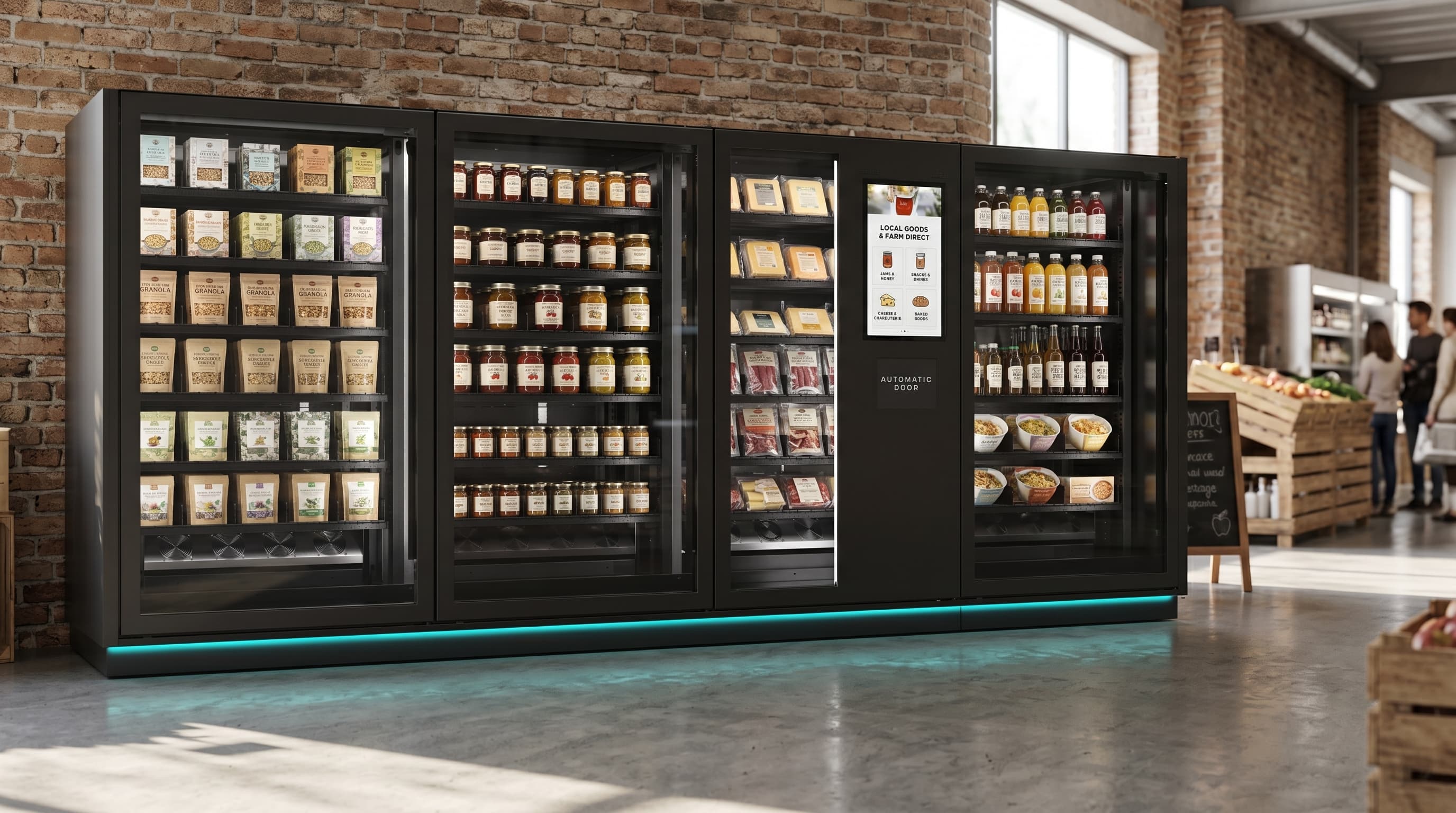
A farm vending machine is an automated retail cabinet, refrigerated or shelf-stable depending on the SKU, used by small farms, beekeepers, dairy operators, and farm shops to sell direct to the customer 24/7 without staffing the counter. The category is no longer experimental: fresh-meal kiosks built around the same architecture already run at scale in offices, airports, and healthcare venues, and farm-themed cabinets are commercially available from multiple manufacturers (Forbes on Farmer's Fridge, Food Inspiration on Farmer's Fridge, TCN Vend farm-themed vending). For the small-scale operator, the real question is not whether the technology works. It is whether the venue, the SKU mix, the cold-chain spec, and the route economics line up.
What sells well from a farm vending machine
The strongest farm-shop SKUs share four traits: they are packaged in a dimensionally consistent unit, they survive coil or carousel dispense without damage, they hold their value in the cabinet's actual temperature band, and they do not depend on the customer inspecting them before purchase. That puts honey jars, packaged eggs, preserves, pickled goods, packaged hard cheese, vacuum-packed cured meats where legal, packaged baked goods on a tight rotation, packaged dairy where direct sale is permitted, packed seasonal produce in standard punnets, and farm-pressed juice in the strong-fit column.
Loose produce, anything that needs the customer to pick through it, raw cuts of meat, and anything that collapses outside a disciplined cold-chain are poor fits for a standard coil-dispense cabinet unless the build is specifically adapted around them.
Cold-chain spec and the equipment decision
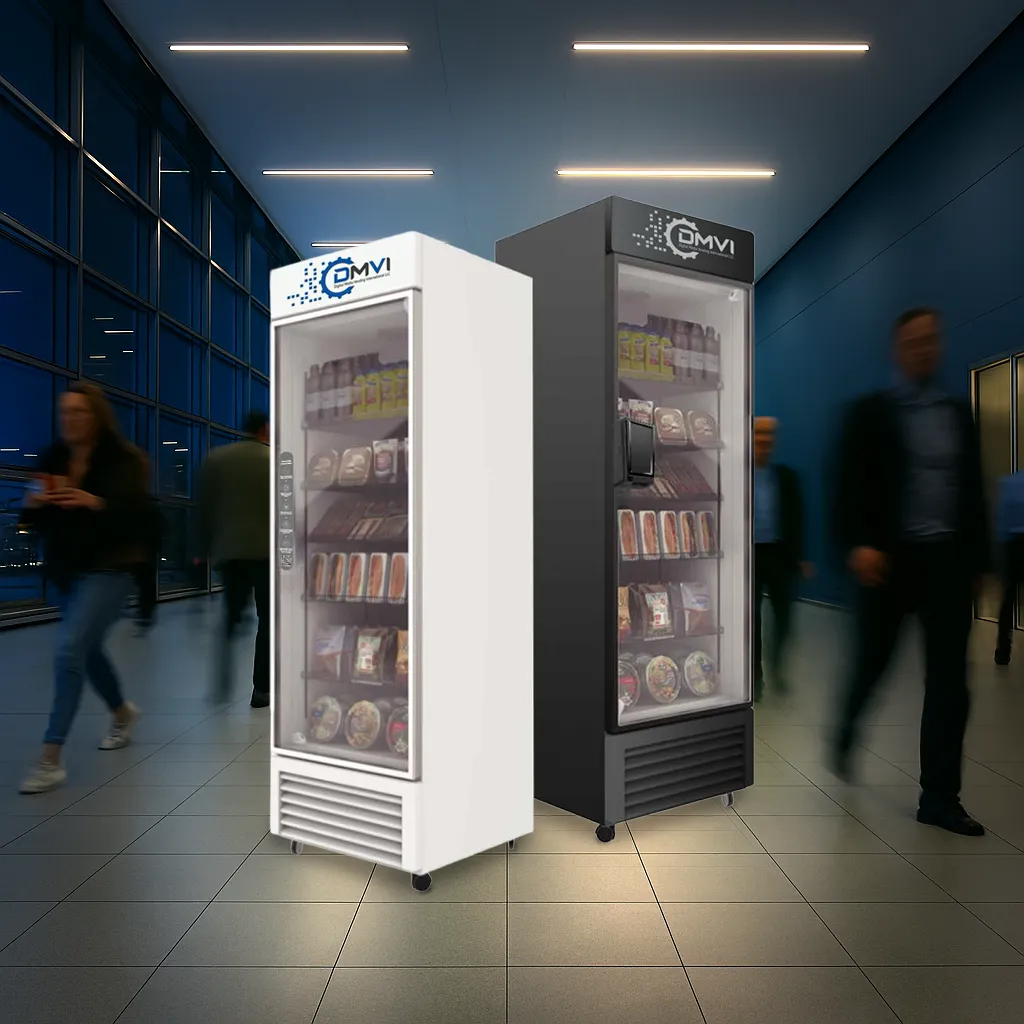
Small-scale farm vending usually splits into three equipment categories. Shelf-stable cabinets handle honey, preserves, packaged baked goods, and other low-risk products; these are the cheapest to buy and simplest to maintain because there is no compressor to nurse along. Refrigerated cabinets in the 2-8°C band handle packaged eggs, packaged dairy, charcuterie, and pre-portioned produce; the operator needs to confirm the cabinet's actual temperature performance across a full cycle, not merely trust the brochure. Frozen cabinets in the -18°C band can support frozen meat, prepared meals, and frozen berries, but they pull more power and demand a more dependable venue.
The electronics inside any of those cabinets, cashless reader, controller, and bill validator if present, usually communicate over the MDB/ICP bus used across the wider vending industry (MDB/ICP). That matters because it affects payment compatibility, telemetry, and serviceability later on.
Where to place a farm vending machine
Venue choice is harder than equipment choice. The strongest placements are usually the ones the producer already understands: the farm gate as an honesty-box replacement, an overnight farmers' market site, a partner café or community shop after hours, a transit-adjacent commuter spot for grab-and-go meals, or a B&B and holiday-let cluster where local product is part of the guest experience. The wrong venues are often the ones a snack-vending operator would pick by reflex. A farm cabinet does not need office-breakroom volume if the basket size and margin are healthy; it needs a site where the audience already values local product enough to pay for it.
A cabinet selling six jars of honey or preserves a day at a meaningful price point can be a better route asset than a high-volume low-margin snack machine, provided the labour and cold-chain costs stay sensible.
Cashless payment, route economics, and the labour reality
Cashless-first payment is effectively mandatory for farm vending. Customers paying real money for local honey, eggs, cheese, or prepared food expect tap, chip, mobile wallet, and increasingly QR, not a coin mech that belongs in 2006. A modern reader running over MDB also gives the operator usable transaction data, which is what makes a one-cabinet or small-route model viable (Nayax vending payment systems, MDB/ICP).
The DEX-style audit trail matters here because it tells the producer what sold, what stocked out, what failed, and when the route genuinely needs attention instead of sending someone on a fixed restock loop that burns time and fuel (DEX protocol). For a small farm, labour discipline is the economic model as much as the cabinet itself.
Regulation, food safety, and what to confirm before you commit
Direct-to-consumer farm sales through an automated cabinet still live under the same regulatory framework as the rest of the producer's operation: cottage-food rules where relevant, direct dairy rules where permitted, weights-and-measures obligations, local environmental-health expectations for refrigerated retail, and the venue's own site constraints. The cabinet does not grant some magical exemption. It merely changes the format of sale.
Three checks settle most operator questions before signing an equipment quote. First, confirm the planned SKU mix is allowed under the producer's licence and local direct-sale rules. Second, confirm the venue can actually support the machine, power, footprint, drainage if needed, and an accessible customer path. Third, confirm the cabinet's real temperature performance with a 24-hour data logger before the first live customer-facing cycle. Skip those steps and the operational trouble usually arrives on the second week, not the first day.
Planning a farm shop or producer-focused vending programme?
DMVI helps farms, local-food operators, and agricultural brands scope cabinet type, cold-chain fit, payment flow, and venue model before they spend money on the wrong machine.