AI-Powered Micro-Markets: How Unattended Smart Fridge Retail Works
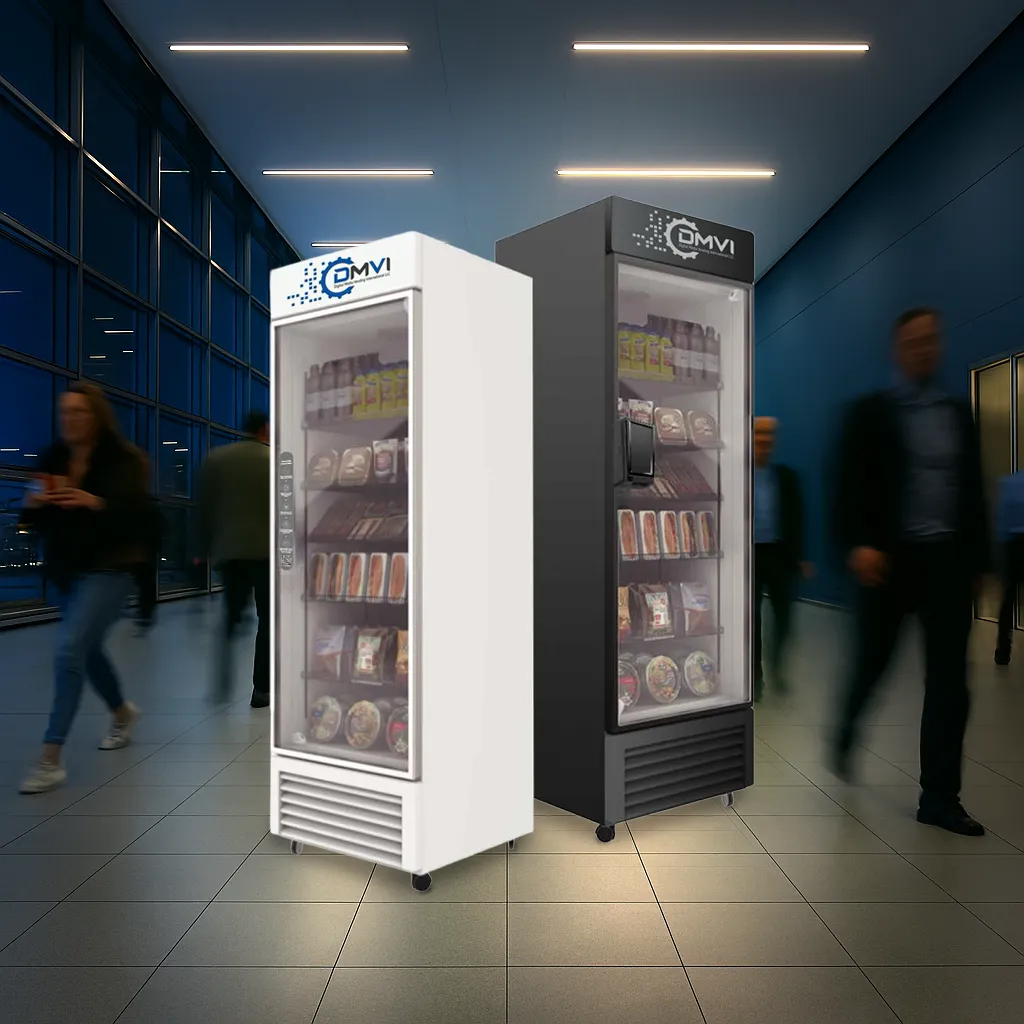
An AI-powered micro-market is a compact unattended retail format built around one or more connected refrigerated or ambient cabinets. The customer authenticates with a card, mobile wallet, or QR flow, opens the door, removes the items they want, and is charged automatically when the session ends. Computer vision, weight sensing, and cabinet telemetry work together so the checkout step disappears for the buyer.
That makes the format materially different from a conventional vending machine. A micro-market is designed for grab-and-go basket building, not one-SKU-at-a-time dispensing. For operators, the upside is larger transactions and better support for fresh food. The trade-off is that stock discipline, refrigeration management, and route planning all matter more.
This guide explains how AI-powered smart fridges actually work, where they fit, and what a buyer should understand before deploying one.
How an AI Micro-Market Actually Works
An unattended smart fridge is usually running three layers in parallel.
- Hardware layer. The cabinet holds refrigerated or ambient inventory and uses door-state sensing, shelf cameras, and weight verification to understand what changed during a shopping session.
- Software layer. Computer vision and SKU reconciliation determine which products were removed, while the cloud platform keeps pricing, inventory, and audit data aligned across the fleet.
- Payments layer. The customer pre-authorises with a card, mobile wallet, or QR credential before the door unlocks. Once the session closes, the final basket value is captured automatically and a digital receipt is issued.
On the operator side, the cabinet is not just a cold box with a payment reader attached. It is a connected retail endpoint that exposes sales velocity, stock levels, refrigeration status, and door-event history through one dashboard. That is what allows one operator to manage multiple fridges without treating every service call like guesswork.
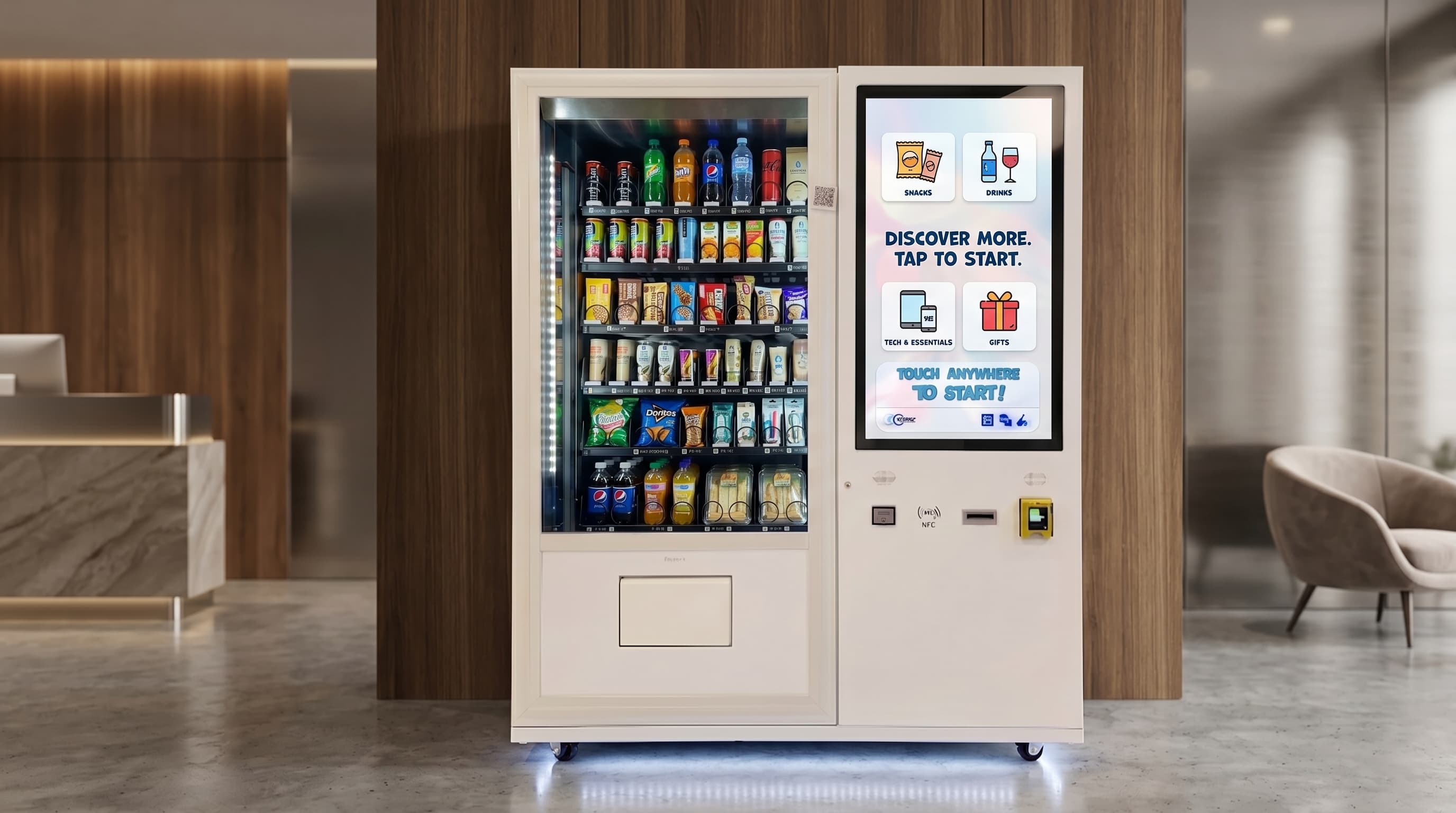
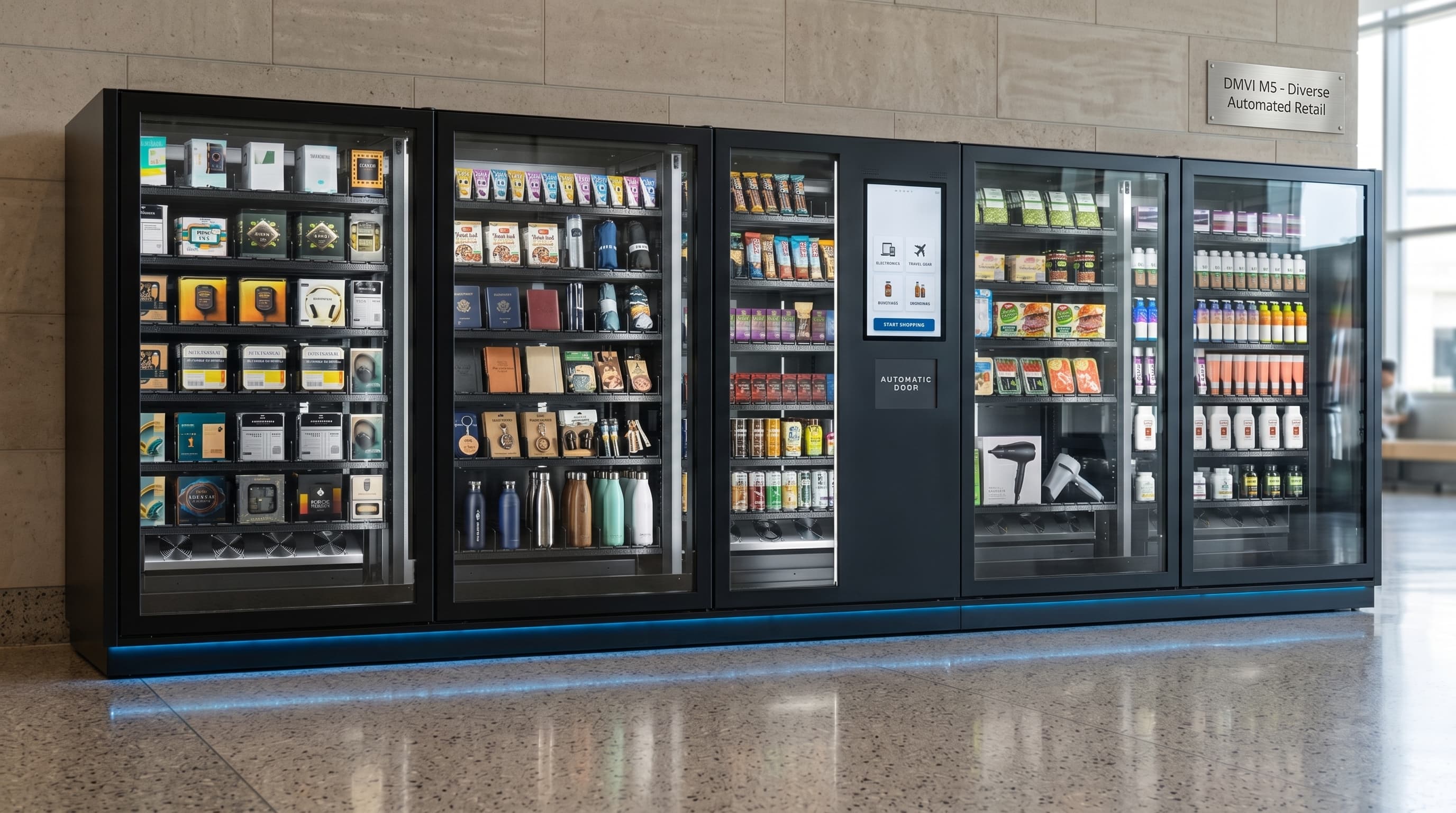
DMVI's micro-market vending machines and self-checkout fridges follow this same unattended retail model, with remote management, cashless payment options, and promotional display support built into the wider platform.
Watch How Our Payment Terminal Option Works
Watch How Our QR Payment Option Works
Micro-Market vs. Standard Vending Machine
A standard vending machine dispenses one SKU per transaction through a coil, elevator, locker, or similar mechanism. It is ideal for packaged items with predictable dimensions and a relatively simple service pattern.
An AI-powered micro-market behaves more like a compact unattended store. The customer opens a cabinet, takes multiple items in one visit, and completes payment automatically when the door closes. That makes the format better suited to fresh meals, salads, sandwiches, dairy, bottled beverages, and mixed grab-and-go assortments that do not belong in a conventional dispense spiral.
The operator-side implications are real.
- Basket size: Multi-item visits often produce higher revenue per transaction than single-item vending.
- Product mix: Fresh and refrigerated assortments become viable, not just ambient snacks and drinks.
- Operations: Fresh inventory demands tighter restocking discipline, stronger planogram control, and better expiry management.
- Data stack: Traditional vending still relies on machine controls and audit flows such as MDB peripherals and DEX-style reporting, but a micro-market leans more heavily on vision, reconciliation, and cloud telemetry.
Neither format wins every location. If the site mainly needs shelf-stable snacks at modest traffic, a standard smart vending machine is often the cleaner commercial answer. If the site needs fresh food access and customers are likely to build a basket, a smart fridge or micro-market usually has the stronger case.
Where AI Micro-Markets Earn Their Floor Space
Corporate campuses, healthcare environments, hotels, universities, and high-footfall 24/7 locations are the canonical fit because buyers want convenience but the site does not want labour-heavy retail staffing.
Corporate offices and business parks. Good fit when employers want fresh food access without a staffed café.
Healthcare facilities. Useful for rotating staff, overnight shifts, and visitor demand outside cafeteria hours.
Hotels and hospitality. Strong alternative to a minibar or a lightly staffed pantry where guests expect round-the-clock access.
Universities and residence halls. Well suited to late-night demand and mixed refrigerated-plus-ambient assortments.
Transit, leisure, and high-footfall venues. Helpful where speed matters and queue friction kills conversion.
The real gating factor is daily turnover. Refrigerated inventory without enough velocity becomes waste. In many locations, roughly 25 to 35 transactions a day is where a fresh unattended cabinet starts to justify itself commercially, though the exact threshold depends on margin, spoilage risk, and basket size.
What Operators Should Know Before Deploying
AI micro-markets are not passive-income toys. They are operating businesses wrapped in better software.
Fresh inventory needs discipline. If route planning is sloppy, the cabinet turns into an expensive waste bin.
Assortment has to match the location. A hospital break room, a hotel lobby, and a university dorm do not want the same planogram.
Remote monitoring only matters if you use it. The value is not the dashboard existing. The value is acting on stock-out risk, refrigeration alerts, and SKU velocity before the location underperforms.
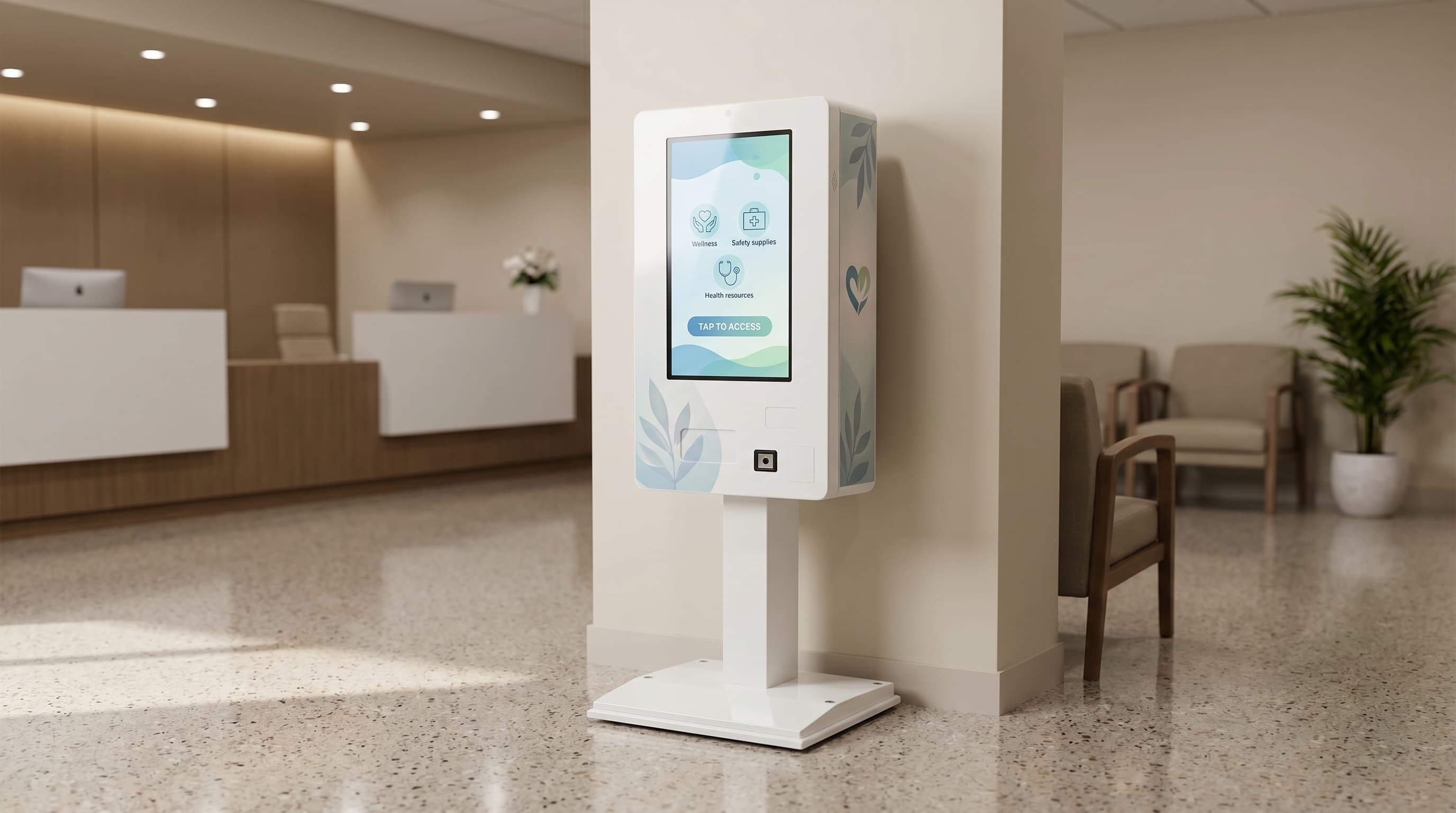
Branding and presentation matter. These units often sit in premium visible spaces, so exterior graphics and screen content can carry real commercial weight.
If you are comparing the wider connected-retail category, DMVI's AI vending machines page is the next logical step.
Evaluating a micro-market or smart fridge for your location?
DMVI can help you assess whether an unattended refrigerated format fits your traffic, product mix, and operating model — and walk you through the hardware, software, and deployment options that make sense for the site.