Workplace Vending Machines: A Buyer’s Guide for Facilities, HR, and Office Services
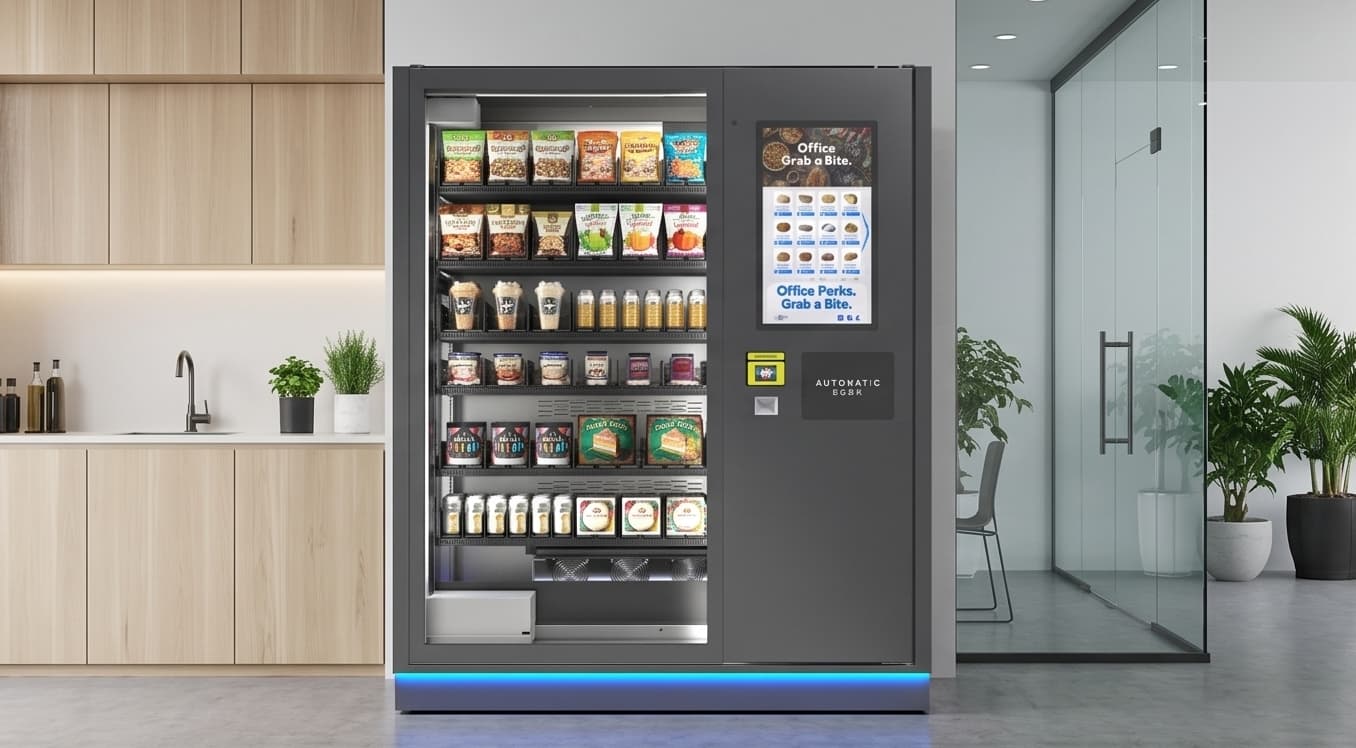
A workplace vending machine is an unattended retail cabinet placed inside an office, plant, warehouse, or institutional site to give employees access to snacks, drinks, fresh food, or convenience items during working hours without leaving the building. The category covers four distinct formats: snack machines, refrigerated beverage machines, combo machines, and micro-markets, each with a different price point, footprint, and operating model (Fooda workplace vending, Avanti Markets micro-markets). Whether a workplace programme lands or sits idle is almost never about the machine itself. It is about whether the format, the product mix, the location, and the payment workflow match the employee population on the floor.
Who are you actually serving, and at what hours?
Before anyone picks a cabinet, profile the site properly. A 9-to-5 office of 80 knowledge workers does not need the same solution as a 24/7 plant of 600 shift workers, and a hybrid office with wildly variable attendance should not be stocked like a stable industrial site. The questions are concrete: how many people are on site by daypart, what dietary expectations dominate, what shift patterns drive demand, and where does the population naturally gather?
The answers determine whether the right move is a single combo machine, a snack-and-beverage pair, a fresh-food cabinet, or a micro-market. Getting that profile wrong is how nice-looking machines become expensive furniture.
Machine format choices: snack, beverage, combo, fresh food, and micro-market
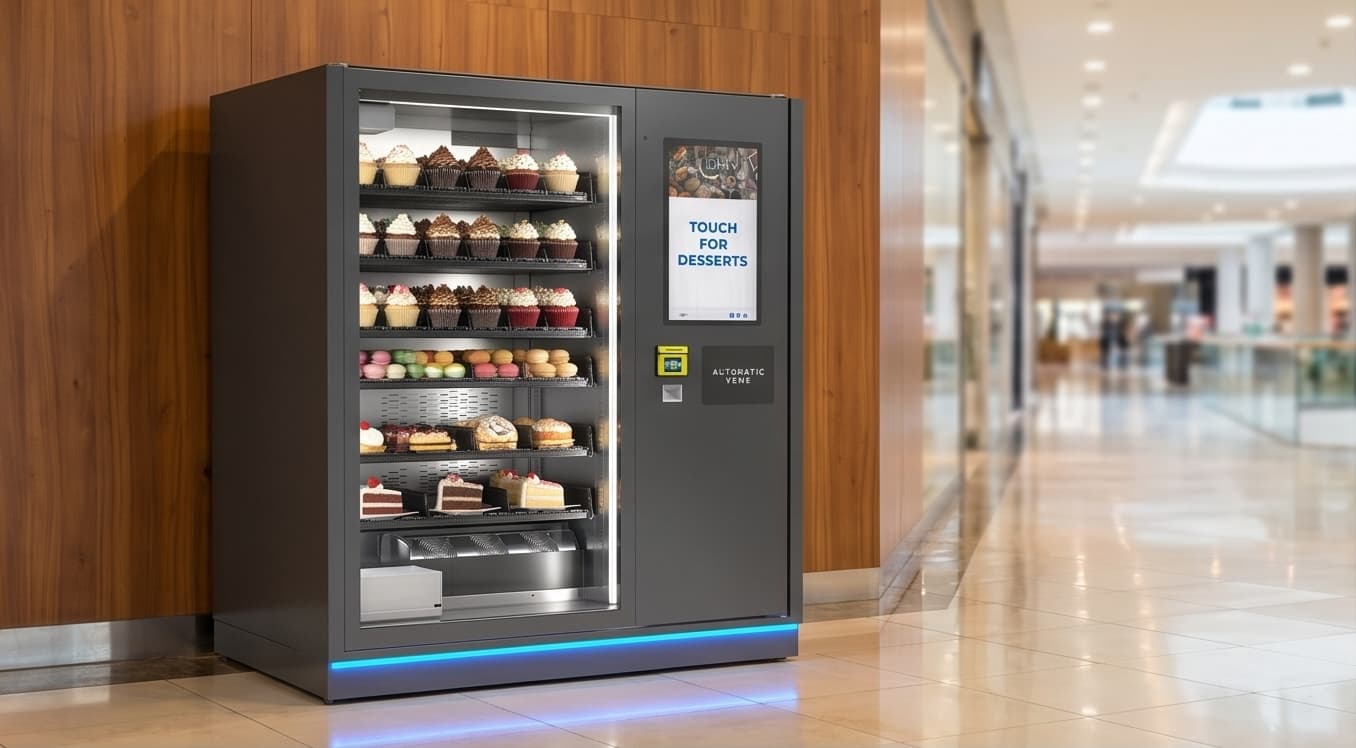
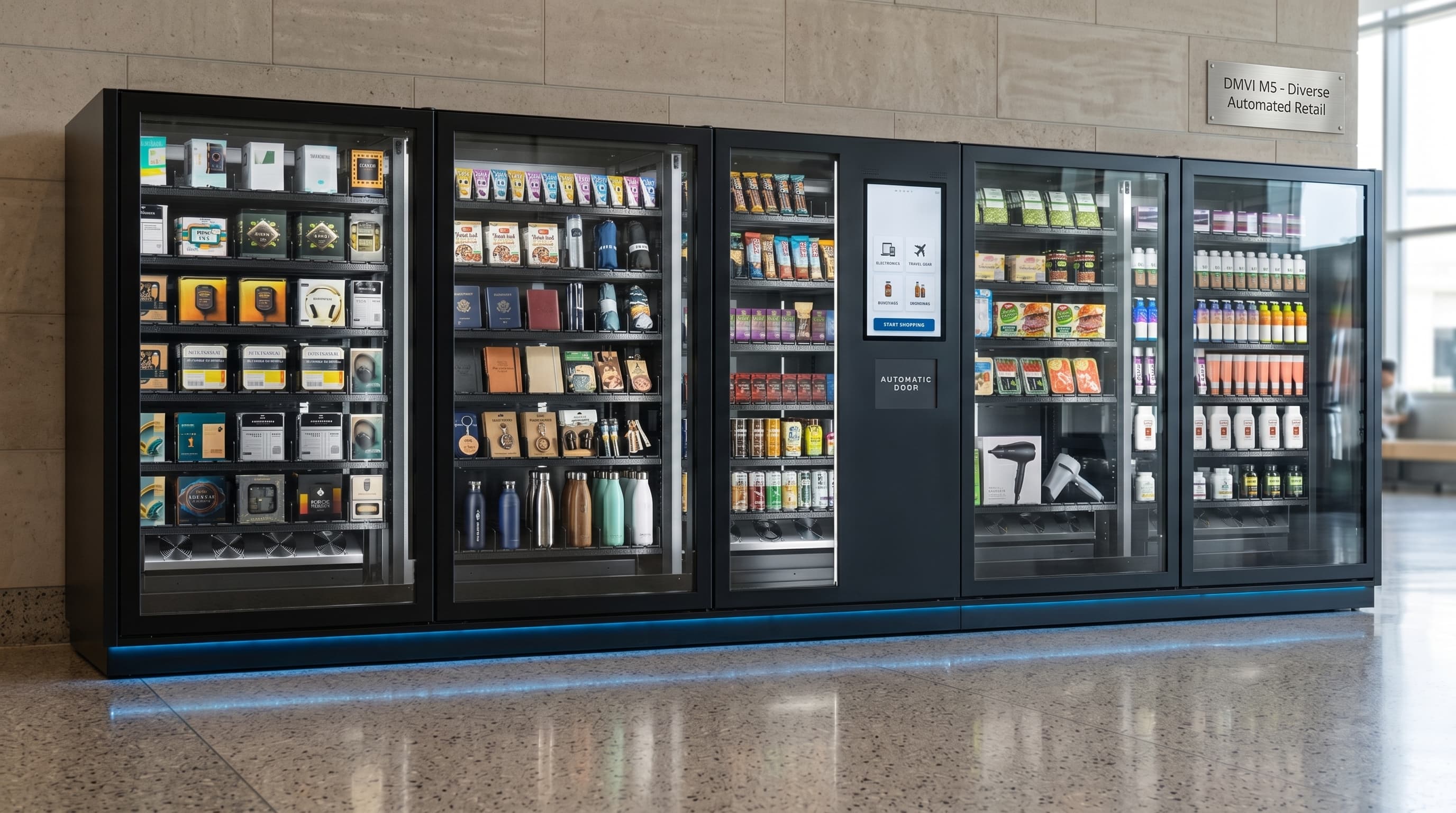
Five formats cover most workplace deployments. Snack machines handle the familiar packaged ambient range and suit small offices or supplementary sites at the lowest price point. Refrigerated beverage machines support cold drinks at proper temperature and usually pair well with a snack machine once the headcount grows. Combo machines put both categories into one cabinet and suit low-velocity sites with limited footprint, but they compromise capacity. Fresh-food machines carry sandwiches, salads, and other chilled options on a tighter route cycle, which matters for 24/7 plants and sites without a real food offer. Micro-markets are the unattended convenience-store answer: open shelving, refrigerators, and a self-checkout kiosk with cashless payment and a different unit-economics profile because there is no per-slot inventory limit (National Vending micro-markets, Guardian Refresh subsidised micro-markets).
As a rule of thumb, micro-markets need meaningful on-floor headcount and enough break-room space to justify the footprint. Smaller sites are usually better served by one or two well-specified machines rather than a grand unattended-retail fantasy.
Location, footprint, and the install reality
A machine in the wrong location underperforms regardless of how clever the cabinet is. It needs to sit where employees already pass through or pause: break rooms, kitchen zones, welfare areas, near main circulation routes, or beside the existing eating space. Install reality matters too. Snack and beverage machines need power, delivery access, and enough clearance for servicing; refrigerated and fresh-food cabinets often need a more dependable electrical setup because compressor loads are less forgiving than a basic snack machine.
Micro-markets raise the bar again because they need genuine floor area, stable connectivity for the kiosk, and a facilities team willing to treat the install as part of the employee amenity design rather than a random appliance drop.
Cashless payment, MDB, and the no-cash workplace
Cash acceptance is no longer the default in workplace vending. Modern sites expect tap-to-pay, chip card, mobile wallet, and increasingly badge-based or QR-driven subsidy flows. The cashless reader, cabinet controller, and any bill validator if present communicate over the MDB/ICP bus used across the wider vending industry (MDB/ICP). That matters because the payment layer is also the telemetry layer; the same hardware that takes the payment can feed the operator or facilities team the sales and machine-state data needed to keep the programme healthy (Nayax vending payment systems).
If the workplace wants a subsidised or payroll-deduct model, that usually sits on top of the same payment stack rather than replacing it with something mystical and bespoke.
Remote management, DEX feeds, and what the dashboard should show
The practical value of a smart workplace vending programme is visibility. A DEX-style audit feed captures sales, stockouts, failed transactions, and machine-offline events in a standard reporting structure (DEX protocol). The dashboard should make five things obvious: sales by SKU and daypart, stockout frequency, payment success rate, machine uptime, and whether the route cadence actually matches demand.
Anything beyond that can be useful, but if those basics are missing the site is still guessing. Repeated stockouts are a planogram problem. Recurring payment failures are a reader or connectivity problem. Overnight outages are an operations problem. The dashboard exists so those issues get fixed before employees start grumbling in the kitchen.
Subsidised, free-vend, and full-pay: which model fits?
Workplace vending usually runs in one of three commercial models. Full-pay treats the programme as a normal vending route and the operator earns on sales. Subsidised means the employer underwrites part of the cost as an employee amenity, with staff paying a reduced price at the machine. Free-vend means the employer covers the full cost and the employee pays nothing. Each model has different economics and different behavioural outcomes.
HR and facilities teams should resist choosing free-vend because it sounds generous in a meeting. It is the easiest model to lose control of if usage spikes, and it makes sense only when the site has deliberately budgeted for that level of benefit.
Finding the right vending setup for your workplace?
DMVI builds smart vending machines and micro-market solutions for offices, warehouses, healthcare facilities, and specialist commercial environments. Talk to the team about your site, headcount, and service model.