Healthcare Vending Machines: Controlled Dispensing of PPE, OTC, and Medical Supplies in Hospitals, Clinics, and Travel Hubs
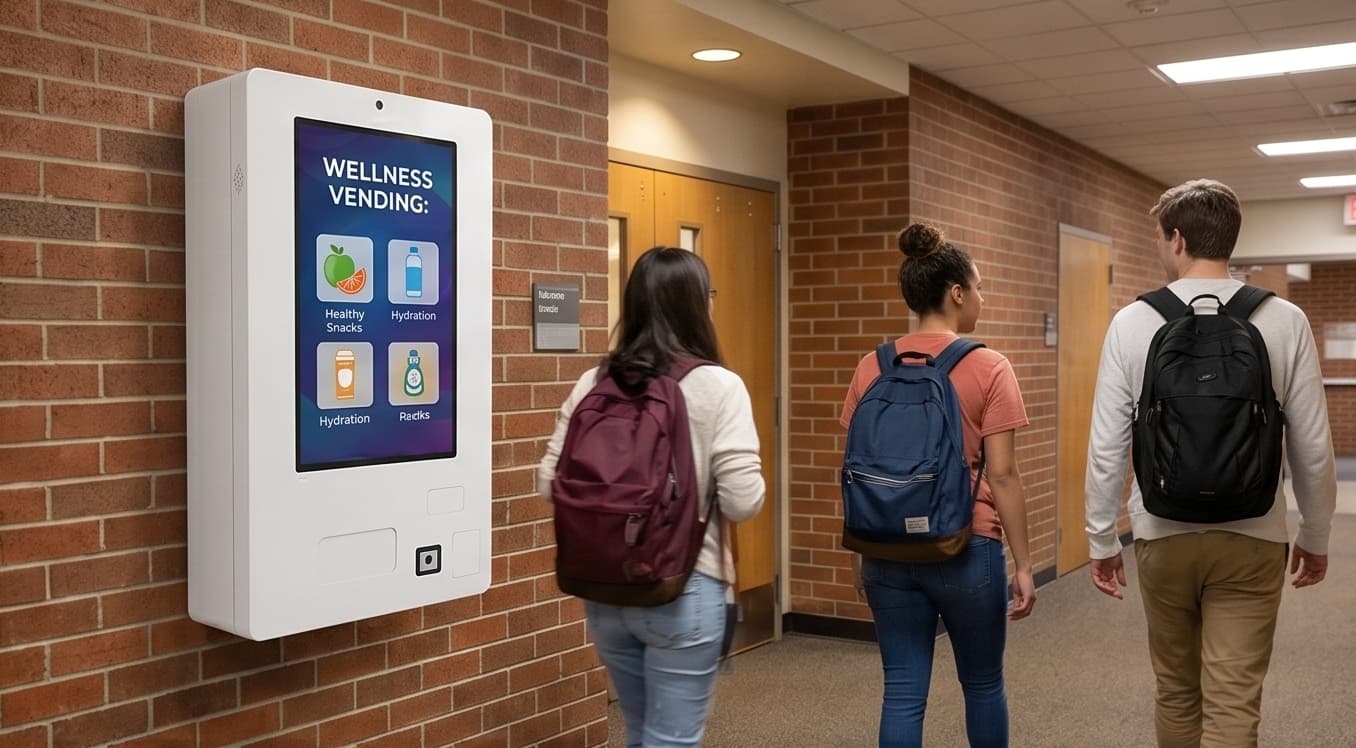
A healthcare vending machine is a controlled-dispensing cabinet that delivers personal protective equipment, over-the-counter health products, and selected medical supplies to staff, patients, or the public at a point of use and on an audit trail. The useful operator frame here is not speculative market graphs. It is access scope, assortment scope, audit scope, and whether the cabinet solves a genuine availability problem in a hospital, clinic, airport, university health service, or other health-adjacent environment.
DMVI positions these cabinets deliberately outside the prescription workflow. The category is strongest when the machine is used for PPE, OTC, and selected non-prescription supplies that benefit from faster access, cleaner control, or 24/7 availability.
What a healthcare vending machine actually dispenses
The honest assortment map has four lanes. Public-access health vending covers masks, sanitiser, menstrual products, travel wellness basics, and selected OTC items where policy allows. Staff-access clinical vending covers gloves, masks, gowns, eye protection, and related PPE on a badge, PIN, or nurse-ID workflow. Patient-access cabinets can support selected discharge or in-clinic supplies on vouchers or ward-issued credits. And then there is the deliberate out-of-scope lane: prescription medication, controlled substances, and anything that requires pharmacist-managed clinical oversight.
That last boundary matters. A healthcare vending machine is not a replacement for an automated dispensing system tied to pharmacy workflow. It is a controlled access and convenience layer for the products that should live outside that higher-clinical-control environment.
Why controlled dispensing is the load-bearing feature
Healthcare vending without controlled dispensing is just a snack machine in scrubs. The value is the audit trail: who took what, when, under which access rule, and sometimes against which cost centre or work area. In a clinical environment, that matters because unaudited supply shelves quietly bleed stock, create waste, and make replenishment less reliable than anyone admits in meetings.
Controlled dispensing brings the inventory event into software. Standard controller and reader communications such as MDB/ICP, plus reporting layers such as DEX-style audit data, let the operator reconcile usage, spot stockouts earlier, and keep the cabinet tied to a real policy rather than wishful thinking.
Where healthcare vending earns its footprint
Hospital concourses and clinical back-of-house zones are obvious fits because the need does not politely end when a supply room is closed or a counter is unstaffed. Emergency and urgent-care corridors benefit from point-of-use PPE access near the patient encounter. Outpatient clinics and dental practices can use controlled glove and mask dispense per operatory. Airports, transit hubs, and campus health centres can support public-access OTC and wellness assortments where the customer needs something quickly and does not want to go on an archaeological dig for an open pharmacy.
The pattern is simple: high footfall, real urgency, and a strong reason to reduce dependence on staffed access points for relatively low-complexity items.
What an operator should specify for a healthcare deployment
The cabinet and workflow need to match the venue. Public-access units may be ambient and consumer-payment driven. Clinical PPE cabinets may need closed-loop access, wipeable surfaces, cost-centre tagging, and tighter stock-control rules. Some assortments need refrigeration. Some need tamper-evident logging. If cameras are present, they should be scoped to dispense verification and tamper detection rather than defaulting into facial-recognition nonsense. The retention and disclosure posture should be documented, not improvised.
Restock ownership also needs to be explicit. Somebody must own cadence, expiry review, and the FIFO discipline for time-sensitive items. A healthcare cabinet becomes irritatingly expensive the moment it turns into a machine for discovering expired stock under fluorescent lighting.
Why smart features matter more here than in ordinary retail
In healthcare-adjacent vending, a stockout is not just a missed sale. A missing box of masks, gloves, or a needed OTC item can create operational drag, clinical inconvenience, or avoidable frustration at exactly the wrong moment. That is why remote monitoring, real-time stock alerts, and usable audit reporting are not decorative extras in this category. They are the features that make the machine defensible to operations, procurement, and facilities teams.
The smart layer should reduce waste, improve availability, and make the cabinet easier to reconcile. If it merely adds a shiny screen and a larger invoice, it has missed the point.
Assortment has to fit the venue, not a generic health fantasy
A hospital corridor, a senior-living common room, an international airport, and a university campus may all justify health vending, but they do not need the same mix. Senior environments may lean toward mobility and personal-care support. Airports may lean toward travel OTC, masks, sanitiser, and convenience health basics. Campus health settings may lean toward menstrual products, simple OTC, and wellness supplies. Venue fit beats generic “health” positioning every time.
Need a healthcare vending deployment that is controlled, auditable, and actually useful?
DMVI can help you scope the assortment, access rules, audit model, and cabinet configuration so the machine solves a real healthcare availability problem instead of becoming a shiny policy headache.