Smart Vending Machine Sales Boost: What Actually Drives the Uplift
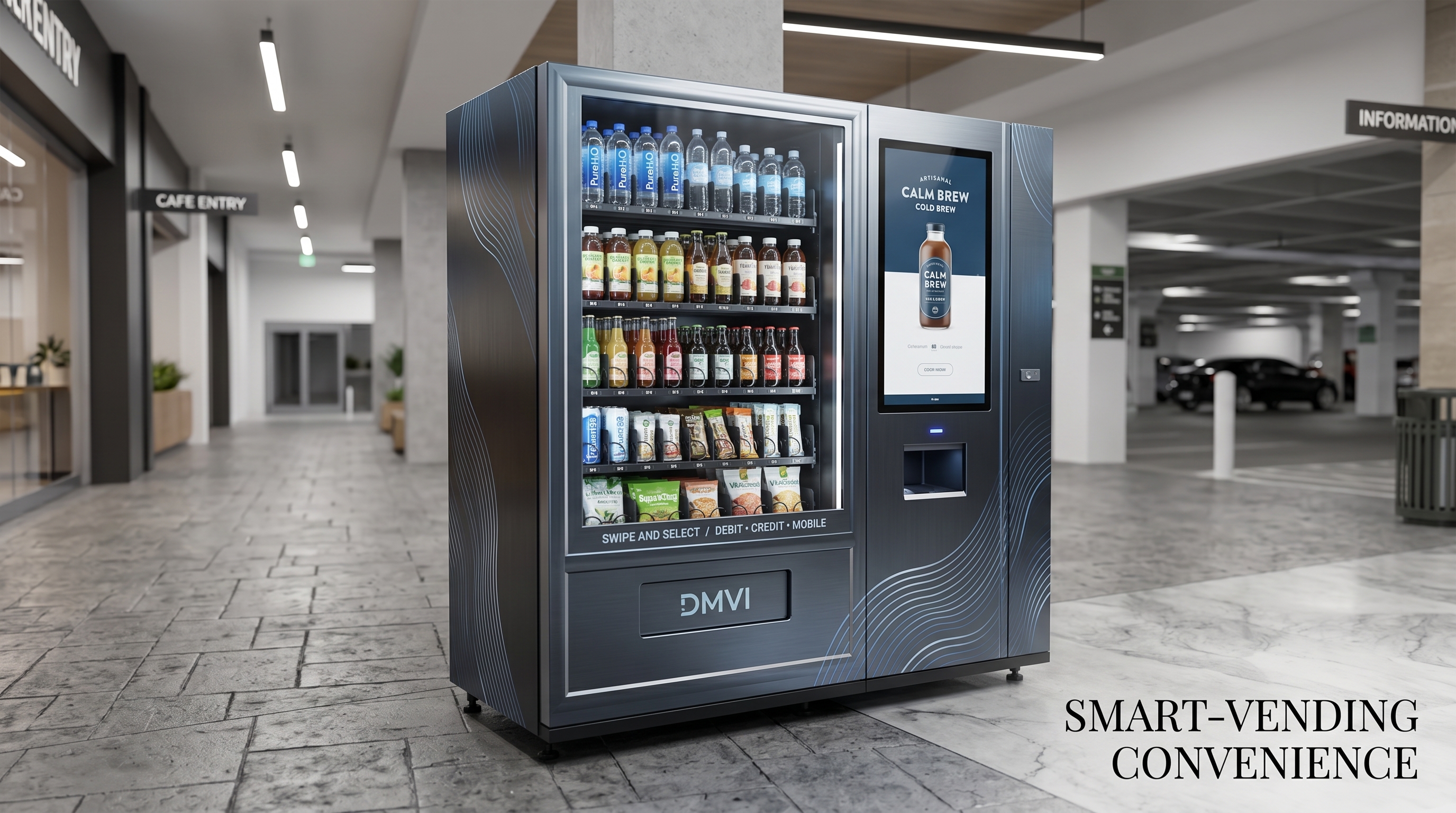
A smart vending machine is a connected retail unit that combines cashless payments, telemetry, and a richer on-screen customer interface to sell a broader product mix than a traditional mechanical machine. Operators choose smart hardware when they need real sales visibility per SKU, faster pricing and content changes, and a buying experience that feels closer to compact self-service retail than to an ageing coin-op box with a trust problem.
That does not mean every smart machine automatically delivers some magical headline increase. When people cite a sales boost such as 65%, the useful question is not whether the number sounds exciting. It is what actually caused the uplift — cashless adoption, improved stock availability, better merchandising, stronger venue fit, or simply the fact that the old machine was dreadful.
Why smart vending machines can outperform legacy units
The largest single driver is usually payment. Cashless vending captures sales that older machines simply lose when buyers do not have coins or notes. It also tends to increase basket size because customers are not limited by whatever spare change is sulking in their pocket. Industry research consistently shows cashless transactions taking a dominant share of vending sales, which is a far more grounded explanation for uplift than generic talk about futuristic convenience.
The second driver is availability. A smart machine with telemetry helps the operator keep top-selling products in stock, identify dead slots faster, and react before customers meet an empty spiral where the bestseller should have been. In practice, a machine that stays stocked on its strongest items often outperforms a prettier but badly managed unit every time.
What telemetry changes for sales performance
Connected machines generate transaction data, stock visibility, machine-health signals, and route-level reporting that let operators make decisions from evidence rather than superstition. That can improve sales indirectly by tightening replenishment, removing weak SKUs, and reducing the time a machine spends half-empty or partially broken. In other words, telemetry does not mint money on its own. It helps operators stop making the same avoidable mistakes at scale.
That is why the better question is not “does smart vending increase sales?” but “which operational weaknesses will the data actually help us fix?” If the route team ignores the alerts or the planogram is still poor, the expensive data will merely watch the problem happen in higher resolution.
How the customer experience improves
Smart vending can also lift performance through a better purchase flow. Touchscreens let customers see product images, clearer pricing, and promotions rather than squinting at labels and guessing which button maps to which item. Multi-item carts, dietary tags, and more flexible payment options all reduce friction and make the machine feel more credible.
That matters because a buying experience that feels clearer and faster tends to convert better. Still, the uplift is venue-specific. A high-traffic transit machine with strong cashless demand and better merchandising may improve substantially. A sleepy machine in a mediocre location may remain sleepy, just with a nicer screen and more opinions about itself.
Why the 65% claim needs caution
A large uplift can happen, but it should be treated as a scenario, not a promise. Results depend on venue traffic, cashless penetration, SKU mix, replenishment quality, product pricing, and the size of the gap between the old machine and the new one. If the previous setup was cash-only, poorly stocked, and visually grim, the smart replacement may indeed post a dramatic lift. If the baseline was already well run, the gain may be much more modest.
That is why operators should model expected improvement against their own current performance rather than borrowing a cheerful benchmark from someone else’s deck. Smart vending is a toolset, not a guaranteed applause machine.
What operators should prove before buying into the headline
They should prove that the venue supports cashless usage, that telemetry will actually change route behaviour, that the planogram fits the audience, and that the machine’s support model is strong enough to keep uptime high. The point is not simply to install a more advanced cabinet. The point is to improve the retail system around it.
When those conditions are in place, smart vending can absolutely outperform legacy vending. When they are not, the operator has mostly purchased a nicer-looking way to repeat the old mistakes.
Want the smart-vending uplift without relying on fantasy benchmarks?
DMVI helps operators connect cashless payments, telemetry, merchandising, and route discipline so a smart vending machine improves real performance rather than just promising a dramatic headline.