Touchscreen Robotic Vending Machines: Replacing the Convenience Store Footprint
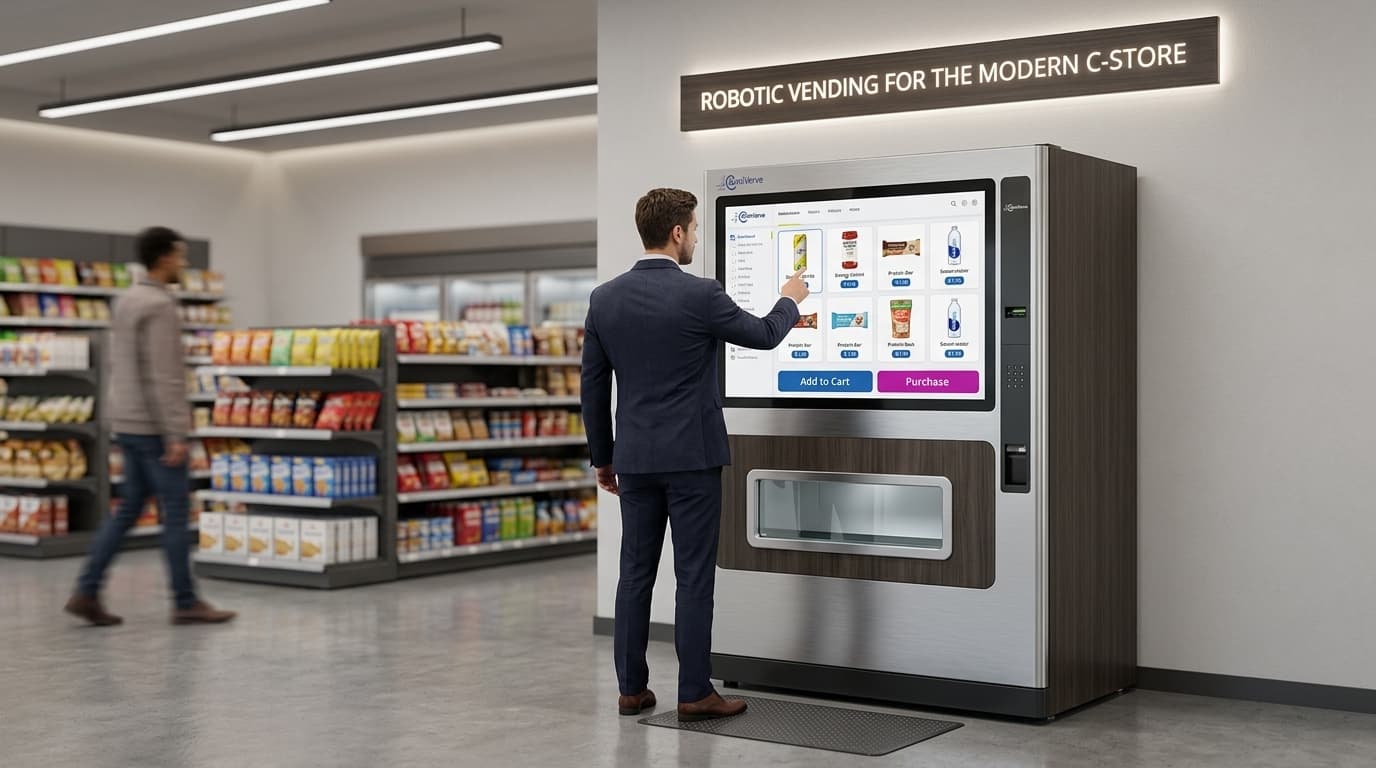
A touchscreen robotic vending machine is an automated retail kiosk with a large interactive interface, a robotic pick-and-deliver mechanism, mixed-temperature storage, and cashless checkout, designed to replace the small-format convenience-store or grocery footprint with an unstaffed retail point. It is not merely a fancier snack machine. It is a different retail model aimed at the top slice of what a small c-store sells all day long.
That distinction matters because this category should not be judged by the standards of an old spiral snack cabinet. A robotic kiosk can handle a broader SKU envelope, support refrigerated and ambient products under one shell, and sell through a touch-led interface that feels much closer to a compact self-service store than to conventional vending.
This page is about c-store replacement, not generic touchscreen vending
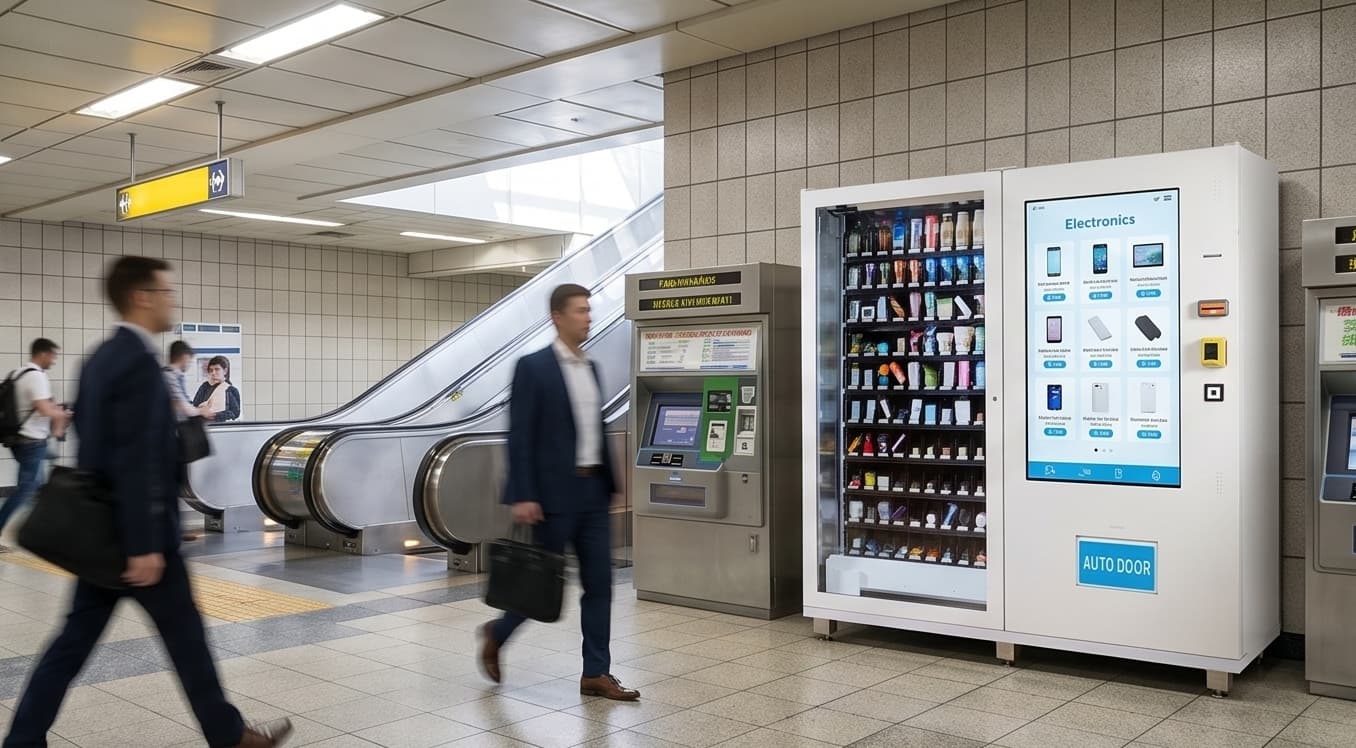
Touchscreen vending is a broad topic. This page focuses specifically on the convenience-store and grocery-store replacement use case: residential lobbies, transit hubs, campuses, forecourts, parking structures, and other locations where operators want the top several hundred high-velocity items from a small retail footprint without staffing a full checkout lane.
That makes the relevant comparison a small-format c-store bay, not a candy machine. If the operator wants to replace only 30 fixed snack slots, robotics is usually overkill. If the operator wants beverages, salads, sandwiches, ready meals, grocery basics, and irregular packaging in a single unattended point, the comparison becomes much more interesting.
Why robotic touchscreen machines can cover more of the basket
The key advantage is the SKU envelope. A robotic pick mechanism can retrieve bottles, cartons, bowls, boxed meals, and other awkward shapes that spirals often jam on or simply cannot carry well. That expands the machine beyond snack-and-soda logic into categories a convenience or grocery outpost actually relies on.
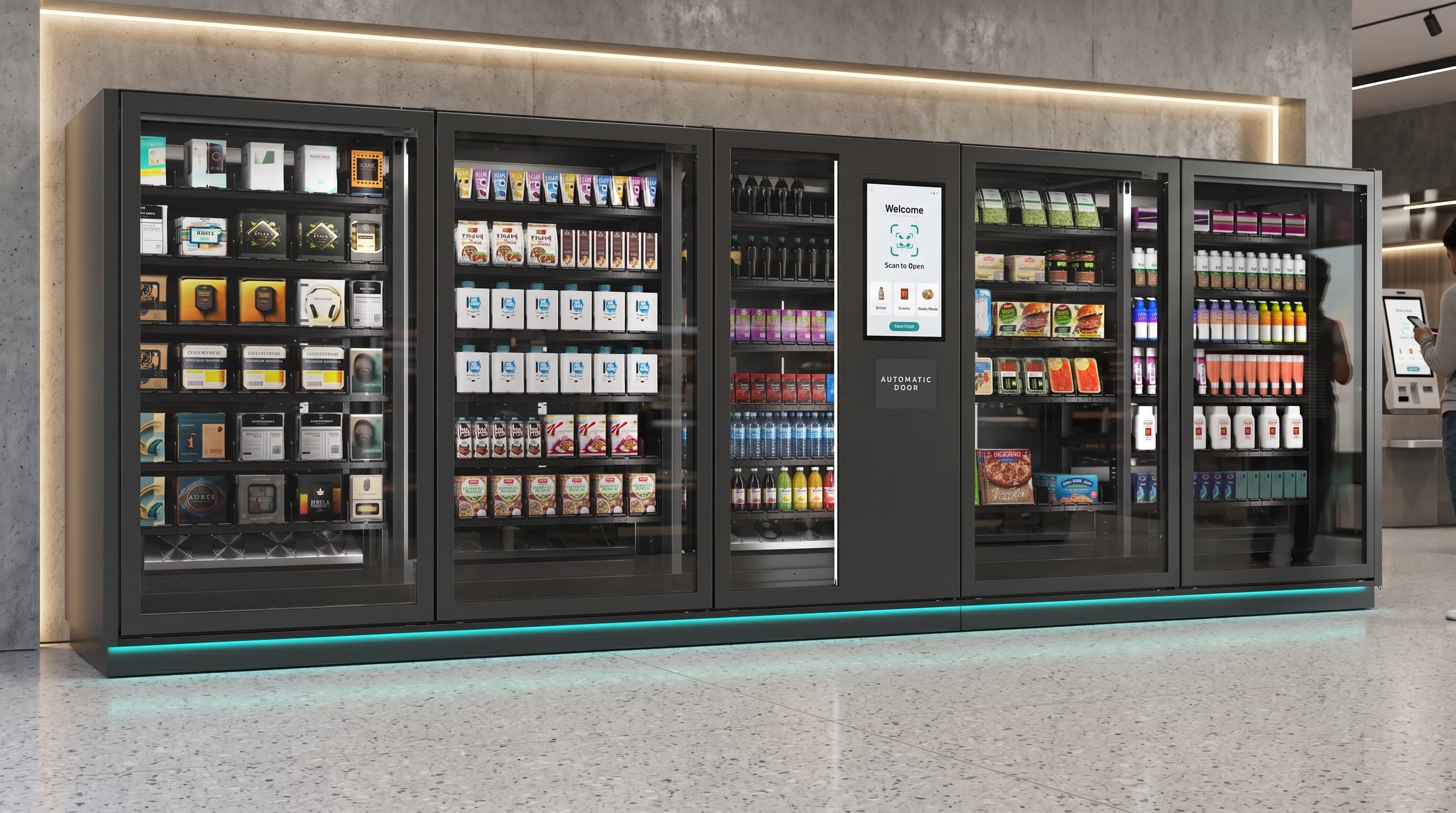
The second advantage is mixed-temperature zoning. Ambient, refrigerated, and sometimes frozen compartments under one shell let the operator combine drinks, fresh food, and packaged grocery in the same footprint. That is far closer to a compact store assortment than a traditional vending planogram.
Operator economics change when the machine replaces retail space
Once the machine starts replacing a small retail footprint, the economics shift. The operator is not just looking at margin per snack spiral. They are looking at whether the kiosk can deliver 24/7 sales without full-time staffed checkout, whether it can justify its floor space against a manned bay, and whether the route or service model can keep the assortment attractive without the labour burden of a mini shop.
Real-time reporting matters here because the machine is carrying a broader basket and a higher expectation. Connected inventory visibility, payment monitoring, and fault reporting help the operator restock based on actual need rather than on ritual route habits. That makes the model more defensible when compared with a compact staffed store or after-hours retail bay.
Cashless checkout and touchscreen UX are part of the retail proposition
These kiosks usually make sense as cashless-first systems. Customers expect tap-to-pay, mobile wallets, and a fast, screen-led checkout flow. The touchscreen does more than look modern: it supports broader assortment browsing, promotions, product discovery, and a cleaner self-service journey than static selection buttons can provide.
When the interface is done well, the machine feels like a compact unattended shop. When it is done badly, it becomes a queueing puzzle with refrigeration. So the user flow matters rather a lot.
Where the format still does not replace a real store
Robotic touchscreen vending is strong when the customer wants speed, availability, and a familiar basket of relatively straightforward products. It is weaker when the site depends on lottery, staff-prepared hot food, dense promotional shelving, heavy age-gated workflows, or the kind of customer service that still benefits from a person behind the counter.
That is why the smartest operators treat the kiosk as a footprint extension or replacement for selected store missions, not as a grand declaration that every fluorescent-lit aisle is going extinct by teatime.
What makes these kiosks commercially worth considering
They are worth considering when the location can support a compact but meaningful basket, when 24/7 access matters, when labour for a staffed bay is uneconomic, and when the assortment needs more flexibility than old-school spirals can provide. In the right location, a touchscreen robotic kiosk can behave like a tiny automated convenience outpost rather than a novelty machine with delusions of grandeur.
The question is not whether the machine looks futuristic. The question is whether it can replace enough of the right retail function to justify its cost, service model, and footprint. When the answer is yes, the format can be genuinely powerful.
Evaluating a robotic touchscreen kiosk for convenience retail?
DMVI helps operators assess whether a mixed-temperature touchscreen machine can replace enough of a small retail footprint to justify the hardware, service model, and 24/7 access strategy.